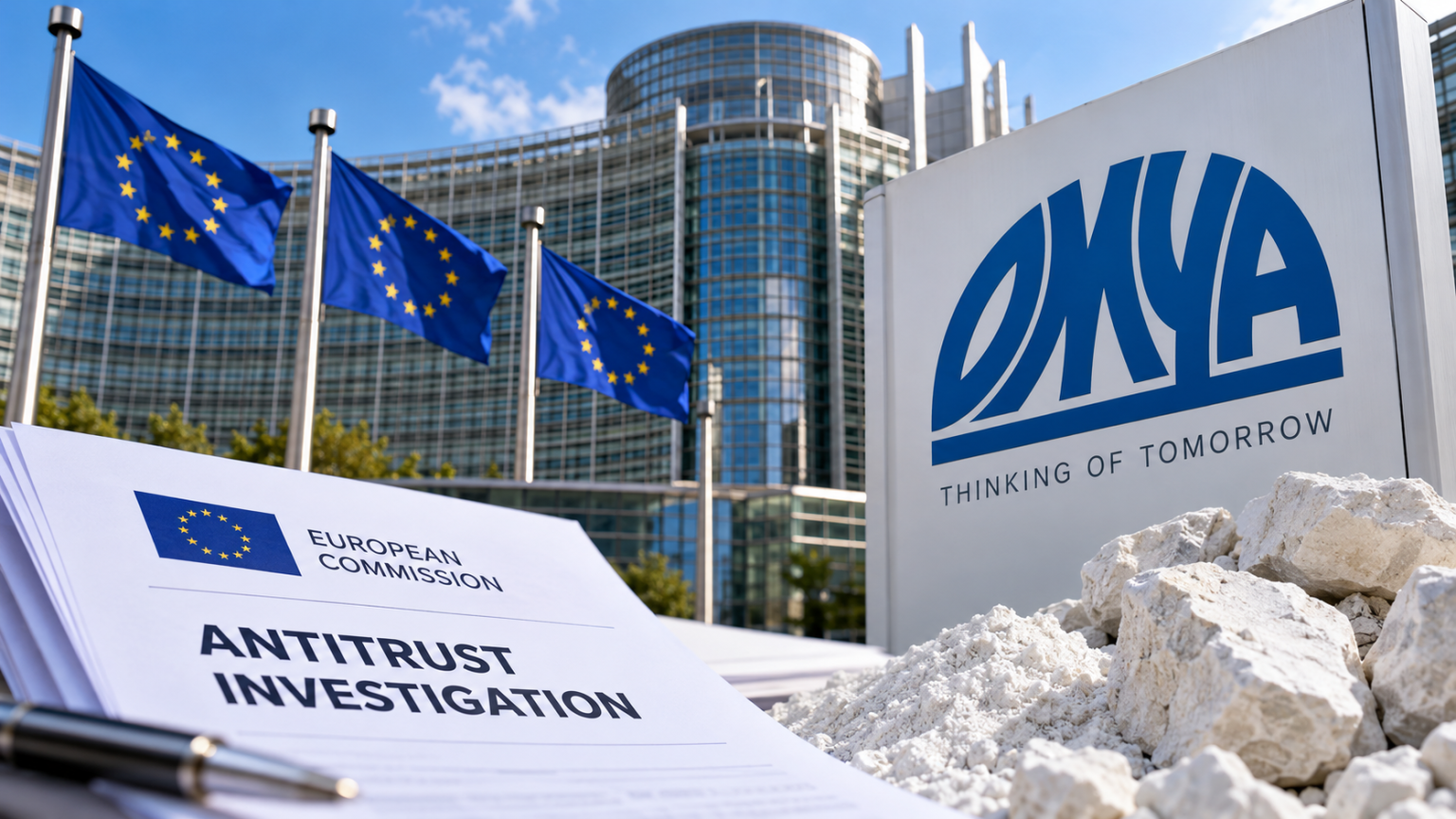
Brussels, 25 October, (Brussels Morning Newspaper) – The European Commission has opened a formal investigation into Swiss minerals company Omya over concerns that its commercial agreements may have restricted competition in Europe’s paper manufacturing sector. The Omya antitrust probe focuses on suspected exclusive purchasing requirements and rebate arrangements that could have discouraged customers from buying calcium carbonates from rival suppliers.
The investigation places one of Europe’s leading industrial minerals suppliers under scrutiny as EU regulators examine whether its business practices comply with competition law.
European Commission Investigates Omya’s Market Practices
The European Commission announced formal proceedings on 23 October to examine Omya’s conduct in the supply of ground calcium carbonate, an important mineral used in paper and cardboard manufacturing.
According to the Commission, Omya is the largest supplier of calcium carbonates in the European Economic Area and may occupy a dominant market position.
Investigators are examining whether the company required customers to purchase all or most of their mineral supplies from Omya.
They will also assess whether rebate arrangements encouraged customers to concentrate their purchases with the company, potentially making it more difficult for competing suppliers to secure business.
The Commission has not established that Omya violated EU competition law.
EU Competition Authorities Raise Concerns Over Exclusive Deals
The investigation concerns Article 102 of the Treaty on the Functioning of the European Union and Article 54 of the European Economic Area Agreement.
These provisions prohibit companies from abusing dominant market positions through practices that unlawfully restrict competition.
Exclusive purchasing arrangements and conditional rebates are not automatically illegal. Their legality depends on their structure, market circumstances and potential effects on competitors.
The Commission will assess whether Omya’s agreements created barriers for alternative mineral suppliers.
European Commission Highlights Paper Industry Importance
Teresa Ribera, the European Commission’s Executive Vice-President for Clean, Just and Competitive Transition, has emphasised the importance of calcium carbonates to Europe’s paper and cardboard industries.
In announcing the investigation, the Commission highlighted concerns about maintaining competitive supply chains as demand for paper-based packaging grows.
Calcium carbonates are used to improve paper brightness, opacity, smoothness and printability while helping manufacturers manage production costs.
Omya has said it is cooperating with the European Commission’s investigation.
Why the Investigation Matters for Europe’s Paper Industry
The Omya antitrust probe could have implications for paper mills, packaging producers and competing mineral suppliers across Europe.
Calcium carbonates are essential manufacturing inputs, meaning restrictions on supplier choice could affect production costs and commercial flexibility.
The Commission has emphasised that competitive mineral markets can help manufacturers secure affordable supplies and ultimately benefit consumers purchasing paper and cardboard products.
The investigation is also relevant to the EU’s wider transition towards packaging alternatives to single-use plastics.
However, regulators have not established that Omya’s arrangements increased prices or caused financial losses.
What Happens Next in the EU Investigation?
The European Commission will conduct an in-depth examination of Omya’s purchasing agreements, rebate policies and potential market effects.
The investigation is registered under case number AT.40893 in the Commission’s competition case register.
EU competition proceedings have no fixed statutory completion deadline. Their duration depends on the complexity of the investigation, the evidence examined and the parties’ rights of defence.
The Commission has confirmed that opening formal proceedings does not prejudge the outcome.
Omya remains under investigation, with no finding of wrongdoing announced.