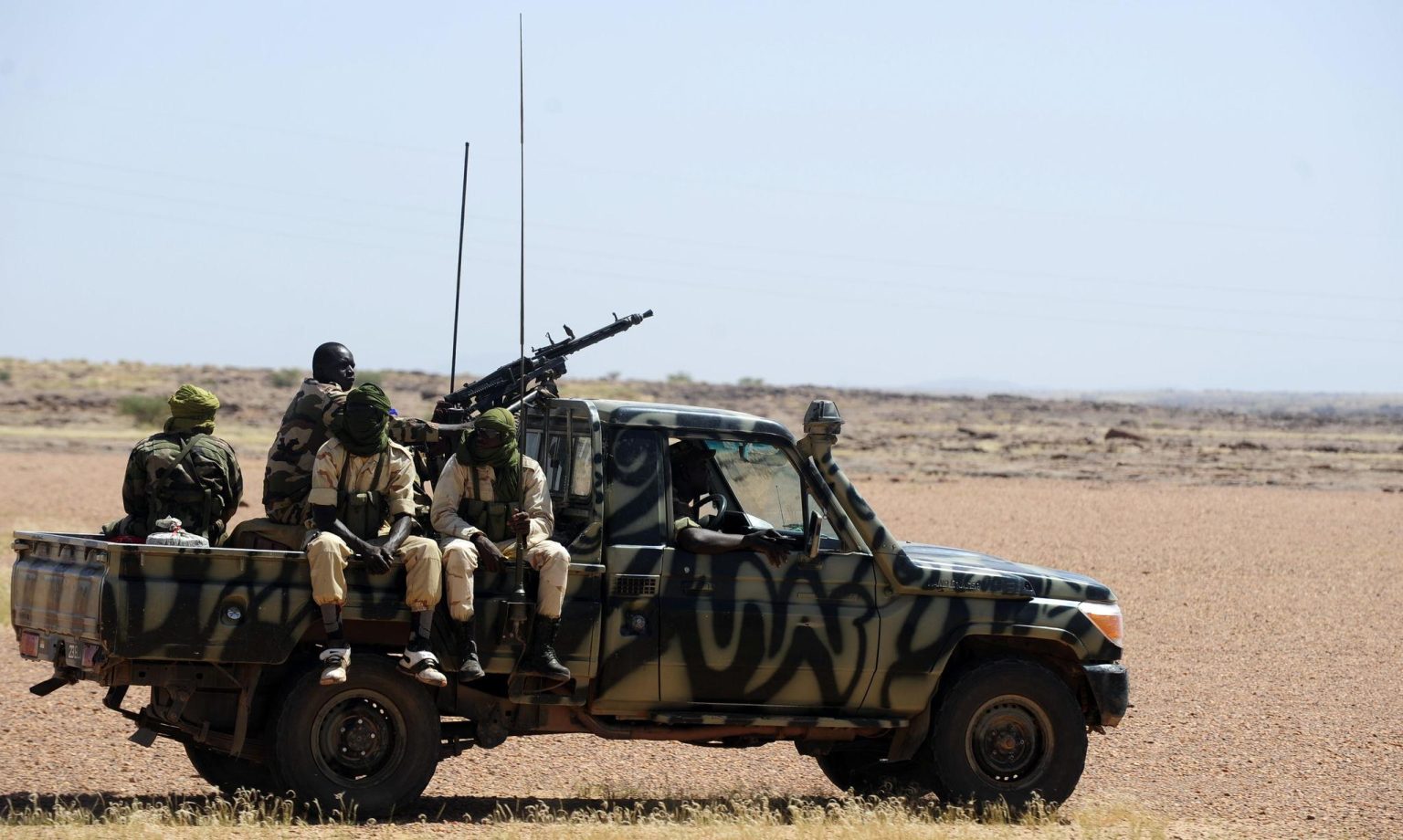
Sanam, Tillaberi Region, Niger., 27 November – Brussels Morning Newspaper – At least 13 members of Niger’s National Guard have been killed and another 20 wounded after heavily armed assailants attacked a military position in the western Tillaberi region, close to the border with Mali, according to the country’s Defence Ministry. The assault, which took place on Thursday, November 26, has renewed concerns about deteriorating security across the Sahel, where armed extremist groups continue to challenge government forces.
The attack targeted a National Guard compound in Sanam, in the Abala department of Tillaberi. Niger’s Defence Ministry described the incident as a terrorist attack involving a large group of heavily armed assailants. The casualty figures remain provisional, and military operations to locate those responsible are continuing.
The incident represents another serious setback for Niger’s security forces as the military-led government struggles to contain persistent armed violence across the country.
Attack details and military response
The attack reportedly began at approximately 5 a.m. local time on Thursday, according to local and security sources cited by Nigerien news outlet ActuNiger. The Defence Ministry’s statement was subsequently read on state television.
The ministry said Nigerien forces killed several attackers during the confrontation and destroyed equipment and logistical infrastructure belonging to the assailants. It also confirmed that security operations were underway to pursue those who escaped.
Some of the wounded soldiers were reported to be in serious condition. The most seriously injured were evacuated for medical treatment, according to the ministry’s account reported by Reuters.
Authorities have not disclosed a definitive number of attackers killed or provided a detailed account of how the assailants managed to strike the National Guard position.
The identity of the group responsible also remains unknown. Although the government described the assault as terrorism, no armed organisation had publicly claimed responsibility in the reports available on November 27.
Reuters and the Associated Press independently reported the 13 deaths and 20 injuries, citing Niger’s Defence Ministry.
Tillaberi remains a major security flashpoint
The attack took place in Tillaberi, one of Niger’s most volatile regions. Located in the west of the country, the region borders Mali and Burkina Faso, forming part of a wider area where armed groups have established operational networks and regularly target military positions and civilian communities.
The geographical position of Tillaberi makes it particularly difficult for authorities to secure. The porous borders and the movement of armed groups across national boundaries complicate military operations and efforts to protect remote settlements.
The wider Sahel region has experienced years of instability involving organisations affiliated with al-Qaeda and the Islamic State group. These groups have exploited weak state control, local grievances and insecurity to expand their activities across parts of Niger, Mali and Burkina Faso.
According to reporting by Africanews, citing conflict-monitoring organisation ACLED, Tillaberi was the deadliest region in the central Sahel for civilians in 2025. The report highlighted the strategic importance of the tri-border area and the growing threat posed to local communities.
The consequences extend beyond military casualties. Repeated attacks have disrupted local economies, threatened access to essential services and forced communities to live with persistent insecurity.
Another deadly attack reported in eastern Niger
The latest assault comes amid a series of deadly incidents involving Niger’s security forces.
Just two days before the Sanam attack, Niger’s Defence Ministry reported that 11 soldiers had been killed in an attack in the Diffa region in the country’s southeast. The government attributed that incident to Boko Haram.
Diffa faces a different but equally serious security challenge. The region is part of the Lake Chad Basin, where Boko Haram and the Islamic State West Africa Province (ISWAP) have carried out attacks against military forces and civilian populations.
The separate incidents demonstrate the geographical scale of Niger’s security problems. While armed groups operate around the western borders with Mali and Burkina Faso, the country also faces persistent militant violence in the southeast.
The two attacks should not be confused: the government attributed the Diffa incident to Boko Haram, but responsibility for the Sanam assault has not been established.
Niger’s military government faces mounting security pressure
The latest casualties come at a difficult time for Niger’s military leadership.
The country has been governed by a military junta since July 2023, when soldiers overthrew President Mohamed Bazoum. The takeover fundamentally changed Niger’s international security relationships.
Following the coup, the military authorities moved away from their previous defence partnerships with France and the United States and strengthened cooperation with Russia.
The shift reflected the government’s determination to pursue a different approach to combating armed groups and asserting national control over security operations.
However, the continuing attacks have raised questions about the effectiveness of the government’s strategy.
Reuters reported that repeated battlefield losses have contributed to tensions within Niger’s armed forces. Those tensions culminated in a failed mutiny in August 2026, which was suppressed by forces loyal to the military leadership.
The Associated Press also reported that Russian forces assisted loyalist troops in putting down the August mutiny.
The latest assault in Tillaberi therefore carries significance beyond its immediate death toll. It highlights the continuing difficulties facing Niger’s military leadership as it attempts to strengthen internal stability while confronting armed groups on several fronts.
Why the attack matters beyond Niger
The security situation in Niger has implications for neighbouring countries and international partners.
Niger, Mali and Burkina Faso face interconnected security threats, with armed groups exploiting cross-border routes to move personnel and equipment. Instability in one country can consequently increase pressure on neighbouring states.
The three countries have also moved closer politically and militarily following their respective military takeovers and disagreements with traditional Western partners.
For European countries, including Belgium, developments in the Sahel remain relevant because of their wider implications for regional stability, humanitarian conditions and international security cooperation.
The situation also raises concerns about the safety of civilians living in areas where armed organisations and government forces operate. Military casualties are only one measure of the conflict’s impact, with communities frequently exposed to displacement, disrupted livelihoods and limited access to public services.
However, the available reporting does not establish a direct connection between Thursday’s attack and any specific threat to European territory.
What happens next?
Niger’s immediate priority is to locate those responsible for the Sanam assault, assess the condition of wounded personnel and prevent further attacks against security positions in Tillaberi.
The Defence Ministry has confirmed that pursuit operations are continuing. However, no definitive information has been released identifying the perpetrators or establishing whether the attackers belonged to an established regional militant organisation.
The provisional casualty figures could also change as authorities provide further information.
For now, the deaths of 13 National Guard personnel represent another major challenge for Niger’s military government. With insecurity continuing in both the western Sahel and the Lake Chad Basin, the latest attack underlines how difficult it remains for the authorities to restore lasting security across the country.