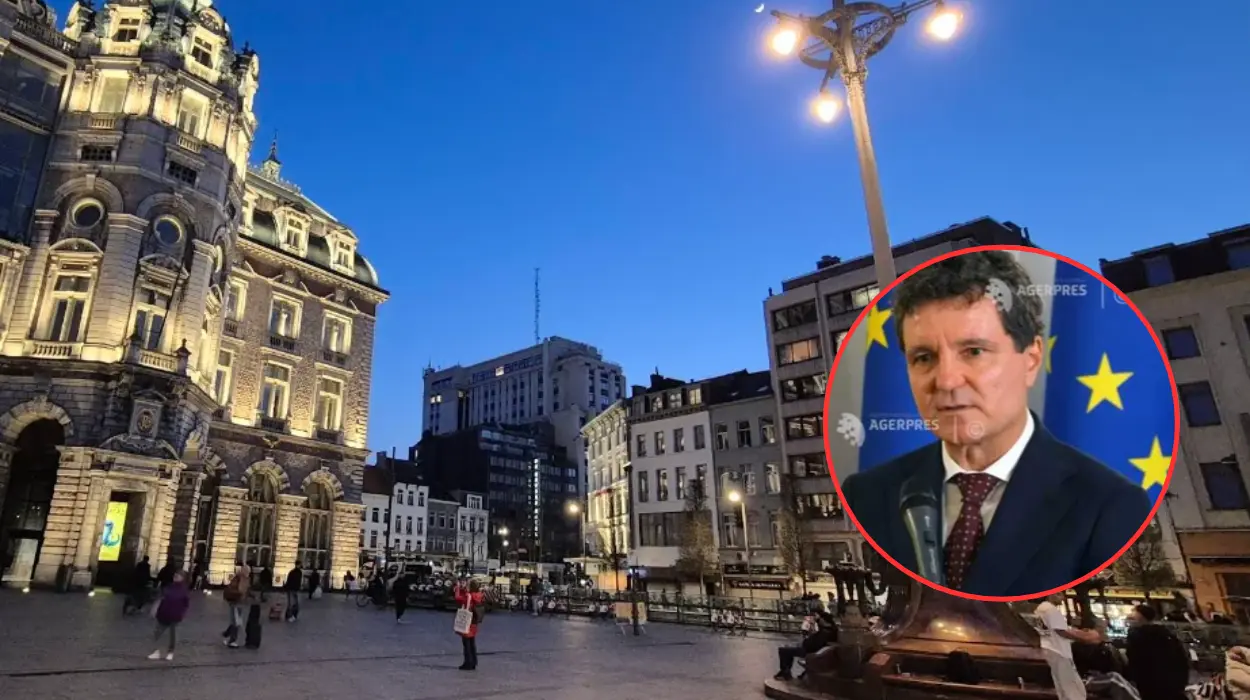
Belgium(Brussels Morning Newspaper)– Romanian President Nicușor Dan is participating in the Special European Council meeting in Brussels on Thursday and Friday, 26 and 27 November 2026, where European Union leaders are negotiating the bloc’s 2028–2034 Multiannual Financial Framework. Prior to the main summit, Dan co-chaired a morning session of the “Friends of Cohesion” group alongside Italian Prime Minister Giorgia Meloni. Ahead of the talks, the Romanian head of state confirmed that Bucharest opposes substantial reductions to the long-term EU budget and is seeking a significant financial allocation to support cohesion policy, agriculture, competitiveness, defence, and enlargement.
Brussels Summit Agenda and Friends of Cohesion Coordination
President Nicușor Dan arrived in Brussels for two days of high-level European Union deliberations centred on the future seven-year budget and financial support for Ukraine in 2027. According to the official agenda released ahead of the summit, Dan began his Thursday programme at 10:15 a.m. in the Europa building by co-chairing a meeting of the “Friends of Cohesion” group with Giorgia Meloni, President of the Council of Ministers of the Italian Republic.
A statement issued by the Italian government confirmed that the morning gathering of leaders from the “Friends of Cohesion” coalition provided an opportunity to assess the latest state of play in the Multiannual Financial Framework (MFF) negotiations. Leaders evaluated the revised negotiating box circulated on 21 November by European Council President António Costa, measuring it against the joint negotiating platform previously established by the group in October. During the session, Prime Minister Meloni reiterated the coalition’s call to halt gradual reductions in resources for the next European budget and to safeguard allocations for the Common Agricultural Policy and Cohesion Policy, describing both areas as essential for economic and social convergence, growth, and competitiveness across the Union.
Following the cohesion group session, President Dan joined fellow EU heads of state and government at 11:00 a.m. for the formal opening of the Special European Council proceedings. His Thursday schedule includes an inclusive-format Euro Summit—featuring analyses of current economic developments from European Central Bank President Christine Lagarde and Eurogroup President Kyriakos Pierrakakis—an exchange of views with European Parliament President Roberta Metsola, and a working lunch in the EU-27 format. In his invitation letter to members of the European Council dated 24 November, President Costa indicated that leaders would react directly to his compromise MFF proposal before breaking for bilateral consultations aimed at reaching a timely political agreement before the end of 2026.
Romania’s Negotiating Position on the 2028–2034 EU Budget
In a statement published on Facebook on Wednesday, 25 November, ahead of his departure for Belgium, President Nicușor Dan outlined Romania’s core objectives for the Brussels negotiations. He stated that the Romanian delegation is making “all the necessary efforts to ensure that Romania secures a substantial allocation” from the European Union’s future long-term budget.
“Together with the Government and other relevant stakeholders, we are making all the necessary efforts to ensure that Romania secures as substantial an allocation as possible from the future European budget and the resources needed to support its development priorities,” Dan stated. “We continue to support an ambitious European budget, capable of responding to the Union’s current and future challenges. In this context, we are carefully analysing the proposals on identifying new own resources for the European Union.”
The Romanian president explicitly rejected proposals that would entail major reductions to the overall size of the European budget. He emphasised that Bucharest views balanced funding across both traditional and emerging policy domains as non-negotiable.
“We consider it essential to ensure adequate funding both for cohesion policy and for the Union’s strategic priorities: economic competitiveness, defence and security, as well as European enlargement,” Dan said. “The negotiations at the European Council in the coming days will be difficult, but it is precisely at such a time that we need greater solidarity and a common vision.”
Domestic Consultations and Inter-Ministerial Preparations in Bucharest
Romania’s mandate for the Special European Council was finalised following a series of institutional and public consultations in Bucharest earlier in the week. On Wednesday, President Dan convened a working meeting with key members of Prime Minister Luca Niculescu’s cabinet—specifically Finance Minister Alexandru Nazare, Foreign Affairs Minister Dan Neculăescu, Minister of Investments and European Projects Mihai Ghigiu, and Agriculture and Rural Development Minister Florin Barbu—to align national positions across all budgetary chapters.
“Today, I held a discussion with representatives of the ministries of Finance, Foreign Affairs, Investments and European Projects and Agriculture, in preparation for the Special European Council meeting, which begins tomorrow,” Dan wrote on Wednesday. “We analysed and agreed on Romania’s standpoint in the complex negotiations on the future Multiannual Financial Framework of the European Union for 2028–2034.”
Prior to the ministerial coordination meeting, the Presidential Administration hosted a public consultation at Cotroceni Palace on Tuesday, 24 November. That session brought together representatives from civil society, the business community, academia, and sectoral stakeholders so that domestic economic and social priorities could be incorporated into Romania’s negotiating framework.
European Council Compromise Proposal and Inter-Institutional Debate
The negotiations in Brussels centre on a revised negotiating box presented by European Council President António Costa on 21 November 2026. Costa’s compromise text reduces the overall budget envelope compared with the European Commission’s initial July 2025 proposal, bringing the total figure down to approximately €1.78 trillion in current prices—a reduction of roughly €180 billion to €204 billion from the Commission’s original blueprint.
Presenting the text, Costa stated that his proposal aims to balance established policies, such as the Common Agricultural Policy and Cohesion Policy, with new strategic priorities while keeping national contributions within reasonable limits. According to figures released by the European Council, Costa’s draft increases funding for competitiveness by 120 per cent, defence by 232 per cent, migration management and border control by 100 per cent, global engagement by 23 per cent, and the Erasmus programme by 25 per cent in constant prices, alongside a 35 per cent spending target for climate and environmental action. The proposal also retains €158 billion in current prices for the post-2027 Horizon Europe research programme and includes an off-ceiling Ukraine Reserve of up to €100 billion.
To finance these priorities without raising direct national contributions, Costa proposed a basket of five new EU own resources: revenues from digital services of large companies, the Carbon Border Adjustment Mechanism, non-recycled electronic waste, tobacco-related products, and the carbon Emissions Trading System.
Divergent Positions Among Member States and the European Parliament
The compromise negotiating box has drawn varied reactions across EU institutions and national capitals ahead of the two-day summit. Fiscally conservative member states, including Finland, have maintained that the overall ceiling of the financial framework remains too high and have insisted on strict limits on national contributions. Germany has similarly underscored budget discipline while linking MFF discussions to equitable burden-sharing among all 27 member states for financing Ukraine’s needs, including a proposed €45 billion loan package for 2027. Conversely, several Central, Eastern, and Southern European member states—including Poland, the Czech Republic, Hungary, Slovakia, Austria, and Greece—have criticised reductions to traditional cohesion and agricultural envelopes.
Meanwhile, during a plenary debate in Strasbourg on 25 November with European Commissioner Piotr Serafin, Members of the European Parliament expressed concern over the scale of the proposed reductions. According to a European Parliament press release, speakers across most political groups noted that Costa’s proposal brings the overall MFF size below 1 per cent of the EU’s gross national income (GNI)—specifically falling below 0.97 per cent of GNI under the Commission’s autumn economic forecast—compared with the 1.27 per cent of GNI benchmark adopted by Parliament in April.
Adoption of the 2028–2034 Multiannual Financial Framework requires unanimous approval from all 27 member states in the European Council, followed by the formal consent of an absolute majority of Members of the European Parliament. While leaders aim to reach a political agreement before the end of 2026, discussions in Brussels are scheduled to continue through Friday, 27 November, alongside bilateral meetings chaired by President Costa.