
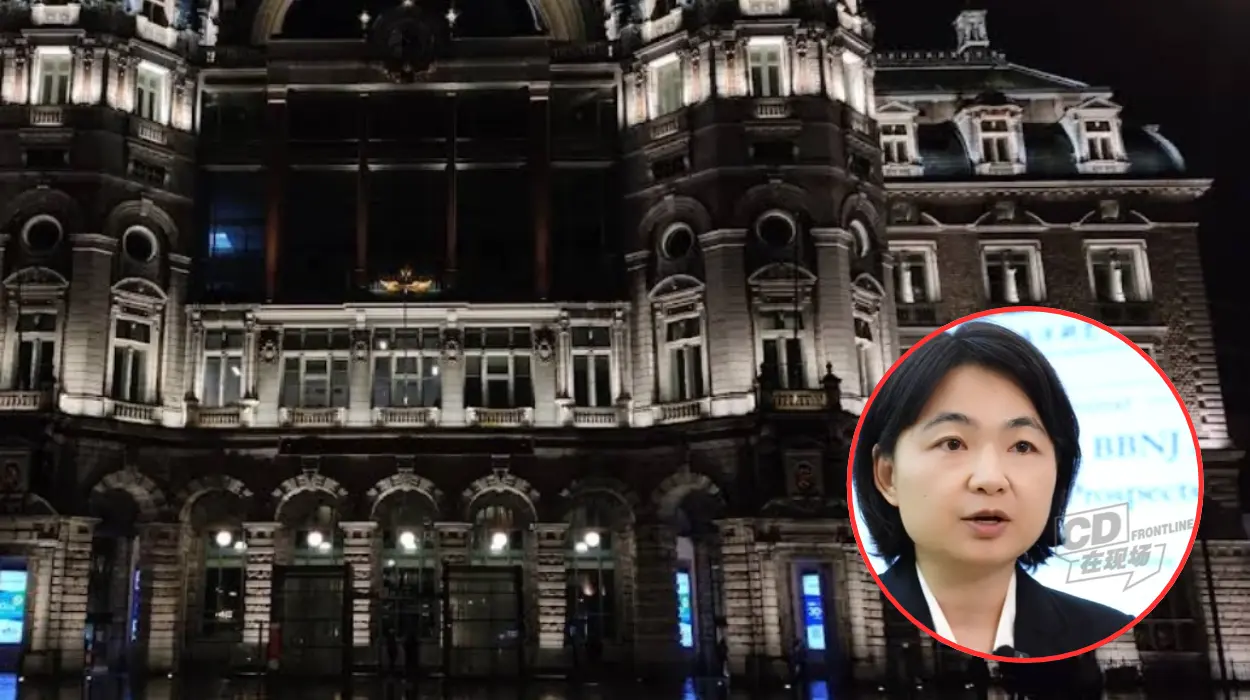
Belgium (Brussels Morning Newspaper), November 23, 2026 – Belgium and Chile have announced a joint bid to host the secretariat of the United Nations High Seas Treaty, introducing a cross-continental proposal that places the main secretariat in Valparaíso, Chile, while assigning Brussels a key role in hosting the treaty’s Clearing-House Mechanism infrastructure and meetings of subsidiary bodies. The proposal has raised legal and operational questions among maritime policy experts ahead of the January 2027 decision on the permanent host location in New York.
Structure of the Joint Belgium-Chile Secretariat Proposal
Prior to the November announcement, the competition to host the BBNJ Secretariat consisted of three separate national candidatures submitted by Belgium, Chile, and China. Belgium had nominated Brussels and Chile had nominated Valparaíso in 2025, while China formally notified the United Nations on 16 January 2026—one day before the treaty’s entry into force—of its nomination of Xiamen in southeastern Fujian Province.
In a joint statement issued by the foreign ministries of Belgium and Chile on 6 November 2026, nine weeks ahead of COP1, the two governments confirmed that they had combined their candidatures “also as a contribution to facilitate an effective decision at COP1”. Under the revised structure, Valparaíso, a Chilean port city situated approximately 120 kilometres from Santiago, is designated as the principal seat of the secretariat. From Valparaíso, the secretariat would execute its primary administrative functions, including the operationalisation of the agreement’s financial mechanism.
Simultaneously, the joint proposal allocates distinct institutional responsibilities to Brussels. The Belgian capital would accommodate the physical and technical infrastructure of the Clearing-House Mechanism—an open-access information-sharing platform mandated by the treaty to connect scientific data, environmental impact assessments, and capacity-building initiatives—and would serve as the venue for meetings of the agreement’s subsidiary bodies.
Legal and Procedural Scrutiny of a Split-Secretariat Model
Following the announcement of the merged bid, maritime policy specialists and international legal analysts examined how the proposal aligns with the text and procedural rules of the BBNJ Agreement. In an interview with China Daily published on 23 November 2026, ocean policy expert Yan Yan, director of the Research Center for Oceans Law and Policy at the National Institute for South China Sea Studies, examined the motivations behind the sudden bundling of the two bids, whether the arrangement complies with the treaty’s procedural framework, and the operational risks posed by a geographically divided secretariat.
International legal commentary published by the European Journal of International Law (EJIL: Talk!) on 18 November 2026 similarly detailed multiple procedural and textual questions surrounding a two-host-state arrangement. Under Article 50(3) and Annex IV of the BBNJ Agreement, states parties are tasked with deciding on “the seat” of the secretariat. Legal analysts noted that the treaty text refers to a single seat rather than distributed seats across two continents, raising the possibility of procedural objections at COP1 regarding whether a joint offer qualifies as an offer for “the seat” under Annex IV, whether the merger was submitted too late in the preparatory timeline, and whether commitments assigned to Brussels require a separate decision or vote.
Furthermore, under the draft rules of procedure prepared for COP1, decisions on matters of substance are intended to be adopted by consensus, with voting available only if all efforts to reach consensus are exhausted. Legal observers noted that if the legitimacy or procedural validity of a dual-location bid is contested during the January 2027 conference, disputes over whether the matter constitutes a procedural or substantive question could complicate the decision-making process.
Operational and Coordination Risks Across Two Continents
Experts and commentators have also highlighted potential administrative and logistical challenges inherent in separating the secretariat’s core leadership from its technical and information infrastructure. Under the BBNJ Agreement, the Clearing-House Mechanism is designed to function as an integral operational tool managed by the secretariat to facilitate transparency, marine genetic resource notifications, and technology transfer.
Reports examining the split-secretariat model noted that locating the principal secretariat in South America while housing the Clearing-House Mechanism infrastructure and subsidiary body meetings in Western Europe introduces cross-continental time-zone differences, duplicated administrative structures, and elevated coordination costs. Analysts pointed out that managerial attention and financial resources could be absorbed by internal coordination between offices in Valparaíso and Brussels rather than being directed toward substantive treaty implementation. Additionally, legal analysts noted that separating the headquarters from the data infrastructure creates distinct regulatory questions, as data governance for the Clearing-House Mechanism would fall under the jurisdiction of a European Union member state while the secretariat accountable for managing it operates from Chile.
Diplomatic Responses and Official Statements from China
The Chinese government, which is backing Xiamen’s bid to host the secretariat, has formally objected to the Belgium-Chile merger. At a regular Ministry of Foreign Affairs press conference in Beijing on 12 November 2026, spokesperson Mao Ning stated that the joint proposal has at least six “non-conformities” with the provisions and spirit of the BBNJ Agreement.
Mao stated that the joint candidature alters the nature of what had been an open competition among individual host cities, arguing that the arrangement politicises the selection process, attempts to divide states parties into camps, and undermines the principles of fair competition and multilateralism. Chinese officials and researchers have maintained that Xiamen offers unified conference facilities, marine scientific research institutions, and financial backing in a single location.
At the China Institute for Marine Affairs, associate research fellow Zhao Chang stated in remarks reported by the Global Times on 16 November 2026 that Belgium and Chile combined their bids two months before COP1 to offset individual limitations—specifically citing infrastructure and financial constraints in Valparaíso and limited backing from developing nations for Brussels—while framing the merger as a North-South partnership. Chinese representatives have further emphasised that selecting Xiamen would establish the first United Nations body headquarters in China and the first United Nations ocean-related institution in the Asia-Pacific region, addressing what they describe as a geographical imbalance in the global distribution of international organisations.
Background and Mandate of the BBNJ Agreement
Adopted in 2023 following nearly two decades of United Nations negotiations, the BBNJ Agreement serves as the third implementing agreement under the 1982 United Nations Convention on the Law of the Sea (UNCLOS). Prior to its entry into force on 17 January 2026, areas beyond national jurisdiction—comprising the high seas and the deep seabed beyond national continental shelves—lacked a unified legal mechanism for establishing cross-sectoral marine protected areas or conducting comprehensive environmental assessments.
The treaty rests on four core pillars:
-
Marine Genetic Resources: Establishing rules for access to marine genetic resources in areas beyond national jurisdiction and ensuring the fair and equitable sharing of both monetary and non-monetary benefits, particularly with developing states.
-
Area-Based Management Tools: Creating a legal procedure to establish marine protected areas and other conservation measures across the high seas.
-
Environmental Impact Assessments: Setting mandatory standards and transparency requirements for assessing the ecological impacts of planned human activities in international waters.
-
Capacity-Building and Transfer of Marine Technology: Assisting developing countries in building scientific, technical, and institutional capabilities to implement the treaty.
Once established by COP1 in January 2027, the permanent BBNJ Secretariat will be responsible for organising meetings of the Conference of the Parties and its subsidiary bodies, administering the Clearing-House Mechanism, coordinating with existing regional fisheries and maritime organisations, and supporting states parties in fulfilling their treaty obligations.