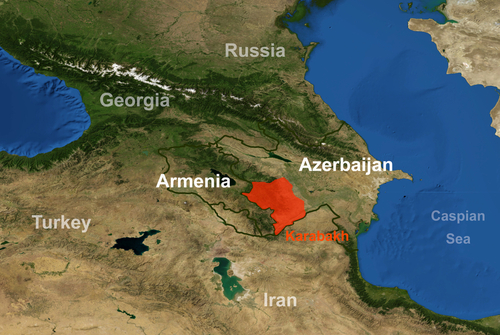
Switzerland (Brussels Morning) Azerbaijan initiated a significant military operation in Nagorno-Karabakh on September 19th, with the goal of defeating the Republic of Artsakh, which has an Armenian-majority population and is self-governed from Stepanakert.
Their objective was to establish complete control over the entire Nagorno-Karabakh region. Following months of blockading the Lachin Corridor, which serves as a crucial supply route to Artsakh, Azerbaijan executed a brief military campaign that achieved remarkable success in serving its goal.
The disbandment of the Artsakh Defense Army, coupled with concerns about the possibility of ethnic cleansing and genocide, led to the mass exodus of tens of thousands of ethnic Armenians from Artsakh. Following the rapid military offensive by Azerbaijan, almost 90 percent of the area’s ethnic Armenian residents have fled due to concerns about the conquering military.
Azerbaijan’s rapid success in this conflict represents a significant achievement for Turkey’s interests in the South Caucasus region. However, it also presents strategic complexities for Iran and ethical dilemmas for Western nations.
One nation two states
Turkey and Azerbaijan share strong economic, military, cultural, and linguistic bonds, with President Erdogan frequently expressing the notion that these nations are “one nation, two states.” Conversely, Turkey’s historical relationship with Armenia has been marked by tensions, notably regarding the fact that Armenia categorizes the deaths and prosecutions of around 1.5 million Armenians during the late Ottoman period as a genocide, a label that Turkey vehemently denies.
Analysts assert that Turkey’s unwavering support for Azerbaijan in the recent conflict has played a central role in this significant regional escalation, shedding light on Ankara’s broader aspirations in the area.
While Turkey has expressed interest in de-escalating tensions in the South Caucasus, it consistently echoed Azerbaijan’s claims of Armenian obstructionism. When border clashes erupted in September 2022, Turkey criticized Armenia’s “aggressive posture” and accused it of undermining the 2020 ceasefire agreement.
During Azerbaijan’s recent offensive, Turkey expressed similar sentiments. On September 19th, President Erdogan addressed the United Nations General Assembly, affirming, “We endorse Azerbaijan’s actions – guided by the principle of one nation, two states – to safeguard its territorial integrity.” Over the past decade, military cooperation between Turkey and Azerbaijan has significantly intensified, with the oil and gas-rich nation making substantial investments to achieve military superiority over its economically disadvantaged neighbor, Armenia.
Turkish President Recep Tayyip Erdogan has steadfastly supported Azerbaijan’s military operations in Nagorno-Karabakh, an ethnically Armenian breakaway region. Turkey provided Baku with combat drones and other military equipment that contributed to Baku’s success in taking parts of the breakaway region during a brief but intense conflict three years ago.
These actions align with Turkey’s significant interests in the South Caucasus, including increasing its influence, securing energy resources, promoting economic opportunities, preserving cultural ties, and maintaining regional alliances.
For Ankara, the South Caucasus serves as a link to Central Asia. In its current foreign policy approach, Turkey considers the South Caucasus and Central Asia as closely interrelated, if not inseparable, regions. Both areas are seen as integral components of the “Turkic World,” a concept that, in Ankara’s perspective, historically extended “from the Adriatic Sea to the Great Wall of China.” These interests are part of Turkey’s broader foreign policy objectives in the region, aiming to play a more active role in shaping the future of the South Caucasus.
More specifically, While Baku can rely on Ankara to enhance its military capabilities, Ankara views Baku as an essential gateway to the South Caucasus and Central Asia. Azerbaijan plays a pivotal role in establishing Turkey’s strategic connections to the South Caucasus, leading to several significant cooperative projects. These include the Baku-Tbilisi-Kars railway, the Baku-Tbilisi-Ceyhan (BTC) oil pipeline, and the Southern Gas Corridor, which encompasses the Baku-Tbilisi-Erzurum (BTE), Trans-Anatolian (TANAP), and Trans-Adriatic (TAP) natural gas pipelines.
Additionally, Turkey, Azerbaijan, and Georgia annually conduct joint military exercises. Lastly, Turkey strongly supports Azerbaijan’s efforts to establish the Zangezur Corridor, a project that Erdogan believes will strengthen cultural and economic connections within the “Turkish World.”
This transit route would provide Azerbaijan with unrestricted access to the Nakhchivan Autonomous Republic, an Azerbaijani territory isolated from the rest of the country by Armenia’s Syunik province, and establish a connection between Azerbaijan and eastern Turkey. This initiative has the potential to expedite the growth of bilateral trade between Turkey and Azerbaijan, aiming to raise it from the current $6 billion to their near-term goal of $15 billion
Therefore, Erdogan recognizes strategic opportunities arising from Nagorno-Karabakh’s integration into Azerbaijan.
Iran’s rise
Historically, Iran has cultural and geopolitical connections with the South Caucasus, particularly Armenia and Azerbaijan. Iran initially supported Armenia to counterbalance Azerbaijan’s cooperation with the West during the First Karabakh War. However, Iran shifted its stance in favor of Azerbaijan during the 2020 Karabakh War, aligning with the presumed winner to secure post-war advantages.
Despite this shift, Iran’s post-war expectations for economic projects and security assurances were not fully met. Iran sought inclusion in post-war economic initiatives and wanted assurances against potential threats from Israel, which had gained influence in the South Caucasus by supporting Azerbaijan militarily.
In the aftermath of the Second Karabakh War, Iran’s interactions with Turkey in the South Caucasus have shifted, eroding Iran’s influence relative to its historical rival. Russia-mediated post-war agreements between Baku and Yerevan have moved away from the previously dominant Russian regional order, paving the way for a more multi-polar landscape where Turkey and Azerbaijan play a pivotal role. This challenges Iran’s long-standing status quo.
More precisely, Azerbaijan’s recent recapture of the remaining Karabakh territory on September 19, 2023, has increased the chances of a peace agreement between Azerbaijan and Armenia, which aligns with Turkey’s interests and may limit Russia’s influence in the region. However, this potential shift toward “less Russia and more Turkey” raises concerns in Tehran about Ankara’s growing role.
Iran is particularly concerned about a clause in the November 2020 Moscow-brokered ceasefire, which mandates the reconstruction of a road and rail link connecting Turkey to mainland Azerbaijan through Nakhchivan and Armenia’s Syunik province as this could marginalize Iran. Tehran is also closely monitoring the deepening ties between Turkey’s ally, Azerbaijan, and its adversary, Israel.
The Brussels Effect
As the Turkey-Iran rivalry evolves within the shifting geopolitics of the South Caucasus, the European Union was carefully maintaining a balanced approach in its dealings with Armenia and Azerbaijan. Despite multiple warnings and assurances from Azerbaijani President Ilham Aliyev that a military operation would not be launched, the West was caught off guard by Azerbaijan’s swift and brutal offensive.
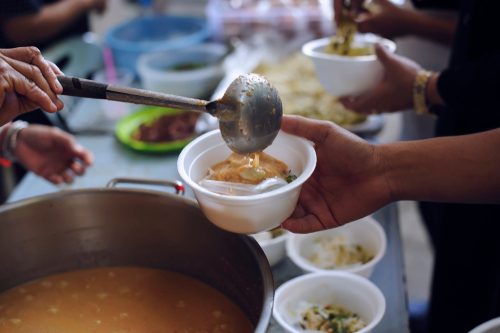
The humanitarian crisis that has unfolded in the aftermath of the conflict, with hundreds of thousands of people displaced and reports of human rights abuses, underscores the urgent need for a more proactive and assertive Western stance to prevent such tragedies in the future and ensure accountability for those responsible.
The West must reevaluate its engagement with Azerbaijan, prioritizing human rights, peace, and stability over short-term economic interests. As for now, next year, Nagorno-Karabakh will no longer be in existence, and we have taken little if no, action to avert this outcome.