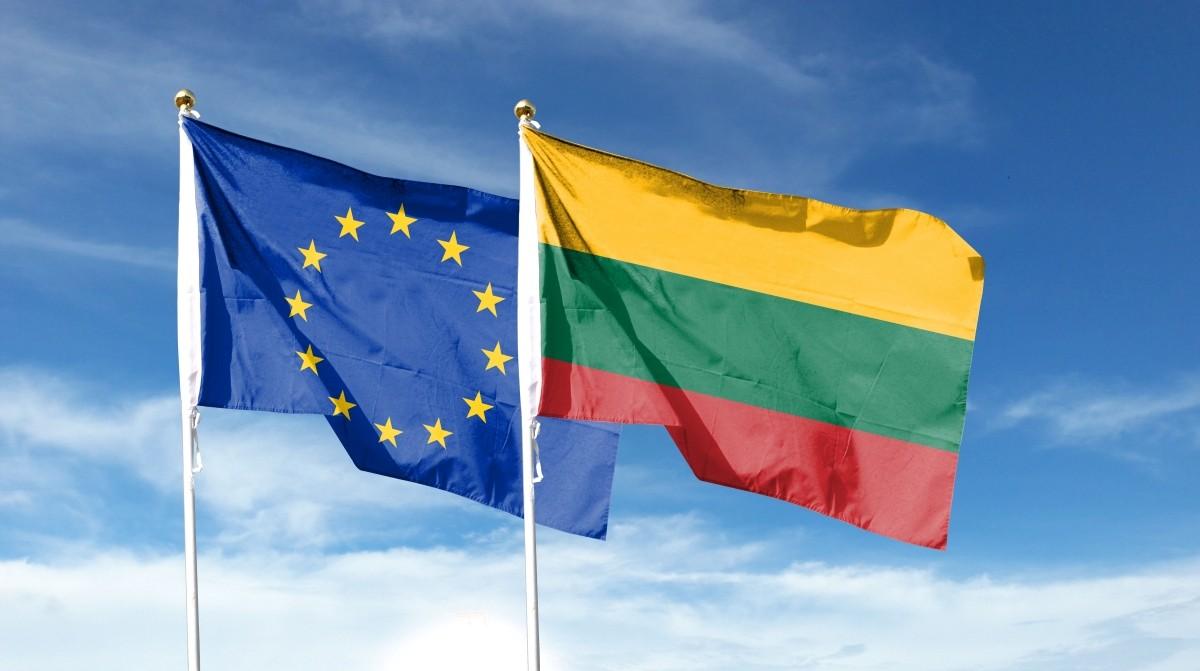
Lithuania is set to take over the EU’s rotating presidency.
Ireland is the current holder of the presidency but this will end on 31 December.
Lithuania’s term at the helm of the EU will put the small Baltic state at the forefront of a range of topical issues, ranging from wars, an energy crisis and the fight against climate change.
The EU still has to decide on its next long-term budget. EU leaders met in Brussels on Thursday to discuss this.
Lithuania will hold the presidency until the end of June and can expect to be confronted with demands from all sides and this includes turning Europe’s competitiveness ambitions into concrete improvements.
On Friday, BusinessEurope’s Council of Presidents convened in Vilnius, hosted by its member federation, the Lithuanian Confederation of Industrialists (LPK).
Ahead of Lithuania’s Presidency of the Council of the EU, business leaders met with Prime Minister Mindaugas Sinkevičius and Minister of Economy and Innovation Edvinas Grikšas to outline their priorities for the six-month term.
They also exchanged views with Andrius Kubilius, EU Commissioner for Defence and Space.
Speaking after the event, BusinessEurope President Maciej Witucki said: “Having a strong economy is essential to supporting Ukraine and achieving Europe’s security, environmental and social goals.
“However, the future of European industry is hanging in the balance, and the response still lacks the urgency needed to deliver real change. The EU must take decisive action to strengthen competitiveness, facilitate investment, scale innovation and tackle unfair competition.
“Reducing the regulatory burden on companies is the most cost-effective way to support European companies. EU institutions must live up to their promises to stop adding new burdens and accelerate the simplification of EU legislation. We call on the upcoming Lithuanian Presidency to drive forward the proposals in BusinessEurope’s Omnibook – only 7% of which have been addressed so far.
The Lithuanian Presidency will also have a key role to play in advancing the next EU budget, the MFF, which is being discussed by the European Council today. The MFF must strengthen Europe’s competitiveness, leverage private investment, and concentrate resources where European action can deliver the greatest added value.
“Cutting competitiveness funding and introducing new company taxes would undermine these objectives.”
Further comment came from Vidmantas Janulevičius, Vice-President of BusinessEurope and President of the Lithuanian Confederation of Industrialists (LPK), who said, “Europe’s competitiveness is built in its companies, factories, laboratories and industrial communities.”
“When a company decides where to build its next production line, it needs confidence that it can rely on affordable and predictable energy, access to financing, a skilled workforce and a truly functioning Single Market. We count on the Lithuanian Presidency to work with Member States to turn Europe’s competitiveness ambitions into concrete improvements in the business environment that will give companies the confidence to invest, innovate and grow in Europe.
Janulevičius says competitiveness is not only about economic performance.
“It is also the foundation of Europe’s resilience, strategic autonomy and security. The industrial capacity that powers our economy also enables us to protect our citizens, support Ukraine and strengthen our defence capabilities.”
As governments increase defence spending, public investment and procurement must help European companies scale up production, develop critical technologies and create high-quality jobs, argues Janulevičius.
“Europe’s resilience depends on the strength of all its regions. Investment in its industrial base, energy and transport infrastructure, connectivity and innovation is a strategic investment for the whole Union. Stronger and more competitive eastern regions mean a more resilient and more secure European Union.”