Learning “lessons from history” can help preserve peace and stability in a trouble world.
That was the keynote message to emerge from a high-level conference on spiritual heritage and education.
Opening the event, President of Uzbekistan Shavkat Mirziyoyev did not reference any particular current conflict but declared:
“In the current extremely difficult time, when confrontations and conflicts are intensifying in different regions of the world, the most urgent task for all of us remains the preservation of peace and stability.”
Speaking in Tashkent, he called on the international community
“not only to admire the past, but also to learn from it for the future.”
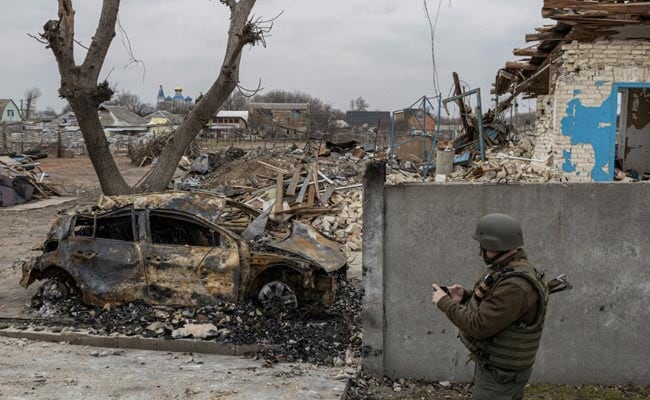
His demand has added significance given the conflicts in such places as Ukraine, the Middle East and Sudan.
He told the packed audience,
“We must learn from history, approach any matter based on knowledge and enlightenment, strengthen harmony between different peoples and expand inter-civilizational dialogue.”
Scholars and historians who were among those participating in the 3-day international congress echoed the president’s call to
“defend traditional values”
amid
“growing conflicts and contradictions.”
Entitled “Central Asia: A Common Spiritual and Educational Heritage – A Common Future”, the event brought together more than 300 participants – representatives of international organizations, the diplomatic corps, scientific and cultural institutions, as well as researchers and scientists from across Central Asia and Azerbaijan. Also present were ministers of culture, heads of national film studios, academies of arts, writers’ unions and youth organizations.
It was especially symbolic because it was held in the new Centre of Islamic Civilization, located on historic territory in the heart of Tashkent, which is due to open to the public in March.It is said to “embody” the 3,000-year history of the region,the Islamic Renaissance and the modern development of New Uzbekistan. The centre will serve as a platform for studying civilizational heritage, educating young people and strengthening international cultural dialogue.
President Mirziyoyev set the general tone for the event, saying that
“the peoples of Central Asia and Azerbaijan are connected by strong centuries-old ties of friendship and brotherhood, they are united by a common history and culture, rich spiritual and scientific heritage.“
“Since ancient times,” he added,
“the greatest thinkers and scientists have lived and worked on our land, who illuminated the world with the light of knowledge and enlightenment and made a worthy contribution to the development of world civilization.”
The congress was organized by the Centre for Islamic Civilization of Uzbekistan, the Ministry of Foreign Affairs and the Academy of Sciences. Participants discussed the historical significance of the spiritual heritage, the mutual influence of the regional cultures, history of the region and modern interregional relations.
Particular attention was paid to the contribution of countries to the preservation, study and popularization of common cultural heritage, as well as the implementation of international initiatives aimed at the development of science, education and intercultural dialogue.
The event’s organiser told this website the aim was to “understand the role of the spiritual and scientific heritage of the people of Central Asia as the basis for their unity, interaction and sustainable development.”
An important event leading up to the congress was the arrival of what is regarded as one of the greatest and most sacred manuscripts of Islamic history, the Mushaf Uthman, which was transcribed during the time of Caliph Uthman (R.A.). It was transferred from the Muyi Muborak Madrasah Museum, within the Hazrati Imam complex in Tashkent, to the new centre.
Within the region there is now a noticeable rise in education and science, the congress was told, with new formats of cooperation between researchers being formed. Academic exchanges and scientific initiatives to preserve cultural heritage and developing modern scientific thought are progressing, it was said.
Significantly, more than 10 memorandums of cooperation were signed between scientific and cultural institutions of the participating countries to conduct joint research, academic exchange and implement joint projects to study and popularize the spiritual and cultural heritage of the region.
In a joint declaration, participants called on states, academic institutions, international organizations and cultural actors to “join efforts to protect common values, strengthen mutual understanding and create a space where knowledge and education will become the basis for peace, trust and sustainable development.”
Those taking part also agreed to prepare a draft special resolution of the UN General Assembly on the recognition of
“the contribution of the Islamic civilization of Central Asia to the development of world education, science and culture.”
They also supported the new Kelajak Merosi International Award, established by President Mirziyoyev to recognize the merits of individuals and organizations that have made a significant contribution to the study of the scientific and spiritual heritage of the peoples of Central Asia and Azerbaijan.
Further comment came from the centre’s director, Firdavs Abdukhalikov, who said Central Asia is
“not just a region, but a space of great ideas and creation, where the traditions of science, culture and enlightenment have been formed over the centuries.”
“Here, at the crossroads of the cultures of Central Asia and Azerbaijan,”
he added,
“a special spiritual tradition based on the single harmony of enlightenment and faith was born hundreds of centuries ago.”
He said the centre had become a
“symbol of respect for our common heritage, a space where the past, present and future of enlightenment meet.”
He added,
“We gathered here not just as representatives of different countries, but as like-minded people, united by common spiritual roots and a desire for mutual understanding.”
The centre, he went on, is
“ready to actively work together with respected partners – to exchange experience, support joint research, educational and museum initiatives, implement cultural projects that reveal the rich heritage of the region in the name of studying, preserving and popularizing the cultural heritage of our countries.”
“Only by combining efforts, we will be able to turn our common past into the basis of a common future.”