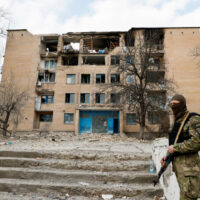
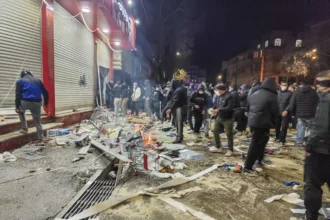
War-related developments accelerated across multiple regions over the past 24–48 hours, with civilians again bearing much of the cost. In Ukraine, a major Russian drone-and-missile barrage struck power infrastructure during freezing winter conditions, triggering emergency outages and damaging homes and public services. In the Israeli-occupied West Bank, a reported settler attack on a Palestinian family home led to arrests and renewed scrutiny of rising violence. In Southeast Asia, Thailand and Cambodia moved toward renewed ceasefire discussions after border clashes, as regional and outside powers pressed both sides to step back from escalation.
This report summarizes the latest war news that has been confirmed by major news organizations, and it explains why these developments matter beyond the immediate headlines.
Ukraine: Large Drone-and-Missile Attack Hits Power Grid
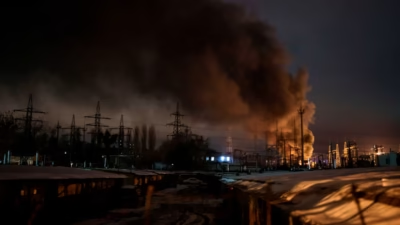
Ukraine’s air defense forces reported intercepting a significant share of incoming threats, but impacts were still recorded across multiple locations and regions. A major point emphasized by Ukrainian officials is the pressure on the electricity network and high-voltage transmission links that keep regions connected. When those lines and substations are damaged, the effects can cascade quickly—forcing emergency outages not only where damage occurs, but also across connected areas to stabilize the system.
According to reporting published Tuesday, Russia launched one of its largest combined attacks in recent weeks, using hundreds of drones and dozens of missiles in an overnight assault that ran into daylight hours. At least three people were reported killed, including a child, with injuries reported across multiple areas. Ukrainian officials said a core objective of the attack was the energy sector, with strikes affecting electricity distribution and day-to-day civilian life.
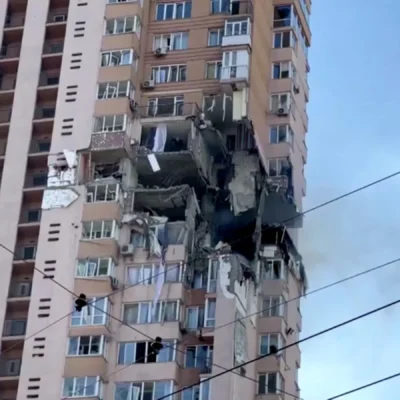
Why winter strikes on energy matter
Energy attacks during winter are not only tactical. They are also strategic and psychological. Even temporary blackouts can disrupt:
- Heating systems and water pumps
- Hospitals and emergency services
- Mobile networks and internet connectivity
- Transit systems and road safety
- Food storage and logistics
In practice, every large attack forces Ukraine into a costly cycle of repairs, grid rebalancing, and emergency backups. The pattern also puts strain on repair crews who must work while the security situation remains uncertain.
Southern ports and the logistics pressure
Separate reporting from earlier in the week described attacks affecting Ukraine’s Odesa region, including port and energy sites, and noted power disruptions impacting large numbers of customers. Ports and coastal infrastructure matter not only for trade but also for fuel and humanitarian supply routes.
Reuters
The diplomatic layer, still unresolved
The latest strikes are also unfolding while diplomatic contacts continue. Public positions from both sides remain far apart, and reporting has emphasized that while talks and intermediaries may be active, the battlefield pressure is not easing. The result is an increasingly familiar dynamic: negotiation signals exist, but major attacks continue in parallel—sometimes intensifying around politically significant moments and holidays.
West Bank: Reported Settler Attack and Arrests Intensify Tensions
In the Israeli-occupied West Bank, an incident reported Tuesday described Israeli settlers forcibly entering a Palestinian home in the town of As Samu’ (near Hebron). Palestinian officials said the attack involved property damage and harm to animals, and that children were affected and required medical attention. Israeli police said five settlers were arrested.
The Washington Post
Why this matters right now
West Bank violence tends to surge during periods of broader regional tension. When a violent incident occurs inside a community—especially at a family home—its impact can be wider than the immediate injuries and arrests. It often becomes:
- A flashpoint for protests and counter-actions
- A driver of copycat incidents
- A catalyst for security crackdowns
- A trigger for international diplomatic statements
The West Bank is also politically sensitive because it sits at the intersection of security, settlement policy, Palestinian governance, and Israeli domestic politics. Each violent incident adds pressure to already strained systems: local policing, military presence, and the fragile everyday movement of civilians.
Competing accounts and the role of investigations
Reporting on West Bank incidents frequently includes disputed details—such as the type of chemical agent used or the sequence of events. That is why arrests and formal investigations matter. They can reduce rumor-driven escalation and establish accountability, but they can also inflame tensions if communities feel justice is uneven.
The broader trend line remains a key issue: multiple outlets have noted rising violence and a continuing climate of fear among Palestinian communities in certain areas.
The Washington Post
Thailand–Cambodia: Ceasefire Talks and Regional Pressure
In Southeast Asia, Thailand and Cambodia have been engaged in renewed hostilities tied to a long-running border dispute. A new development is the push toward talks scheduled for Dec. 24 under existing joint border mechanisms, with ASEAN urging “maximum restraint.”
Reuters reporting also described China’s role, with a Chinese envoy urging both sides to resume a ceasefire as soon as possible. The conflict has involved artillery and rocket exchanges along the shared border, according to Reuters’ account, and diplomatic efforts have expanded beyond ASEAN’s internal mechanisms as larger powers signal interest in preventing escalation.
Why this conflict can expand quickly
- Border clashes can become larger conflicts for a few reasons:
- National pride and domestic political pressure can harden positions
- Disputed maps and historical claims leave room for dueling narratives
- Local commanders may react rapidly to perceived violations
- Civilian displacement and casualties can trigger demands for retaliation
Even if leaders want a pause, the reality on the ground—troop deployments, civilian panic, misinformation—can make de-escalation difficult without clear enforcement steps and communication lines.
Why mediators matter here
Unlike some conflicts where mediation has little leverage, Southeast Asian diplomacy can be influential because:
- Trade and cross-border movement are economically important
- ASEAN’s unity is often treated as a regional priority
- Outside partners (including China) have relationships with both sides
That does not guarantee success, but it raises the odds that talks can at least reduce immediate violence.
The Bigger Picture: Why These Theaters Are Connected
These three conflict zones are not the same war, but they reflect a global pattern in the latest war news: escalating risks to civilians, repeated pressure on critical infrastructure, and fragile diplomatic tracks running alongside violence.
Several themes stand out:
1) Civilians are increasingly targeted by consequence, if not intention
Even when official narratives frame strikes as “infrastructure” or “security,” the effects land on people: homes damaged, children injured, cities without power, hospitals operating on backup systems.
2) Infrastructure is a battlefield
Ukraine’s energy system is a prime example, but similar patterns show up elsewhere: roads blocked, ports threatened, communications strained. When infrastructure becomes a target, recovery costs rise and daily life becomes unstable.
3) The ceasefire problem
Across regions, ceasefires are hard to reach and harder to keep. Announcements may happen, but enforcement is fragile when:
- mistrust is high
- factions operate independently
- verification is limited
- political incentives reward toughness over compromise
That is why “talks scheduled” is meaningful but not a resolution.
What to Watch Next (Next 24–72 Hours)
Based on the current trajectory of events reported today, here are the practical signposts readers should watch:
- Ukraine: whether emergency outages persist and whether additional large waves follow after repairs begin
- West Bank: whether charges follow arrests and whether further incidents occur in nearby communities
- Thailand–Cambodia: whether Dec. 24 talks produce a workable ceasefire statement and what monitoring framework (if any) is agreed
The latest war news underscores an unsettled global landscape as 2025 ends: Ukraine’s winter is again shaped by attacks on electricity and civilian life, the West Bank faces renewed violence with potentially broader consequences, and Southeast Asia’s border tensions are serious enough to pull in regional blocs and major-power diplomacy.