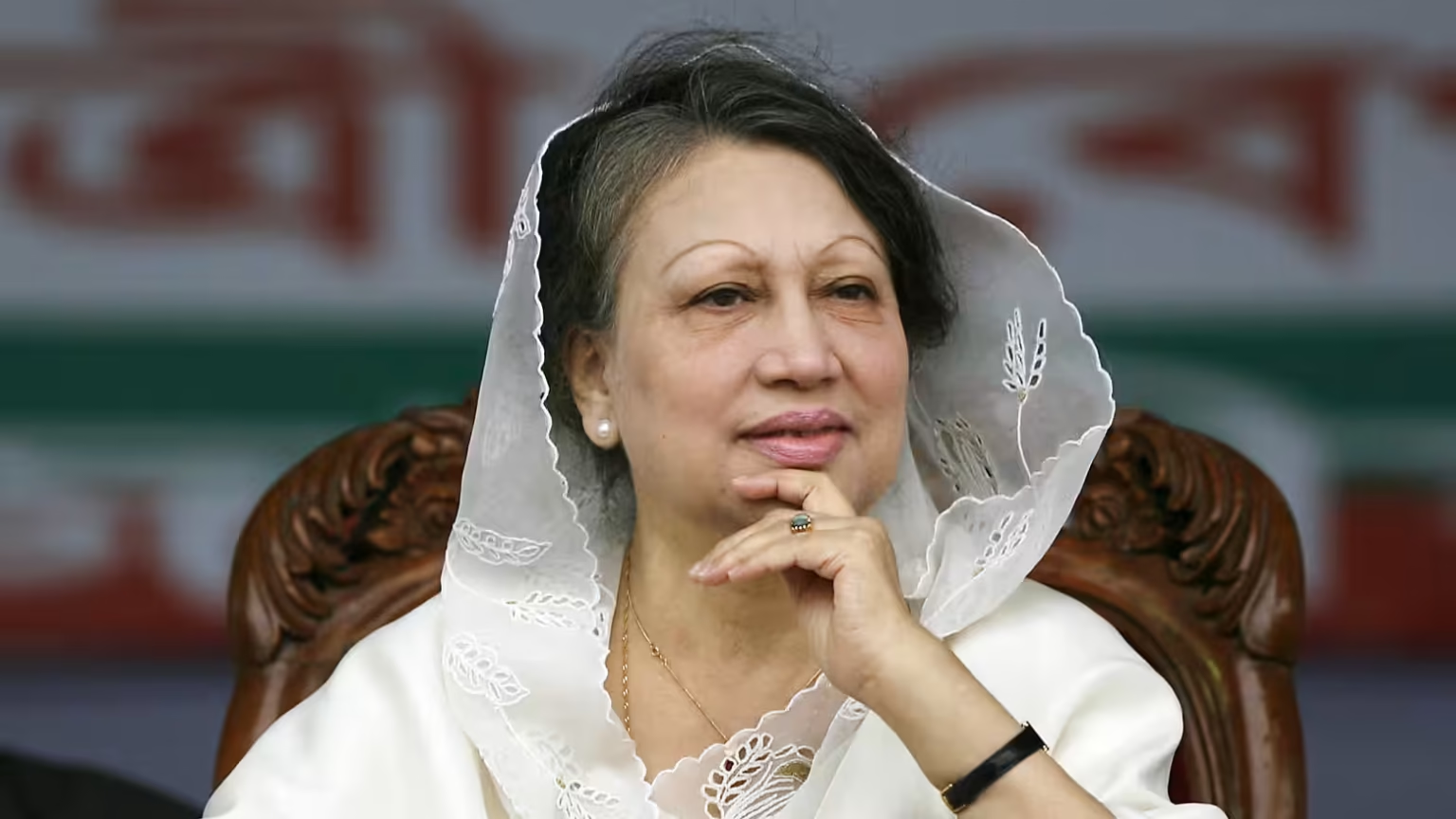
BrusselsMorning coverage reflected an extraordinary pause across Bangladesh as the country came together to witness the Khaleda Zia funeral, an event that transformed Dhaka into a city of remembrance and reflection. From the earliest hours before sunrise, roads leading into the capital filled with buses, private vehicles, and thousands of people traveling on foot. Many had journeyed overnight from distant districts, determined to be present for a moment they believed would define a chapter of national history.
Shops closed across key neighborhoods, public offices reduced activity, and broadcasters suspended normal schedules. The atmosphere was not one of political display but of quiet respect. Citizens stood shoulder to shoulder in silence, some holding flowers, others clasping prayer beads, as the city slowed to a solemn rhythm rarely seen in everyday life.
A leader central to modern Bangladesh
Khaleda Zia was one of the most influential figures in Bangladesh’s political history following years of military rule. Serving multiple terms as prime minister, she stood at the center of national power struggles, democratic transitions, and ideological divides that shaped public life for decades.
As the Khaleda Zia funeral unfolded, Bangladeshis reflected on her long and complex legacy. To supporters, she symbolized resistance, political resilience, and a commitment to civilian leadership. To critics, her era was marked by polarization and institutional tension. Yet across the spectrum, there was broad recognition that her influence was undeniable and deeply woven into the country’s political fabric.
Crowds that redefined the capital
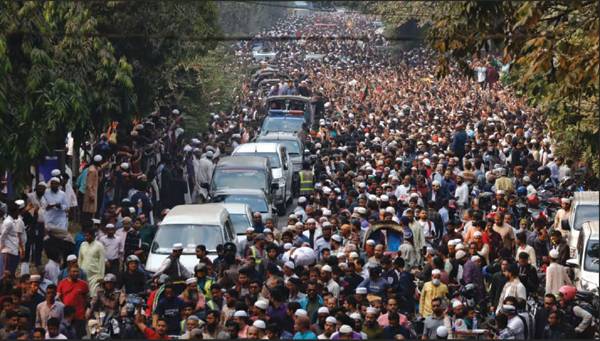
Few events in recent memory have drawn such sustained public participation. As the Khaleda Zia funeral procession moved through central Dhaka, streets became rivers of people stretching far beyond visible boundaries. Elderly citizens leaned on family members, while younger attendees climbed rooftops, balconies, and overpasses in hopes of seeing the cortege pass.
Many attendees described a sense of duty rather than political motivation. Some recalled voting in the elections that defined her leadership years. Others said they came simply because they believed history was unfolding before them. The shared presence of so many generations underscored the breadth of her impact.
State honors and national ceremony
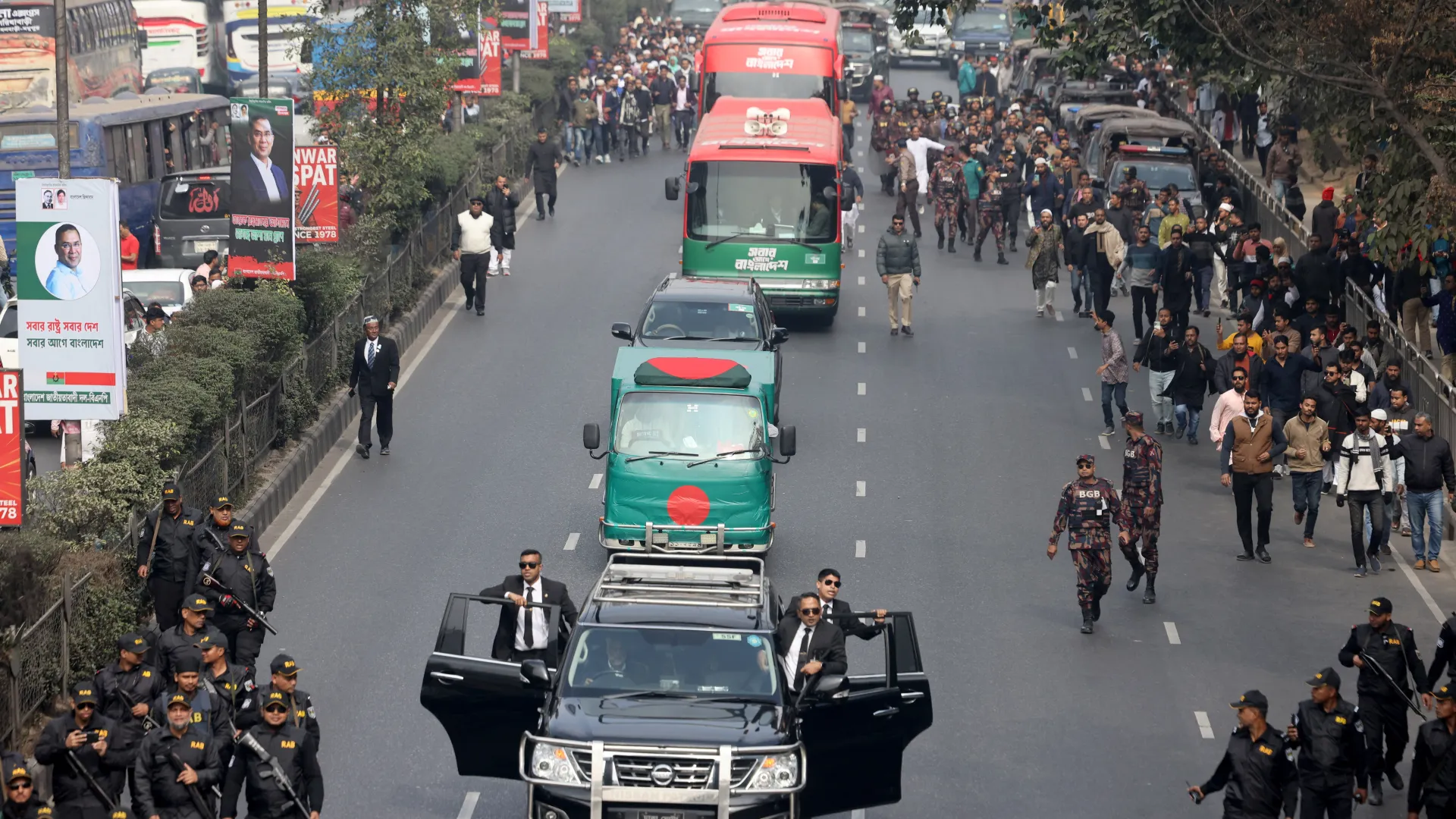
The government accorded full state honors in recognition of her role as a former head of government. The Khaleda Zia funeral followed strict ceremonial protocol, including a guard of honor, official wreath laying, and a formal gun salute.
Religious rites were conducted in accordance with national tradition, blending faith with civic ritual. These moments reinforced the seriousness of the occasion and reflected how state funerals in Bangladesh often function as moments of national reflection rather than partisan alignment.
Security and logistical challenges
Coordinating an event of this scale required extraordinary planning. Thousands of police officers, emergency responders, medical teams, and volunteers were deployed across Dhaka. Temporary medical stations treated dehydration, exhaustion, and minor injuries among attendees during the Khaleda Zia funeral.
Despite the immense crowd density, the event remained largely peaceful. Officials credited disciplined planning, coordinated traffic control, and public cooperation. Observers noted that the solemn mood contributed significantly to maintaining calm, even in tightly packed areas.
Nationwide participation beyond Dhaka
While Dhaka was the focal point, the impact extended far beyond the capital. Prayer services and memorial gatherings were held in cities, towns, and rural communities across Bangladesh. In many areas, mosques and community centers opened specifically to coincide with the Khaleda Zia funeral, allowing citizens unable to travel to take part in remembrance.
Television and radio coverage ensured nationwide access. Families gathered in living rooms and tea stalls, following the ceremony together. For many, participation took the form of silence and prayer rather than physical attendance, reinforcing the truly national scope of the moment.
International media attention
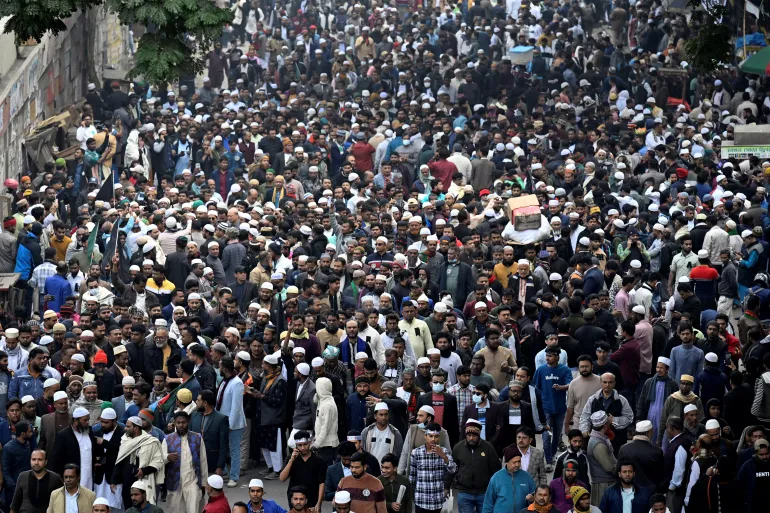
Global media closely followed developments throughout the day. Images from the Khaleda Zia funeral appeared on international news networks, showing dense crowds, expansive processions, and a capital city transformed by collective mourning.
Foreign analysts described the event as a reminder of Bangladesh’s political depth and civic engagement, emphasizing how national mourning can temporarily soften political divisions and reshape global perceptions.
Personal stories from the crowds
Within the vast gathering were countless individual stories. Some mourners spoke of attending with parents who remembered earlier decades of political struggle. Others described coming with children to witness history firsthand.
The Khaleda Zia funeral became a space where strangers shared water, offered shade, and helped those struggling through the heat. These small acts of solidarity illustrated how moments of shared loss can strengthen social bonds, even briefly.
Political reflection and short term impact
Observers believe the funeral may influence political tone in the weeks ahead. Senior figures from across the political spectrum attended, creating rare images of shared presence. The Khaleda Zia funeral thus functioned as a pause in Bangladesh’s otherwise confrontational political environment.
While long standing divisions remain, analysts suggest such moments can encourage restraint and reflection, particularly among senior leadership, even if lasting change remains uncertain.
Symbolism beyond politics
Beyond immediate political implications, the day carried deeper symbolic meaning. The passing of a leader so closely associated with Bangladesh’s democratic evolution reminded citizens of the country’s turbulent journey since independence.
The collective response to the Khaleda Zia funeral highlighted how national identity is shaped not only by policy and governance but by shared experiences of memory, respect, and historical awareness.
A moment for the historical record
Historians are likely to view this event as a landmark civic moment. Images of unified silence, densely packed streets, and ceremonial honor will endure in public memory and academic discussion.
For future generations, the Khaleda Zia funeral may serve as a case study in how leadership continues to influence national consciousness long after political power has passed.
As evening fell and crowds slowly dispersed, Bangladesh entered a period of quiet reflection. The Khaleda Zia funeral was not merely a farewell to a former prime minister but a collective acknowledgment of history, complexity, and shared national experience.
Her legacy will continue to be debated, analyzed, and taught. Yet the day itself will likely be remembered for unity rather than division, standing as a reminder that moments of loss can momentarily bring even deeply divided societies together.