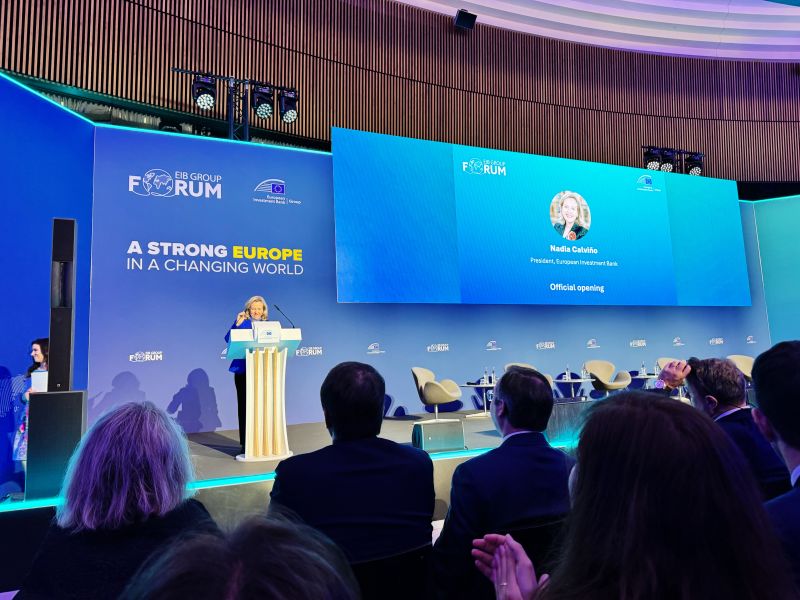
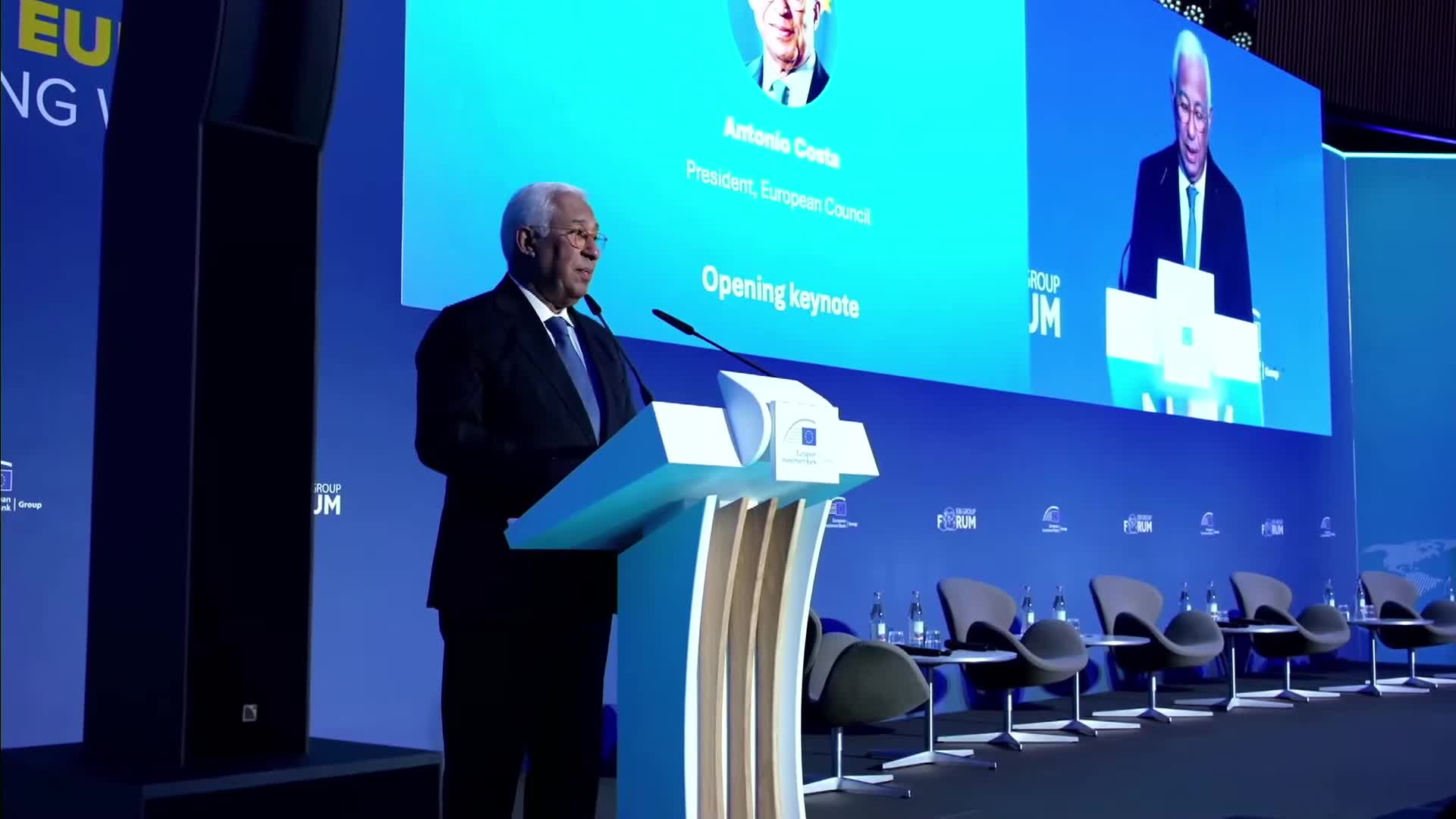
LUXEMBOURG, March 4, 2026 — Keynote Speech by President António Costa delivered at the EIB Group Forum 2026 placed Europe’s economic trajectory firmly in the spotlight. Brussels Morning Newspaper observes that the address, given before policymakers, investors, and institutional leaders, outlined a strategic roadmap for resilience, sustainable growth, and financial innovation. In a year defined by geopolitical uncertainty and structural transformation, the speech underscored Europe’s ambition to strengthen competitiveness while reinforcing unity among member states.
The annual forum of the European Investment Bank has evolved into one of the continent’s most influential economic gatherings. This year’s edition carried particular significance as leaders assessed global volatility, supply chain adjustments, and climate transition commitments.
Strategic Investment Priorities for a Transforming Europe
At the center of Keynote Speech by President António Costa was a call for long term strategic investment planning. He emphasized that Europe must move beyond reactive crisis management and adopt proactive frameworks that anticipate structural shifts in technology, energy, and trade.
Costa highlighted infrastructure modernization, renewable energy expansion, and digital connectivity as pillars of competitiveness. He argued that coordinated fiscal tools are essential to mobilize capital efficiently across borders.
Financial delegates noted that clarity of direction often stabilizes investor expectations. By outlining structured investment priorities, Costa aimed to reinforce confidence in Europe’s long term policy coherence.
Reinforcing the Role of the European Investment Bank
A core theme involved strengthening the European Investment Bank as a driver of sustainable development. Keynote Speech by President António Costa described the institution as a cornerstone of financial stability capable of bridging public objectives and private capital.
He pointed to expanded lending for small and medium enterprises, innovation funds, and cross border infrastructure as mechanisms for accelerating economic momentum.
Policy analysts attending the forum interpreted the remarks as a signal that Europe intends to maintain fiscal discipline while scaling targeted support for strategic sectors.
Climate Action and Green Finance Leadership
Climate transition remains a defining challenge for the European Union. In his address, Costa reaffirmed the continent’s commitment to carbon neutrality while maintaining industrial competitiveness.
He emphasized that climate aligned investment must serve as an engine for job creation and technological leadership. Renewable energy grids, electric mobility infrastructure, and sustainable housing projects featured prominently in his remarks.
Delegates discussed the continued expansion of green bonds and climate risk integration into financial assessments. The emphasis on environmental sustainability reflects Europe’s broader policy alignment with international climate objectives.
Digital Transformation and Innovation
Technological advancement formed another central pillar of the forum. Keynote Speech by President António Costa stressed that digital sovereignty is crucial to strategic autonomy.
Investment in artificial intelligence, cybersecurity, and advanced manufacturing technologies was presented as vital for long term resilience.
Industry leaders underscored the importance of harmonized regulations and cross border collaboration to strengthen research ecosystems. Digital infrastructure development, Costa noted, should extend to rural and underserved communities to prevent widening disparities.
Economic Resilience Amid Global Volatility
The speech also addressed global instability and shifting trade dynamics. Europe faces a landscape shaped by geopolitical realignment and economic competition.
Costa called for diversified supply chains and enhanced cooperation among member states to prevent fragmentation.
Market analysts interpreted the message as a balancing act between openness and prudence. By emphasizing structural reform alongside fiscal stability, Europe aims to maintain credibility in global markets.
Social Cohesion and Workforce Preparedness
Economic growth, Costa argued, must translate into tangible benefits for citizens. Workforce retraining and education reform were highlighted as essential tools for adapting to automation and digitalization.
Investment strategies must generate inclusive growth, reducing regional disparities and strengthening social mobility.
Forum participants discussed programs designed to reskill workers displaced by technological shifts, ensuring that innovation does not outpace human capital development.
Market Reaction and Investor Sentiment
Financial markets responded positively to the structured tone of the Keynote Speech by President António Costa, with analysts noting moderate gains in European equities following the forum.
Clarity regarding fiscal priorities and long term infrastructure projects outlined during the address helped reduce uncertainty, as investors typically seek predictable policy frameworks during periods of volatility.
The emphasis on transparency and disciplined capital allocation in the Keynote Speech by President António Costa contributed to cautious optimism among financial stakeholders and institutional investors.
International Partnerships and Strategic Autonomy
Europe’s global relationships also featured prominently. Costa emphasized balanced partnerships that preserve autonomy while fostering cooperation.
Transatlantic ties and engagement with emerging economies were presented as complementary rather than contradictory objectives.
The forum highlighted the importance of multilateral institutions in maintaining financial stability. Delegates stressed that strategic autonomy does not imply isolation but rather resilience within open systems.
Historical Evolution of Europe’s Investment Framework
European investment policy has undergone significant transformation since the global financial crisis. Coordinated recovery programs and pandemic response funds reshaped fiscal governance.
Keynote Speech by President António Costa reflects a new phase in this evolution, shifting from crisis recovery toward structural modernization.
Historical precedent demonstrates that sustained investment discipline underpins long term competitiveness. The expansion of the EIB’s mandate illustrates Europe’s commitment to institutional adaptability.
Understanding this trajectory provides context for current policy ambitions.
Policy Coordination and Institutional Stability
The forum underscored the importance of cohesion among EU institutions. Coordinated action between the European Commission, the Council, and financial bodies remains central to effective implementation.
Costa emphasized alignment between national and supranational objectives, noting that fragmentation risks undermining growth.
Delegates praised the emphasis on accountability and measurable outcomes for funded projects.
Voices from the Forum Floor
Participants offered perspectives reflecting cautious optimism. One senior economic advisor remarked, “This strategy combines fiscal responsibility with forward looking ambition.”
The comment captured the broader sentiment among attendees.
Costa himself noted during the address that Europe must
“build resilience today to secure prosperity tomorrow.”
The line resonated widely within the conference hall.
These remarks underscore the emphasis on preparedness and unity.
Outlook for 2026 and Beyond
As 2026 unfolds, Europe faces both opportunity and challenge. Implementation of proposed initiatives will determine whether momentum translates into measurable outcomes.
Observers expect further policy announcements in the coming months to operationalize the forum’s priorities.
Keynote Speech by President António Costa may serve as a benchmark for evaluating Europe’s economic strategy during this pivotal year.
Long term competitiveness, climate responsibility, and digital innovation remain intertwined objectives shaping the continent’s trajectory.