
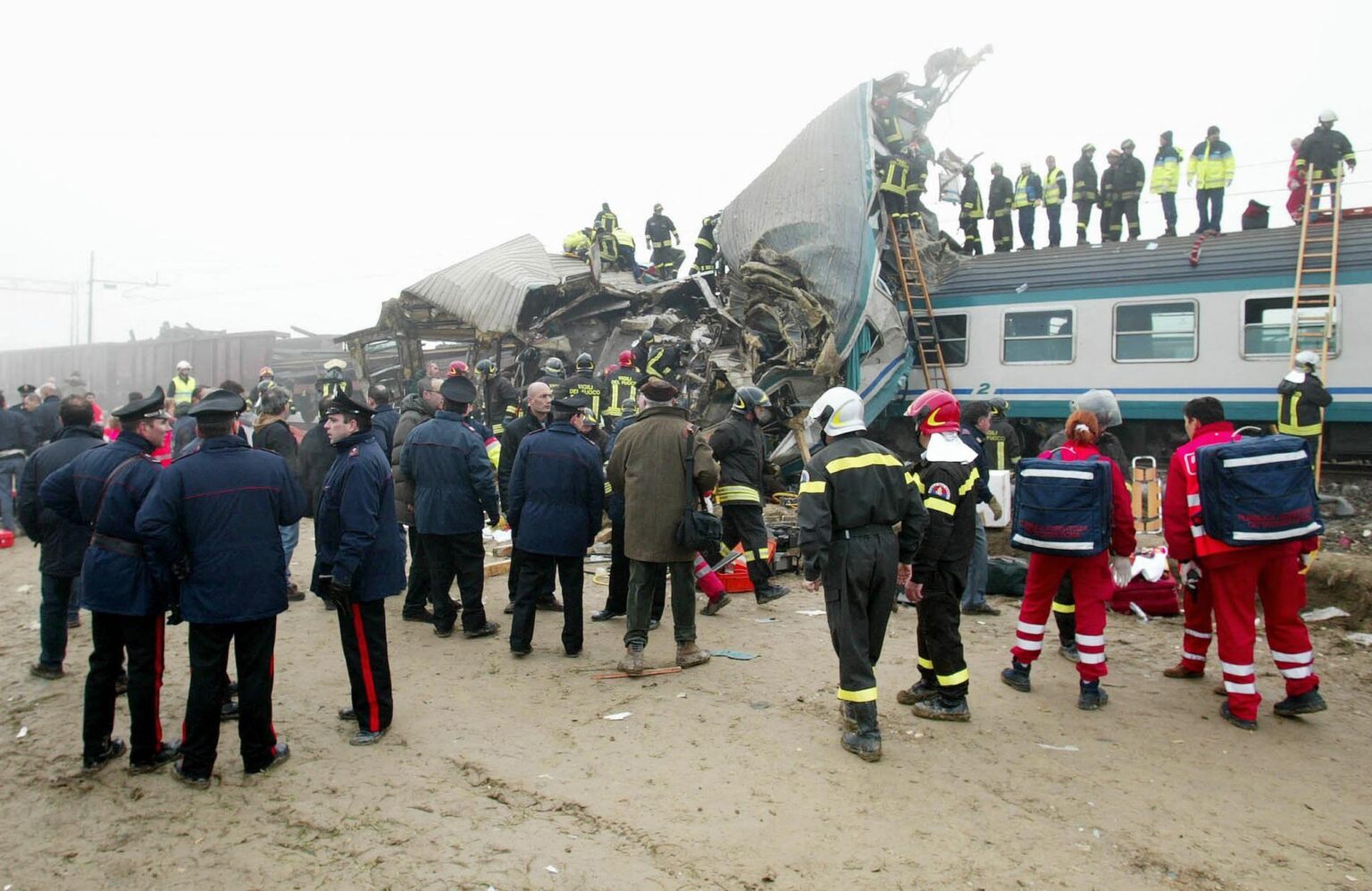
Bologna, Italy, February 7, 2026 — Brussels Morning Newspaper highlights heightened security concerns after suspected sabotage was detected on a critical section of the Italian rail network, prompting a large-scale police investigation and temporary disruption to train services in and around Bologna. Authorities confirmed that the incident occurred along one of the country’s busiest transport corridors, a hub that connects northern and southern Italy.
Rail operators identified damage during scheduled safety inspections, triggering immediate alerts to law enforcement and transport authorities. Passenger services were halted briefly as technicians assessed potential risks to public safety.
Police Secure Site and Launch Criminal Inquiry
Law enforcement agencies quickly sealed off the affected area while forensic teams began examining the scene. Investigators are working to determine whether the damage was deliberate and, if so, how it was carried out. Early findings suggest targeted interference rather than accidental failure, intensifying scrutiny of the Italian rail network and its vulnerability to external threats.
Surveillance footage from nearby infrastructure is being reviewed, and investigators are interviewing rail staff who were on duty prior to the discovery. Officials have not disclosed the exact nature of the damage, citing the sensitivity of the investigation.

Bologna’s Central Role in National Rail Operations
Bologna occupies a unique position within Italy’s transport system, serving as a crossroads for high-speed, regional, and freight services. Any disruption involving the Italian rail network in this area can quickly cascade across multiple regions, affecting travel schedules nationwide.
Rail analysts note that even short service suspensions near Bologna can disrupt thousands of passenger journeys and delay freight shipments moving between Italy and neighboring European countries.
Emergency Protocols Activated by Rail Operators
Following the discovery, rail operators activated emergency safety protocols. Trains were rerouted or delayed while engineers conducted comprehensive inspections of tracks, signaling systems, and power infrastructure connected to the Italian rail network.
Services resumed gradually after authorities confirmed that the affected section was secure. Despite this, residual delays persisted throughout the day as operators worked to restore normal timetables.
Increased Security Measures at Stations and Trackside
In response to the suspected sabotage, national police ordered heightened security across major stations and sensitive trackside locations. Officials acknowledged that the incident exposed potential weak points along the Italian rail network, particularly in open-access areas beyond station perimeters.
Additional patrols were deployed, and coordination between transport authorities and security agencies was strengthened to prevent further incidents.
Political Attention Focuses on Infrastructure Protection
The incident has drawn attention from government officials and lawmakers, who emphasized the importance of safeguarding essential infrastructure. Transport policy experts warned that attacks or interference involving the Italian rail network could have far-reaching economic and social consequences.
“This episode shows how critical it is to protect transport systems that millions rely on every day,”
said a senior transport security specialist.
Passenger Disruption and Public Reaction
Commuters experienced cancellations and delays during the security response, particularly on regional routes passing through Bologna. While no injuries were reported, the disruption underscored how dependent daily life is on the Italian rail network.
Rail operators issued public advisories throughout the day, urging passengers to check schedules and allowing flexible ticket changes to ease the impact.
Freight Transport Also Affected
Beyond passenger travel, the temporary disruption affected freight services moving goods across Italy and into other parts of Europe. Logistics experts note that the Italian rail network plays a vital role in supply chains, especially for industrial and agricultural products.
Even short interruptions can create bottlenecks, increasing costs for businesses and delaying deliveries.
Investigators Examine Possible Motives
Authorities are exploring several possible motives, including political extremism, vandalism, or attempts to disrupt public services. Investigators are also examining whether the incident targeting the Italian rail network is connected to similar cases elsewhere in Europe.
Police emphasized that no conclusions would be drawn until forensic examinations and intelligence assessments are complete.
Rail Infrastructure Resilience Under Review
The suspected sabotage has renewed debate about the resilience of Italy’s transport infrastructure. Experts argue that aging systems require ongoing modernization to better protect the Italian rail network from both deliberate attacks and technical failures.
Government officials confirmed that infrastructure investment and monitoring technologies are under active review following the incident.
Economic Stakes of Rail Security
Italy’s rail system is central to tourism, commerce, and cross-border trade. Any threat to the Italian rail network raises concerns about economic stability, particularly in regions heavily reliant on efficient transport links.
Business associations called for swift resolution of the investigation and reassurances that security measures are sufficient to protect long-term operations.
European Context and Cross-Border Implications
Transport security has become a growing concern across Europe as authorities grapple with protecting open and interconnected systems. The incident near Bologna has prompted discussions among European partners about shared vulnerabilities within rail networks.
Officials noted that disruptions involving the Italian rail network can have ripple effects beyond national borders, reinforcing the need for regional cooperation.
A History of Threats and Safeguards
Italy’s rail system has faced security challenges in the past, ranging from labor unrest to isolated acts of sabotage. Historically, authorities responded by enhancing surveillance and strengthening coordination between operators and police. Compared with earlier incidents, the suspected sabotage involving the Italian rail network near Bologna stands out due to its location and potential impact on national connectivity.
Analysts say historical lessons underscore the importance of proactive monitoring and rapid response to emerging threats.
Community Impact Beyond the Tracks
Local businesses near the affected rail lines reported reduced foot traffic during the disruption, while residents expressed concern about safety. Community leaders emphasized that confidence in the Italian rail network is essential not only for mobility but also for regional economic health.
Public information campaigns were launched to reassure passengers once services resumed.
Technology and Surveillance in Modern Rail Systems
Advances in monitoring technology have improved the ability to detect irregularities along rail lines. Authorities confirmed that sensors and routine inspections played a role in identifying the damage before more serious consequences occurred within the Italian rail network.
Experts argue that further investment in smart surveillance could help prevent similar incidents in the future.
Ongoing Investigation and Next Steps
Police confirmed that the investigation remains active, with additional findings expected in the coming weeks. Security measures will remain elevated as authorities work to determine responsibility for the incident involving the Italian rail network.
Officials reiterated that passenger safety remains the highest priority and that lessons learned from the case will inform future policy decisions.
A Test of Preparedness and Public Trust
The suspected sabotage near Bologna has become a test of preparedness for Italy’s transport authorities. Maintaining trust in the Italian rail network will depend on transparent communication, effective security upgrades, and swift justice if those responsible are identified.
“This system is the backbone of daily life and the economy,”
said a senior rail operations official.

Safeguarding a National Lifeline
As Italy moves forward, the incident serves as a reminder that protecting critical infrastructure requires constant vigilance. The response to the disruption near Bologna may shape how the Italian rail network is protected in the years ahead.
When Security and Mobility Intersect
The events surrounding the suspected sabotage highlight the delicate balance between open mobility and security. Ensuring the resilience of the Italian rail network will remain a central challenge as transport systems evolve and threats become more complex.