As world leaders arrive in New York for the United Nations General Assembly, Iran’s rulers are sending two chilling messages: they are erasing evidence of one of the country’s worst political massacres while sending more prisoners towards the gallows.
On Sept. 13, Iranian state television and the Fars News Agency broadcast footage showing walls being demolished at Gohardasht Prison in Karaj. The head of Iran’s prison system said the work had begun on the orders of the judiciary chief and would clear the way for residential and commercial development within a month.
But Gohardasht is not an ordinary piece of real estate. It was one of the principal sites of the 1988 massacre of political prisoners, when thousands were executed, many after proceedings lasting only minutes. The prison’s “death corridor”, the room where the so-called death commission sat, and the halls where prisoners were hanged form part of the physical record of those events. Survivors’ testimony and maps of the prison were later entered into evidence during the Swedish trial of former Iranian prison official Hamid Nouri.
Tehran describes the demolition as urban development. Destroying the scene of a mass atrocity, however, can obstruct future investigations. Javaid Rehman, the former UN special rapporteur on Iran, previously warned that Iranian authorities were systematically destroying mass graves connected to the 1988 killings, deepening the suffering of victims’ families and impeding efforts to establish truth and accountability.
The destruction forms part of a broader pattern. Burial sites linked to political executions have reportedly been damaged across Iran. According to the National Council of Resistance of Iran, heavy machinery also levelled a plot containing graves of dissidents executed in 1981 at Tehran’s Behesht-e Zahra cemetery in August 2025.
While evidence of past crimes disappears, Iran’s execution machinery remains active. The NCRI reported that authorities executed at least 22 prisoners on Sept. 2, 6, 9 and 13. Three additional executions were reported on Sept. 5, 8 and 14, bringing the reported total to at least 25 in less than two weeks.
The danger extends far beyond those cases. Iran Human Rights has warned that at least 100 people detained following the January protests face possible death sentences. Its documented cases cover only 13 of Iran’s 31 provinces. Five are women, and at least five were under 18 at the time of their alleged offences. Only five of the cases have been publicly acknowledged by official sources, suggesting that the actual number could be higher.
A new Amnesty International report marking the fourth anniversary of the “Woman, Life, Freedom” uprising helps explain why this cycle continues. Amnesty identified 87 Iranian officials for possible criminal investigation over their alleged roles in crimes against humanity during the 2022 crackdown. Many, it said, remain in positions of power, while some have been promoted.
The report, “Architects of Atrocity”, draws on 270 interviews as well as more than 2,000 videos, leaked records, court documents and forensic material. It documents allegations of killings, torture, enforced disappearances, rape and persecution, tracing the repression from senior security bodies to local authorities.
The demolition of Gohardasht, the execution of protesters and allegations of official impunity follow the same pattern: evidence disappears, accountability becomes more difficult and fear spreads. Families of the victims of the 1988 massacre risk losing physical evidence that could be important to future efforts to establish responsibility, while a new generation of Iranians faces the possibility that participation in protests can result in a death sentence.
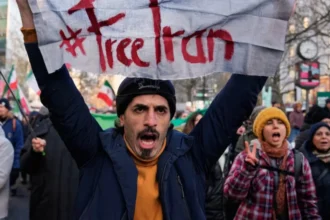
That is why Iranians and human rights advocates will gather outside UN headquarters on Sept. 22. The demonstration is both a memorial and an urgent warning about people whose lives may still be saved. In the city where global diplomacy converges every September, campaigners argue that Iran’s use of executions should not be pushed aside by negotiations over its nuclear programme and wider regional security concerns.
The United Nations and its member states should demand an immediate halt to executions and the preservation of Gohardasht and other sites that may contain evidence relevant to alleged crimes against humanity. They should also press for independent access to prisons, access to chosen legal counsel for prisoners facing execution, and criminal investigations into those alleged to have ordered or carried out repression.
If the international community waits until Gohardasht’s walls are gone and death sentences have been carried out, later statements will restore neither the destroyed evidence nor the prisoners’ lives.