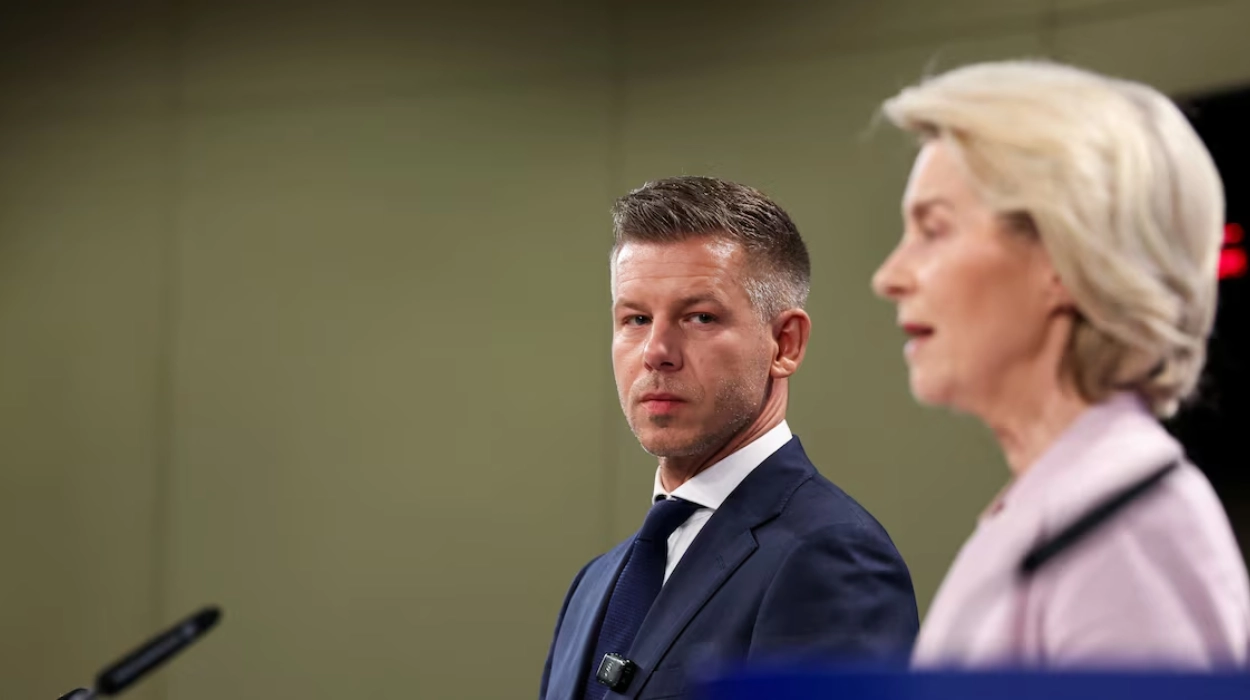
Brussels (Brussels Morning Newspaper) September 23, 2026 – The European Commission has officially proposed lifting protective measures on Hungary, paving the way to unblock €4.2 billion in cohesion funds. The decision follows an assessment confirming that Hungary has successfully addressed previous rule-of-law breaches. In addition to the financial allocation, the proposal aims to restore full access to major educational and research initiatives for Hungarian institutions.
European Commission Proposal and Financial Restorations
The European Commission announced its formal proposal to lift the protective measures that were originally imposed on Hungary in 2022 under the European Union’s Conditionality Regulation. The execution of this proposal will reinstate €4.2 billion in suspended cohesion policy commitments.
This financial adjustment forms part of a wider framework involving discussions regarding Hungary’s access to European Union financial resources. The block on funds was initially enacted to protect the European Union budget from potential breaches of rule-of-law principles, which included concerns over public procurement, anti-corruption mechanisms, conflicts of interest, and the overall effectiveness of prosecutorial actions.
Restoration of Academic and Research Programmes
Alongside the reinstatement of cohesion funding, the Commission’s proposal includes provisions to restore full participation in key Union initiatives. Specifically, access to the Erasmus+ student exchange programme and the Horizon Europe research programme will be reopened.
These academic benefits will extend to students and researchers affiliated with universities maintained by Hungarian Public Interest Trusts. Previous restrictions had prohibited the Commission from entering into new legal commitments with these specific trusts and entities under direct or indirect management programmes.
Statements from European Union Leadership
European Commission President Ursula von der Leyen addressed the development through an official statement. She noted that Hungary has taken important steps to strengthen the rule of law and safeguard the financial interests of the Union.
“I am glad that they will once again fully benefit from the opportunities our Union creates.”
President von der Leyen stated, adding that the progression demonstrates how structured reforms deliver concrete results.
Background of Reforms and Political Transition
The reassessment by the European Commission follows official notifications and remedial measures submitted by Hungary. The policy shifts occurred following the April 2026 parliamentary election, which brought Prime Minister Péter Magyar to office. Restoring access to suspended European Union funds had been established as a primary focus for the new administration.
According to the European Commission’s evaluation, Hungarian authorities successfully implemented corrective actions. These adjustments enhanced the operational capacity of the Integrity Authority, improved transparency guidelines regarding public spending, and established a comprehensive asset declaration framework. Furthermore, the reforms expanded judicial reviews concerning decisions made by investigative and prosecution bodies, while also reinforcing control structures associated with Union funding. Hungary’s accession to the European Public Prosecutor’s Office was similarly highlighted as an instrumental step in augmenting anti-corruption safeguards.
Next Steps in the Legislative Process
The proposal has now been transmitted to the Council of the European Union. The Council has a designated timeframe of one month to review and officially decide whether to adopt the Commission’s recommendation to lift the 2022 restrictions. Final approval requires a qualified majority vote among the member states, during which the existing financial and programmatic limitations remain active until a formal resolution is passed.