
The Centre for Feminist Foreign Policy (CFFP) has played a pioneering role in advancing the global movement to reimagine international relations through a feminist lens. Over its seven years of operation, CFFP’s contributions have been transformative, pushing feminist perspectives from the periphery into the core of foreign policy discussions worldwide.
- Elevating Feminist Perspectives in Global Politics
- Foundations and Milestones of the Centre for Feminist Foreign Policy
- Advocacy and Impact: From Concept to Concrete Change
- Shaping the Discourse: Publications and Thought Leadership
- Challenges and Courage in a Polarized Landscape
- Legacy and the Future of Feminist Foreign Policy
Elevating Feminist Perspectives in Global Politics
For decades, foreign policy was dominated by traditional power structures that often sidelined issues of gender, equality, and justice. Feminist foreign policy seeks to challenge these entrenched norms by centering the experiences and rights of women, LGBTQI* individuals, and marginalized communities in international decision-making.

The Centre for Feminist Foreign Policy emerged as the first organization entirely dedicated to promoting this paradigm shift, introducing innovative frameworks and amplifying voices historically excluded from diplomatic arenas.
The Centre’s mission was unapologetically ambitious: to embed feminism into the heart of international politics, disrupt systems perpetuating inequality, and chart new courses toward peace, security, and social justice. Its work spanned advocacy, research, policy advising, and coalition building, making it a cornerstone institution in the feminist foreign policy movement.
Foundations and Milestones of the Centre for Feminist Foreign Policy
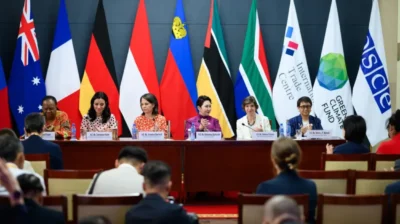
Founded in 2018 in Berlin, the CFFP began with little institutional support or funding, driven by visionaries determined to demonstrate that feminist principles are vital for addressing global challenges. Its launch attracted over 400 participants, signaling an early resonance with advocates and policymakers.
Key milestones include:
- Institutional Firsts: The CFFP was the inaugural entity wholly devoted to feminist foreign policy, carving out an academic and practical niche that did not previously exist.
- Groundbreaking Events: It hosted the first international summit on feminist foreign policy, facilitating critical dialogues among governments, activists, and scholars. The organization also secured a presence at influential forums such as the Munich Security Conference, organizing women-only dinners that convened heads of state, Nobel Laureates, and global advocates, fostering networking and policy collaboration.
- Publications and Scholarship: Co-founder Kristina Lunz authored the first book dedicated to feminist foreign policy, achieving bestseller status in Germany and gaining international readership in English. Moreover, the CFFP produced over 40 publications exploring peace, security, climate justice, and human rights, which have shaped discourse in diplomatic circles and academia.
- Inclusive Global Collaboration: The Centre worked with more than 100 activists from over 25 countries in the Global South to co-develop an intersectional feminist international cooperation policy, emphasizing the importance of diverse perspectives in policy formation.
Advocacy and Impact: From Concept to Concrete Change
The CFFP consistently advised governments on integrating feminist principles into their foreign policy frameworks. Countries including Germany and Mexico moved toward adopting feminist foreign policies, acknowledging the influence of advocacy from organizations like the CFFP. Its efforts have helped mainstream feminism within international relations, reshaping conversations on conflict, development, and diplomacy.
Project highlights demonstrate the Centre’s intersectional commitment and global reach:
- Women’s and LGBTQI Rights:* The CFFP supported initiatives in Uganda and Afghanistan aimed at enhancing the rights and security of women and LGBTQI* communities, often marginalized in conflict zones.
- Combatting Gendered Misinformation: It addressed emerging challenges such as gendered disinformation and cybercrime, recognizing their disproportionate effects on marginalized groups worldwide.
- Tackling Urgent Global Crises: The Centre was active on fronts including nuclear disarmament, justice for victims of nuclear testing, abortion access, femicide prevention, and countering the international backlash against women’s rights.
- Rapid Humanitarian Response: In 2021, following the Taliban’s return to power, the CFFP quickly mobilized with partners like HÁWAR.help, raising significant funds for Afghan women’s human rights groups while elevating their voices on international platforms.
Such initiatives illustrate how feminist foreign policy must be rooted in real-world contexts and aimed at systemic transformation.
Shaping the Discourse: Publications and Thought Leadership
The Centre’s extensive body of research has been instrumental in defining feminist foreign policy as both an academic discipline and a practical framework. Covering a wide array of topics peace and security, climate justice, anti-racism, human rights the CFFP’s work has continuously challenged prevailing narratives.
For example, its analyses highlight how traditional security approaches often neglect the gendered impacts of conflict and climate change, calling for policies that prioritize marginalized voices and holistic approaches to peacebuilding. These publications serve as essential resources for policymakers, scholars, and activists pushing for inclusive global governance.
Challenges and Courage in a Polarized Landscape
Operating at the forefront of a contentious paradigm shift has required courage, particularly as the global political climate grew increasingly polarized. Feminist foreign policy challenges powerful interests entrenched in patriarchal and militarized systems. The CFFP’s leadership navigated resistance and backlash while remaining steadfast in advocating for justice and equality.
The organization’s decision to close in June 2025 was not taken lightly. Its founders and team express pride in the movement they helped ignite and confidence in the continuity of feminist foreign policy through the efforts of a wide network of global partners and advocates.
Legacy and the Future of Feminist Foreign Policy
Though the Centre for Feminist Foreign Policy will cease operations, its legacy endures. The seeds planted over the past seven years have blossomed into a vibrant, global movement. Feminist foreign policy has moved from the margins into mainstream diplomatic and policy arenas, influencing governments, international organizations, and civil society worldwide.
The ongoing challenges facing global peace, security, human rights, and climate justice continue to demand feminist perspectives that address structural inequalities and amplify diverse voices. The foundational work of CFFP provides a roadmap for future efforts to embed feminism permanently within foreign policy strategies.
As Nina Bernarding and Kristina Lunz, CFFP co-founders, reflect: “The future of foreign policy is still and always feminist.” Their optimism underscores a belief that transformative change in global affairs requires centering feminist values of equity, inclusion, and justice.
Dear reader,
Opinions expressed in the op-ed section are solely those of the individual author and do not represent the official stance of our newspaper. We believe in providing a platform for a wide range of voices and perspectives, even those that may challenge or differ from our own. We remain committed to providing our readers with high-quality, fair, and balanced journalism. Thank you for your continued support.