
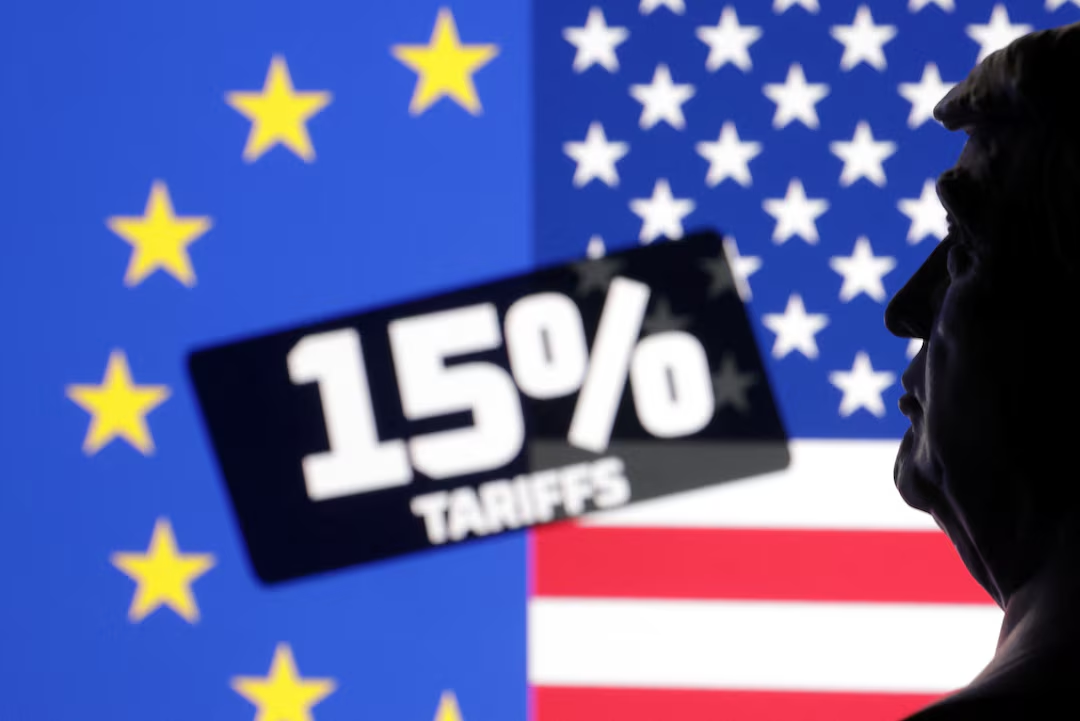
Brussels, Belgium, January, 2026: According to the Brussels Morning Newspaper, senior European officials assembled in the European Quarter near the Berlaymont headquarters as Greenland tariffs rose to the top of the European agenda. The date and location reflect how Brussels has once again become the focal point of decisions that could reshape relations between Europe, the United States, and the rapidly changing Arctic region.
From Trade Friction to Strategic Debate
What initially appeared to be a limited economic disagreement has evolved into a broader strategic debate within European institutions. Officials note that trade policy no longer operates in isolation, increasingly intersecting with security, technology, and long-term geopolitical planning. The dispute surrounding Greenland tariffs has accelerated internal discussions about Europe’s ability to protect its interests while remaining anchored to international rules.
At the heart of the debate is concern that trade tools are being used to influence strategic positioning in sensitive regions. European policymakers argue that this trend requires a more coordinated and confident response, especially when the implications extend far beyond customs revenues and into global power balances.
Washington’s Signals and European Concerns
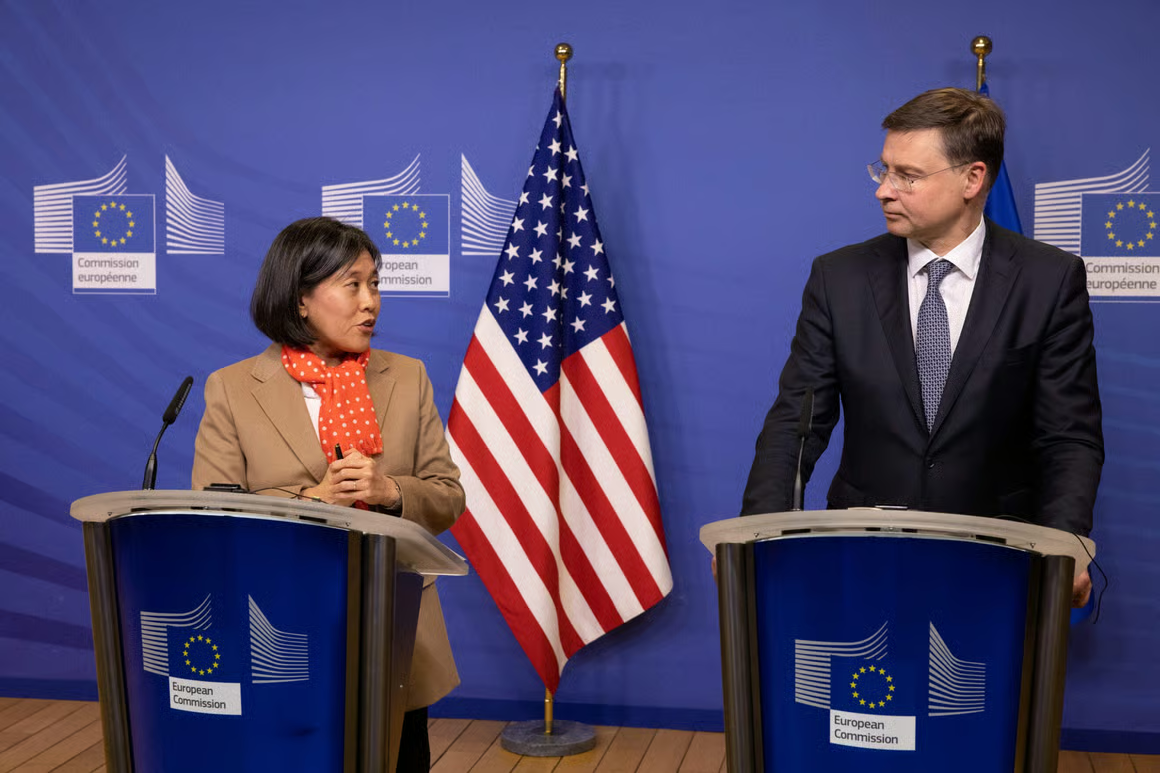
Public statements from Donald Trump earlier this year suggested a willingness to align economic pressure with strategic objectives. Although no immediate measures were enacted, the rhetoric alone was enough to unsettle European capitals. Diplomats privately acknowledged that even the suggestion of Greenland tariffs challenged assumptions about predictability in long-standing transatlantic partnerships.
For Brussels, the issue is less about a single policy move and more about the signal it sends. If trade measures become normalized tools of strategic leverage, European officials fear that similar tactics could emerge in other sensitive sectors, from technology to energy.
Greenland’s Rising Strategic Value
Greenland’s importance has expanded dramatically over the past decade. Climate change has opened new Arctic shipping routes, while the island’s mineral resources are increasingly vital for renewable energy systems, batteries, and advanced defense technologies. These developments have transformed Greenland from a remote territory into a central node in global strategic planning.
European analysts stress that measures such as Greenland tariffs cannot be treated as routine economic instruments. They directly affect access to resources and routes that will shape global supply chains for decades, making the current debate about far more than trade balances.
Europe’s Institutional Capacity and Unity
The European Union has invested heavily in strengthening its collective response mechanisms. Trade defense instruments, coordination frameworks, and crisis-response procedures have all been refined since earlier transatlantic disputes. Officials argue that Europe is now better positioned to act with unity rather than fragmented national approaches.
The present situation has become a test case for that institutional evolution. How effectively Europe navigates the challenge will influence perceptions of its credibility as a global economic actor capable of defending shared interests.
Trade Defense Tools Under Discussion
Among the options under review is the Anti Coercion Instrument, designed to deter economic pressure used for political purposes. Supporters describe it as a necessary safeguard in an era of heightened competition, while critics caution that its use could escalate tensions if applied too quickly.
Still, many policymakers argue that simply having credible tools available strengthens Europe’s negotiating position. In discussions surrounding Greenland tariffs, the existence of such instruments has already altered the tone of internal deliberations, shifting the focus from vulnerability to preparedness.
Multilateral Law and Global Trade Norms
Europe continues to frame its approach around respect for international law and multilateral institutions, particularly the World Trade Organization. Legal experts note that formal dispute settlement processes offer legitimacy and help preserve a rules-based system, even if they require patience.
The challenge for policymakers is balancing adherence to these norms with the need for timely responses. As debates unfold, officials emphasize that multilateral-ism remains central to Europe’s identity, even as it adapts to a more contested global environment.
Economic Stakes for Industry and Markets
European industries are watching developments closely. Shipping companies see opportunity in Arctic routes, while manufacturers depend on stable access to critical minerals. Prolonged uncertainty linked to Greenland tariffs could delay investment decisions, disrupt planning, and weaken confidence across multiple sectors.
Financial markets have already shown sensitivity to policy signals from Brussels. Analysts note that clarity is essential, as uncertainty itself can weigh on growth and stability. For investors, the direction Europe chooses will shape expectations well beyond the immediate dispute.
Transatlantic Interdependence
Despite rising tensions, Europe and the United States remain deeply interconnected economically. Supply chains, investment flows, and consumer markets are tightly linked, meaning any escalation would have consequences on both sides of the Atlantic. Economists caution that while Europe must defend its interests, it must also consider the broader costs of prolonged confrontation.
This interdependence explains why many leaders continue to emphasize dialogue. One senior European diplomat said,
“Strength is most effective when it is paired with restraint,”
highlighting the careful balance sought as discussions continue around Greenland tariffs.
Internal Politics and Consensus Building
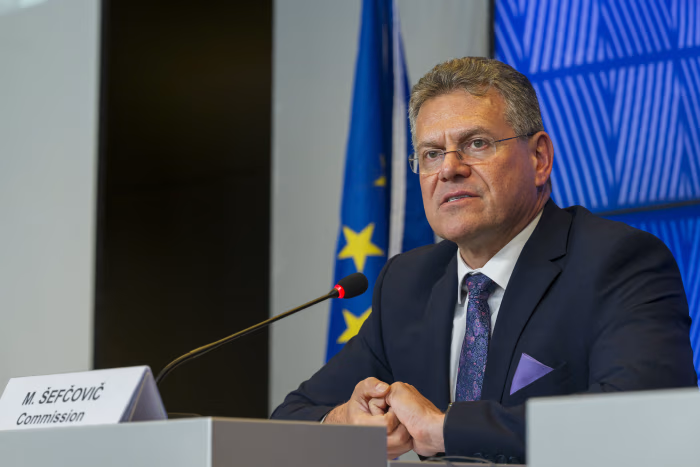
Reaching agreement among 27 member states remains a complex process. While some governments prioritize preserving close ties with Washington, others emphasize deterrence to prevent future pressure linked to Greenland tariffs. Recent council meetings point to a gradual convergence around the need for unity, even as differences persist over tactics.
Officials privately concede that a divided response would weaken Europe’s standing. As a result, the debate has become as much about maintaining internal cohesion as it is about shaping an effective external strategy.
Arctic Governance and Long-Term Vision
Beyond economics, the dispute intersects with Europe’s broader Arctic policy. The EU has positioned itself as a supporter of sustainable development, environmental protection, and indigenous rights in the region. Allowing trade measures like Greenland tariffs to shape access and influence could complicate these commitments, tying economic decisions to long-term governance challenges.
Policymakers argue that the Arctic should not become a theater of unchecked competition. Instead, they advocate cooperation, transparency, and respect for international norms as the region becomes more accessible.
Global Signals Beyond Europe
How Brussels responds will be closely watched by other global powers. A measured but firm stance could signal that Europe is prepared to defend its interests without abandoning cooperation. Conversely, hesitation might encourage similar pressure tactics elsewhere, reshaping expectations across the global trading system.
In this sense, the handling of Greenland tariffs carries implications far beyond Europe’s immediate neighborhood, influencing how economic power is exercised worldwide.
Europe at a Strategic Crossroads
As deliberations continue in Brussels, leaders recognize that the choices made now will resonate for years. Managing Greenland tariffs effectively offers Europe an opportunity to demonstrate unity, uphold international rules, and project confidence in an increasingly competitive world.
Europe’s Arctic Trade Moment
The debate unfolding in Belgium’s capital marks a defining chapter in Europe’s evolving trade and strategic posture. How leaders address Greenland tariffs, whether through dialogue, deterrence, or a careful balance of both, will shape not only transatlantic relations but also the future governance of a region whose global importance continues to grow.