
Doel (Brussels Morning Newspaper) – The Flemish Department of Mobility and Public Works plans to rebuild Doel near the Port of Antwerp into a vibrant, fossil-free village with 125 homes, 288 residents, completed by 2027.
As VRT News reported, the Flemish Department of Mobility and Public Works has released new images showing plans for the future of Doel, the nearly abandoned village near the Port of Antwerp, Belgium. After years of debate, the Flemish Government has confirmed that Doel will not be demolished but rebuilt as a “vibrant polder village.”
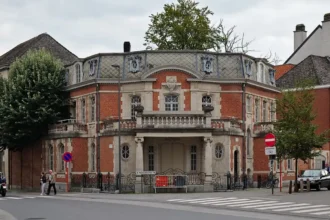
The project will focus on restoring the historic village centre. Old homes and heritage buildings will be repaired. A green village ring will be created around the centre, including walking paths, a monument garden, and open green areas.
What will the rebuilt Doel look like by 2027?
The renewed Doel will also connect directly to the Groot Saeftinghe Border Park, a cross-border nature area between Belgium and the Netherlands. The plan allows for around 125 houses within the historic village centre, which could eventually accommodate about 288 residents. New homes will be added gradually, with a few becoming available each year.
Officials mentioned that sustainability is at the core of the new development plan for Doel, guiding every step of its revival. A shared water purification system will be built using a reed bed, which naturally filters and cleans wastewater. This system will blend into the landscape and help protect the local ecosystem.
Houses and public buildings will run on heat pumps and solar panels. The plan also introduces car-free streets in the centre of the village. Residents will park their vehicles on the outskirts, while visitors will use a separate parking area.
The project will follow the idea of “slow urbanism.” Development will take place in stages. Space will be made for co-housing, workshops, local restaurants, and tourism projects that fit the village’s small scale.
A new management structure will coordinate work between government bodies, residents, and organisations to ensure cooperation and steady progress. The largest projects in Doel and the polders on the Left Bank of the Scheldt are planned for completion by 2027.
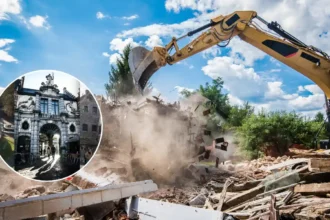
The village of Doel, on the Left Bank of the Scheldt near the Port of Antwerp, has faced uncertainty for more than 50 years. Plans to expand the port in the 1970s led to the gradual departure of residents and long legal battles over the village’s future.
By the early 2000s, most homes were empty, and Doel became known as a ghost village. Over the years, heritage groups and former residents continued to call for its protection. In 2022, the Flemish Government decided that Doel would not be demolished but rebuilt as part of a new regional plan for the Scheldt area.