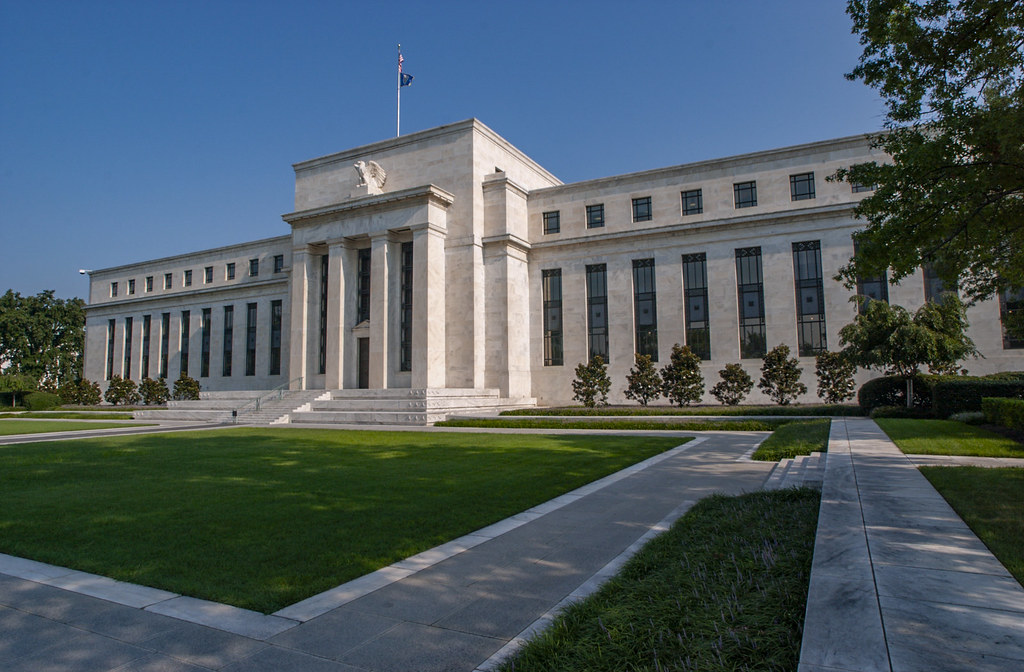
Washington, DC, 16 September (Brussels Morning Newspaper) – The Federal Reserve rate hike raised the US central bank’s benchmark interest rate by 25 basis points on Wednesday, taking the federal funds target range to 3.75%-4.00% as policymakers sought a more timely return of inflation towards the central bank’s 2% objective.
Fed Raises Interest Rate by 25 Basis Points
The Federal Open Market Committee unanimously approved the increase following its two-day meeting on 15-16 September.
The decision marked the Federal Reserve’s first interest-rate increase in more than three years and represented a shift towards tighter monetary policy as inflation remained above the central bank’s target.
The Fed said economic activity continued to expand at a solid pace. Job gains had broadly kept pace with growth in the labour force, while the unemployment rate had changed little.
Inflation, however, remained elevated, providing the central bank with the principal reason for raising borrowing costs.
Fed Projects Another Rate Increase in 2026
The Federal Reserve rate hike may be followed by additional monetary tightening before the end of the year.
According to the Fed’s latest economic projections, 16 of the 18 policymakers who submitted interest-rate forecasts expected at least one additional quarter-point increase during 2026.
The median projection placed the federal funds rate at 4.00%-4.25% at the end of the year.
Officials also raised their projection for 2026 inflation, measured by the Personal Consumption Expenditures price index, to 3.7%. Policymakers projected real gross domestic product growth of 2.3% and an unemployment rate of 4.1% at year-end.
Fed Seeks Faster Return to 2% Inflation
In its official statement, the Federal Reserve said:
“Today’s policy action will support a timelier return to the Committee’s 2 percent goal.”
The central bank also reaffirmed its commitment to delivering price stability.
Federal Reserve Chair Kevin Warsh, who took office in May, is overseeing monetary policy as officials assess how much additional tightening may be required to bring inflation under control without causing unnecessary weakness in employment and economic activity.
Persistent Inflation Changes Interest Rate Policy
The increase follows a period in which the Federal Reserve had maintained interest rates while assessing the direction of inflation and the broader US economy.
Persistent price pressures have complicated that outlook. Inflation remains above the Fed’s 2% objective despite previous monetary-policy measures intended to bring price growth under control.
The central bank’s latest projections indicate officials now expect inflation to take longer to return fully to target.
The decision also comes amid political attention surrounding US interest rates. President Donald Trump has publicly called for substantially lower borrowing costs, including saying before the September meeting that the United States should have the world’s lowest interest rate.
The Federal Reserve conducts monetary policy independently of the White House and Congress.
Higher Rates Increase Pressure on Borrowers
The Federal Reserve rate hike can affect households and businesses because changes in the federal funds rate influence borrowing conditions across the US financial system.
Higher policy rates can contribute to increased financing costs for businesses and higher rates on some consumer credit products. They can also increase returns available on certain savings products.
For policymakers, the objective is to restrain demand sufficiently to reduce inflation while limiting damage to employment and economic growth.
US stocks finished lower following Wednesday’s decision, while the dollar strengthened against major currencies.
Fed Will Review Inflation Before Next Decision
Federal Reserve officials will now assess new inflation, employment, consumer spending and economic growth data before determining whether another interest-rate increase is necessary.
The latest projections indicate that most policymakers currently expect additional tightening during 2026. Those projections, however, are not commitments to specific future rate decisions.
The timing and size of any further increase will depend on incoming economic data and whether inflation shows sufficient progress towards the Fed’s 2% objective.