Vilnius (Brussels Morning Newspaper) January 17, 2026 – Archbishop Gintaras Grušas of Vilnius has addressed a letter to Catholic bishops across Europe, renewing churches’ call for prayer and unity. The message links this appeal to the recent updating of the Charta Oecumenica, the ecumenical charter between Catholic and Orthodox churches. The initiative responds to ongoing wars and social divisions affecting the continent.
- Archbishop Grušas’ Letter Content
- Updated Charta Oecumenica Details
- Context of European Conflicts
- CCEE Role and Structure
- Historical Background of Charta Oecumenica
- Previous Ecumenical Prayer Initiatives
- Specific Commitments in Updated Charter
- Responses from European Bishops
- Geographical Scope of Appeal
- Links to Broader Vatican Efforts
- Ecumenical Milestones in Recent Years
- Organisational Framework for Prayer Events
- Comparison of Charta Editions
- Implementation Challenges Noted
- Future Ecumenical Calendar
- Contact and Official Resources
Archbishop Grušas, President of the Council of European Bishops’ Conferences (CCEE), sent the letter following the January 2026 revision of the Charta Oecumenica. The document, first adopted in 2003, outlines principles for dialogue between the Catholic Church and Orthodox Churches in Europe. The updated version emphasises joint prayer amid geopolitical tensions.
Archbishop Grušas’ Letter Content
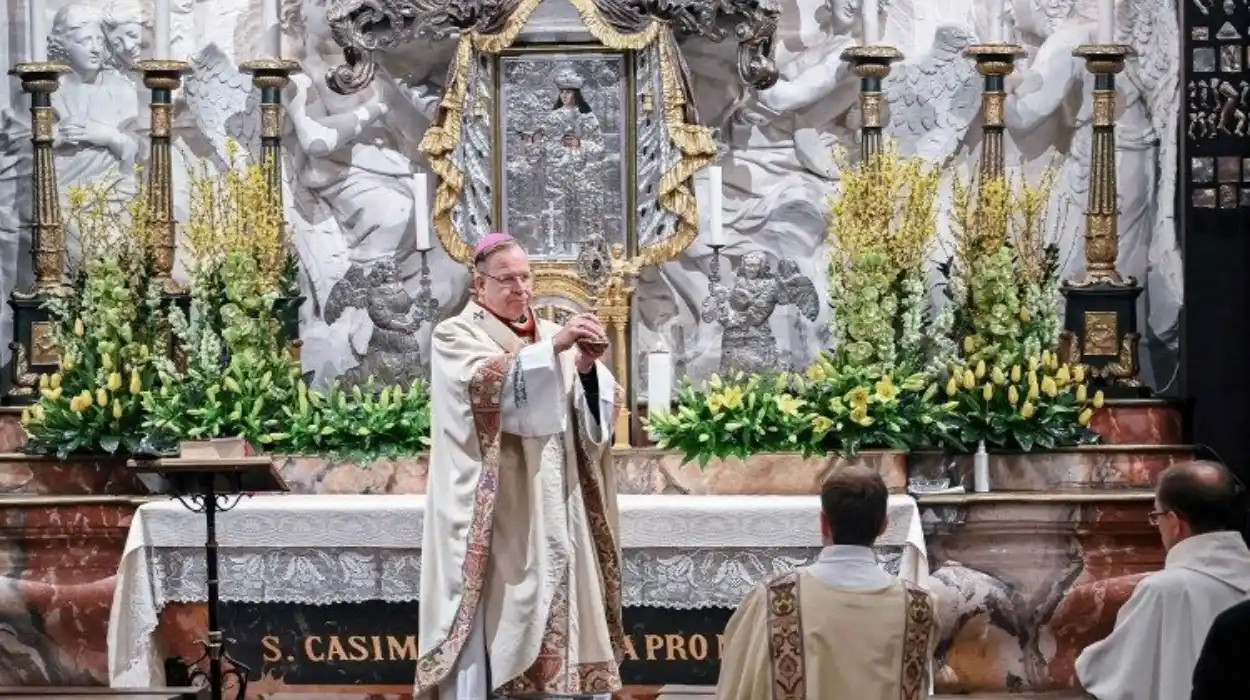
The letter calls on bishops to organise days of prayer for peace and reconciliation. It highlights conflicts in Ukraine, the Middle East, and internal European divisions over migration and values. Grušas urges ecumenical initiatives uniting Catholics and Orthodox in public worship events.
Recipients include all CCEE member bishops from 46 European countries. The message stresses spiritual solidarity as essential for Christian witness. Distribution occurred via official CCEE channels on January 15, 2026.
Updated Charta Oecumenica Details
The Charta Oecumenica revision occurred during a January 2026 meeting in Strasbourg. Catholic and Orthodox representatives from the CCEE and Conference of European Churches (CEC) approved changes. Key updates address digital evangelisation, climate stewardship, and responses to secularism.
Original 2003 text focused on basic dialogue steps like mutual visits and common declarations. The 2026 version adds 12 new commitments, including inter-church refugee aid coordination. Signatories reaffirmed the charter during a joint liturgy.
Context of European Conflicts
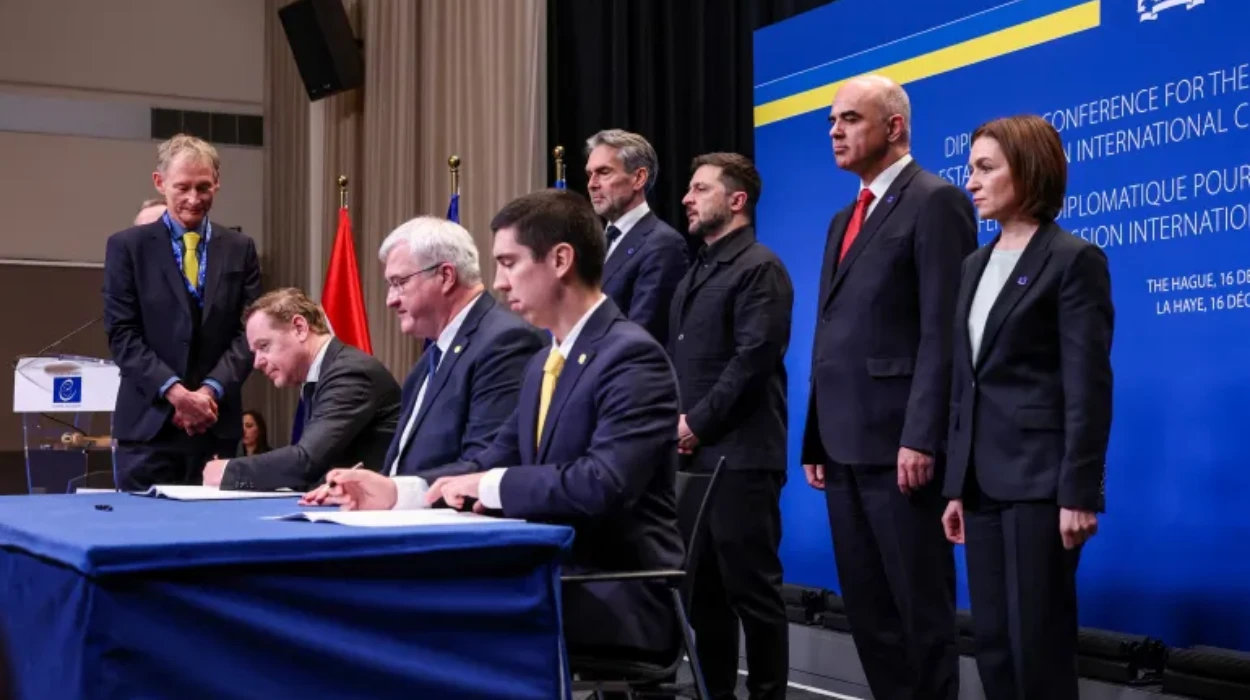
Archbishop Grušas references the Russia-Ukraine war, entering its fourth year in 2026. Ongoing hostilities displace millions across Europe. Middle East conflicts exacerbate migration pressures on EU borders.
Internal divisions involve debates over family policies and religious freedom. Secular legislation challenges church teachings in several nations. The letter frames prayer as antidote to polarisation.
CCEE Role and Structure
The Council of European Bishops’ Conferences coordinates Catholic episcopal efforts continent-wide. Grušas assumed presidency in 2023, succeeding Cardinal Angelo Bagnasco. Vilnius hosts the CCEE general secretariat.
Membership spans from Ireland to Russia, including Orthodox-majority states. Annual plenaries address pastoral priorities. The prayer call forms part of 2026 thematic focus on unity.
Historical Background of Charta Oecumenica
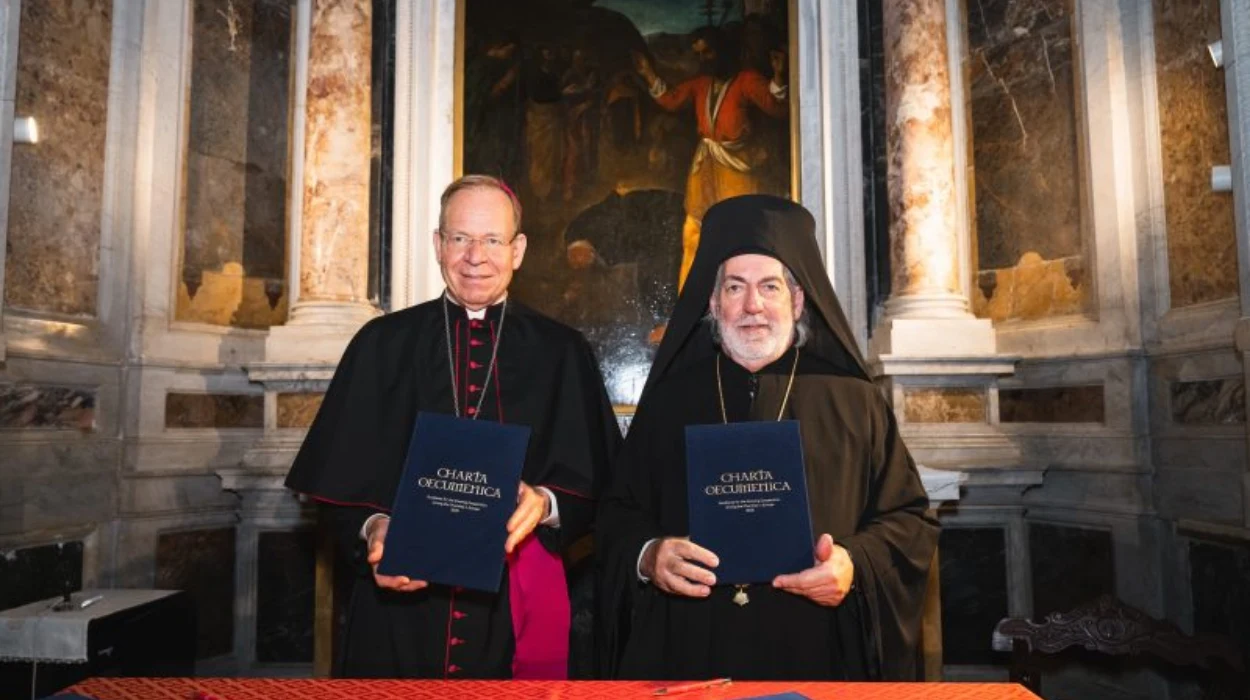
Adopted on 18 October 2003 in Strasbourg, the charter marked 40 years of Catholic-Orthodox dialogue. Second edition appeared in 2016 with minor clarifications. 2026 update responds to post-pandemic and war developments.
Signatories include the CCEE and all Orthodox autocephalous churches in Europe. Implementation occurs through national bilateral commissions. Progress reports appear in ecumenical journals.
Previous Ecumenical Prayer Initiatives
CCEE organised 2024 Day of Prayer for Ukraine in multiple capitals. Joint Catholic-Orthodox vespers held in Warsaw and Bucharest. 2025 European Churches’ Week focused on migration prayer vigils.
Orthodox Church of Greece hosted similar events in Athens. Vatican dicasteries endorsed cross-confessional efforts. Outcomes included shared aid convoys to conflict zones.
Specific Commitments in Updated Charter
New articles mandate annual youth ecumenical forums. Churches commit to joint statements on bioethics. Digital platforms host common catechesis resources.
Environmental section calls for collaborative Laudato Si’ implementation. Refugee protocols standardise shelter provision. Monitoring committee convenes biannually.
Responses from European Bishops
Polish bishops announced nationwide prayer chains starting January 20. German conference plans Orthodox-Catholic synod in March. French delegates welcomed migrant focus.
Italian bishops pledged media campaigns promoting charter. Romanian Orthodox primates reciprocated with parallel letter. Implementation varies by national context.
Geographical Scope of Appeal
Letter targets 250 bishops across 46 nations. Nordic countries emphasise secularism response. Balkan states prioritise Orthodox-Catholic reconciliation.
Baltic nations like Lithuania stress Russia border security prayers. Iberian peninsula focuses family unity themes. UK and Ireland address post-Brexit divisions.
Links to Broader Vatican Efforts
Pope Francis referenced ecumenism in 2025 Urbi et Orbi address. Dicastery for Promoting Christian Unity oversees Charta steps. Fratelli Tutti encyclical informs unity messaging.
Annual Week of Prayer for Christian Unity aligns with CCEE calendar. Joint declarations with Patriarch Bartholomew reinforce commitments.
Ecumenical Milestones in Recent Years
2023 Balamand Conference reviewed dialogue progress. 2024 Crete follow-up addressed Ukraine schism impacts. 2025 Ravenna II document clarified primacy issues.
Joint declarations mark feast days like Saints Cyril and Methodius. Liturgical exchanges include shared Easter celebrations in select dioceses.
Organisational Framework for Prayer Events
Bishops receive liturgical aids for unity masses. CCEE provides multilingual prayer texts. Local implementation falls under diocesan ecumenical offices.
Digital toolkit includes Zoom templates for virtual vigils. Evaluation forms track participation numbers. Reports consolidate for 2027 plenary.
Comparison of Charta Editions
| Edition | Year | Key Additions | Signatories | Pages |
| First | 2003 | Basic dialogue steps | CCEE, CEC Orthodox | 8 |
| Second | 2016 | Migration, family | Same + primates | 10 |
| Updated | 2026 | Digital, climate, war | Full Orthodox list | 15 |
Implementation Challenges Noted
Orthodox jurisdictional overlaps complicate local action. Language barriers affect Eastern Europe events. Funding shortages limit youth forums.
COVID restrictions previously halted in-person gatherings. Hybrid models now standardise participation.
Future Ecumenical Calendar
2026 hosts Pan-Orthodox-Catholic summit in Vienna. October ecumenical congress planned in Budapest. Annual prayer octave expands to 10 days.
CCEE vice-presidents coordinate regional clusters. Progress markers include joint ordinations recognitions.
Contact and Official Resources
CCEE website hosts letter download: ccee.eu. Charta text available in 12 languages. Vilnius archdiocese press office: +370 5 212 3890.