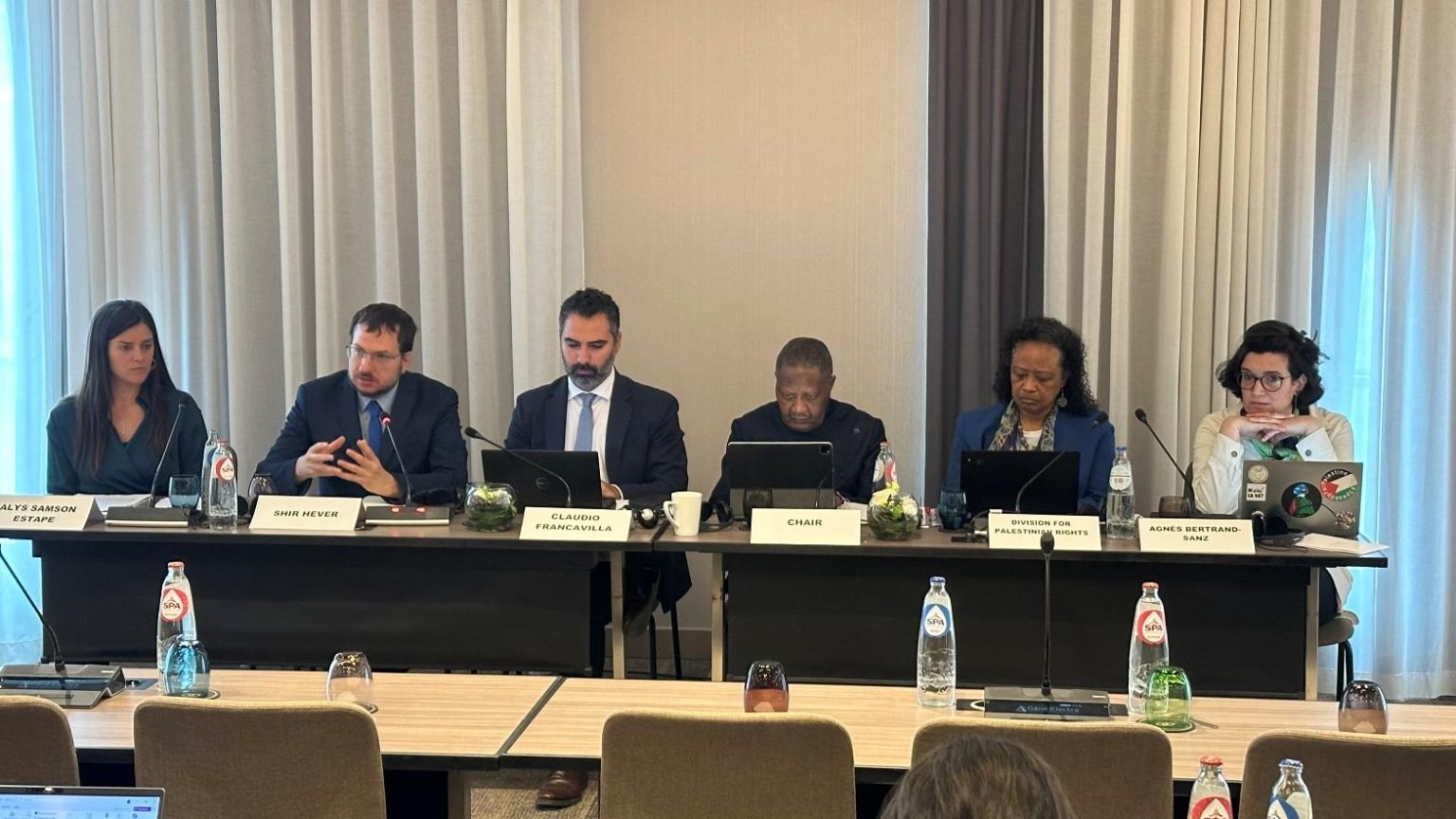
From Brussels to the United Nations, activists, diplomats, legal experts, and civil society leaders delivered a clear and urgent message: the time for statements without action is over. Calling for arms embargoes, sanctions, and legal accountability, speakers accused European governments and international institutions of enabling impunity through continued political, military, and economic ties with Israel, while urging stronger collective action to uphold international law and justice for Palestine.
During a conference organized by several international organizations in Brussels, researcher Shir Hever stated: “A few weeks ago, an Israeli commander described it as a ‘miracle’ that Palestinians are not responding more forcefully to the terror, killings, dispossession, and violence inflicted upon them in the West Bank. He openly admitted: ‘We are killing like never before since 1967.’”
He added: “Let us be clear: Palestinians are not ignoring these atrocities. Families who are being killed, displaced, and wounded cannot ignore them. What is truly alarming is that impunity has become so normalized that such violence can be spoken of openly and even celebrated.
This is not only a reflection of Israel’s actions; it is also a reflection on all of us and on the international community’s failure to exert meaningful pressure. Each and every one of us carries an individual responsibility not to remain silent in the face of atrocities and crimes against humanity. Silence is complicity. We have the responsibility to act.”
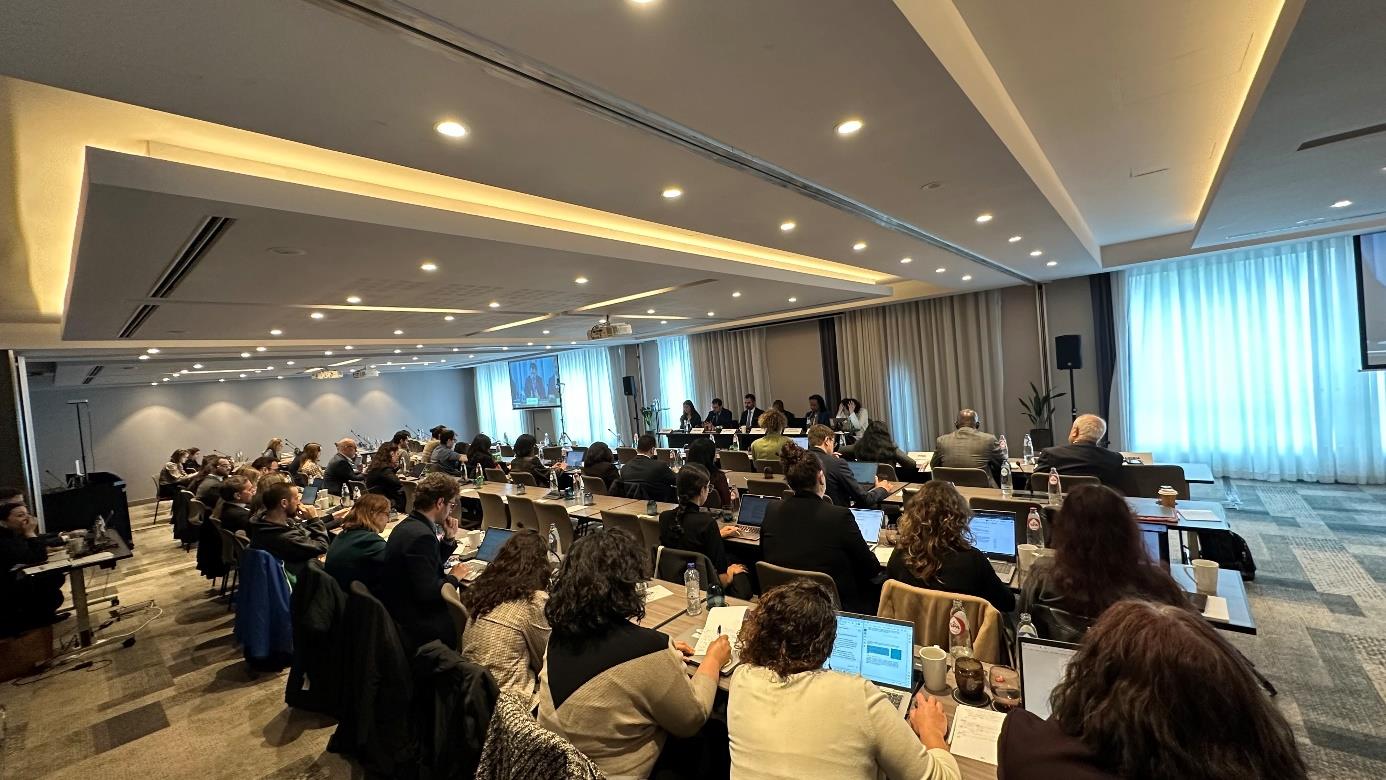
Hever stressed that responsibility must go beyond words and individual gestures. “Our responsibility is not only to avoid complicity through silence or inaction, but to take an active stand against atrocities, apartheid, and genocide. Yet meaningful action cannot remain individual; it must be collective, strategic, and organized.
Civil society exists to hold governments accountable when they fail to uphold their legal and moral obligations. Here in Brussels, we must say clearly: Belgium and the European Union cannot continue ignoring their responsibility while arms and military equipment pass through European ports toward Israel.”
Referring specifically to Belgium, Hever said: “The Belgian government has the authority to inspect ships passing through the Port of Antwerp, yet chooses not to ask questions because knowing the truth would require action. This culture of impunity allows atrocities to continue.”
He also emphasized the importance of coordinated pressure campaigns: “That is why collective pressure matters: unions refusing to handle arms shipments, universities cutting institutional ties with apartheid structures, churches, banks, and pension funds divesting from companies enabling war crimes. Individual gestures are not enough. What is needed is organized civil action powerful enough to force governments to impose sanctions and end complicity.
Silence is complicity. Neutrality in the face of genocide is not neutrality at all. We have the responsibility to act collectively, courageously, and without delay.”
Political advocacy and social movements activist Alys Samson also addressed the conference, delivering what she described as a message from Spanish civil society. “Today, I stand with a clear message from Spanish civil society: the time for statements without action is over. The world must impose sanctions on Israel and end all complicity with apartheid, occupation, and genocide against the Palestinian people.”
She noted that political shifts in Spain were achieved through years of grassroots organizing and public mobilization. “Spain has taken positions that many governments refused to take, but these steps were not acts of political generosity. They were achieved through decades of organizing, anti-fascist struggle, political education, and mass mobilization led by civil society and the Palestinian solidarity movement. People forced the government to move. But let us be clear: what Spain has done is still not enough.”
Samson criticized the contradiction between public condemnation and continued cooperation with Israel. “While the Spanish government condemns Israel’s atrocities, it continues to maintain military, economic, and diplomatic ties with Israel. This violates international law. States have a legal obligation not to assist genocide, apartheid, and war crimes. Condemnation without action is complicity.”
She also accused the European Union of continuing to shield Israel from accountability. “Europe also carries deep responsibility. The European Union continues to protect Israel politically and economically while refusing to suspend the EU-Israel Association Agreement, enforce full sanctions, or impose a complete arms embargo. Israel continues to enjoy trade, cultural platforms, and international normalization while Palestinians face destruction, displacement, and mass killing.”
Drawing comparisons with South Africa’s apartheid era, Samson declared: “Europe sanctioned apartheid South Africa. It must do the same with Israel. The demands are clear: an immediate arms embargo; no imports, exports, or transit of weapons; suspension of the EU-Israel Association Agreement; and economic, military, and diplomatic sanctions.”
She highlighted the growing role of collective action across Spain. “Trade unions, students, academics, artists, anti-racist movements, and Palestinian communities have mobilized to expose complicity, end institutional cooperation, and challenge the normalization of apartheid and colonial violence.”
According to Samson: “This struggle is larger than Palestine alone. It is connected to every struggle against racism, militarization, colonialism, fascism, and injustice. Genocide continues because systems of complicity allow it to continue. Neutrality is not an option. Silence is complicity.”
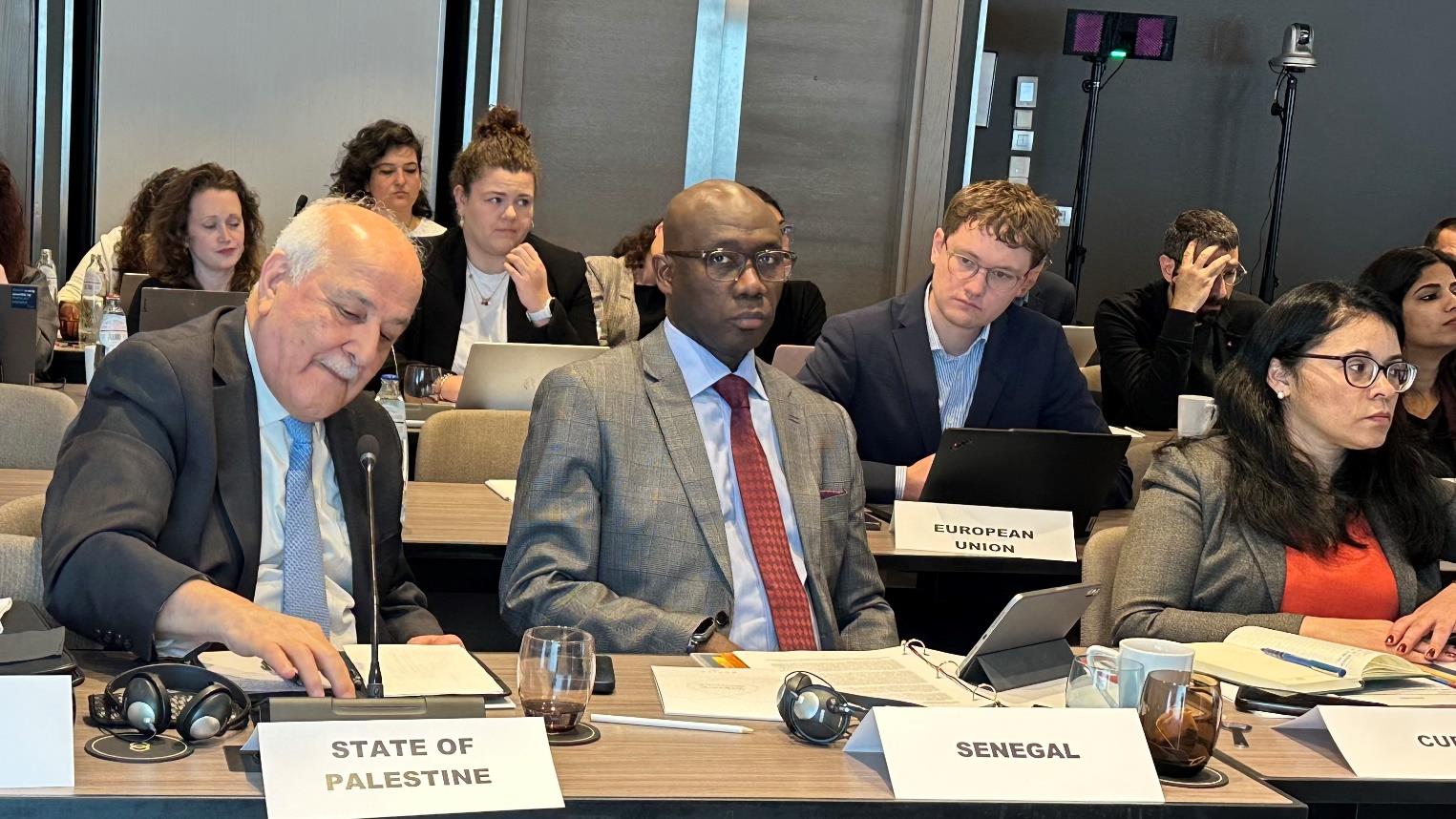
She concluded: “We will continue organizing, mobilizing, and building pressure until all complicity ends until there are no arms, no military cooperation, no normalization of apartheid, and until justice and freedom for Palestine are achieved, from the river to the sea.”
Riyad Mansour, the Palestinian Ambassador to the United Nations, who also participated in the Brussels conference, described the situation in the occupied Palestinian territories as systematic and state-driven.
“What we are witnessing in the occupied Palestinian territory is not isolated violence or the actions of a few extremists. The evidence is overwhelming that settler violence is state-led, state-protected, and politically encouraged. Ministers openly arm settlers, protect illegal outposts, and incite violence, while Israeli soldiers stand alongside settlers as Palestinians are attacked, displaced, humiliated, and terrorized.”
Mansour also raised concerns about reports of sexual violence. “We are also receiving horrifying reports of sexual violence being used as a weapon of intimidation and forced displacement. This is not random brutality; this is state responsibility.”
He further described what he called an apartheid legal system operating in the occupied territories. “Palestinians are prosecuted in military courts with conviction rates reaching nearly 100%, while investigations into crimes committed by settlers against Palestinians are almost nonexistent, with accountability rates reportedly as low as 3%. This is not justice. This is institutionalized discrimination and impunity.”
Despite mounting evidence, Mansour criticized governments for failing to act decisively. “Courts demand impossible standards of proof while people are being killed in real time. Belgium’s own judicial findings have already stated that measures regarding arms transit and exports came too late and were insufficient. This shows clearly why legal action, public pressure, and civil society mobilization remain essential.”
At the same time, he argued that global public opinion is beginning to shift. “Israel is spending hundreds of millions on propaganda campaigns across Europe and the United States because they understand something very important: global public opinion is shifting. People are no longer accepting the old narratives that justified occupation, apartheid, and collective punishment.”
He pointed to political developments in the United States and Europe as evidence of changing attitudes. “For the first time in history, members of the United States Congress voted against sending certain weapons to Israel. Across Europe, across universities, trade unions, parliaments, and civil society organizations, people are organizing, mobilizing, and refusing complicity. That matters.”
Mansour emphasized the importance of sustained public pressure. “Every action matters. Every legal case matters. Every protest, every campaign, every act of solidarity weakens the system of impunity and strengthens the struggle for justice. The Palestinian people have waited decades not only for recognition of their rights, but for the implementation of those rights.”
Another speaker stressed the need for stronger legal and political strategies. “The time for statements without action has passed. We must continue exposing propaganda with truth, confronting impunity with accountability, and answering injustice with collective action. We must stay the course until international law is applied equally, until complicity ends, and until the Palestinian people achieve freedom, dignity, justice, and self-determination.”
The speaker added: “We already have many tools available litigation against companies, legal action against states, public mobilization, and political pressure but we must use them more effectively and more courageously.”
The conference also heard calls for legal action against the European Union itself. “There is sufficient legal ground for EU Member States to bring the European Union before the Court of Justice for its failure to act, whether on suspending the EU-Israel Association Agreement or banning trade linked to settlements and occupation. This is not merely a matter of sanctions; it is a matter of compliance with international law.”
Claudio Francavilla, EU Advocacy Director at Human Rights Watch, also addressed the gathering. “We must raise the political cost of inaction. Governments must no longer be allowed to hide behind vague statements while avoiding responsibility. Accountability must become public and direct.”
Francavilla argued that European governments must no longer hide behind the institutional structure of the EU. “We must challenge the narrative that ‘the EU’ is somehow an abstract actor with no responsibility. Decisions are made by governments Germany, Italy, France, and others and they must be named and held accountable for blocking meaningful action.”
Despite the ongoing violence, he said one major shift cannot be denied. “Public consciousness has changed dramatically over the past two years. Across Europe and the United States, millions of people have begun questioning the dominant narrative. They are reading, learning, organizing, and recognizing the reality of apartheid, occupation, and collective punishment.”
He concluded by emphasizing the growing role of civil society movements worldwide. “Civil society organizations, activists, students, trade unions, and ordinary citizens have played a critical role in this transformation. But we must now move from awareness to organized power. Every legal victory matters. Every act of accountability matters. Every challenge to complicity matters. Because history shows that systems of oppression do not collapse on their own they are dismantled through sustained pressure, collective action, and the refusal to remain silent.”