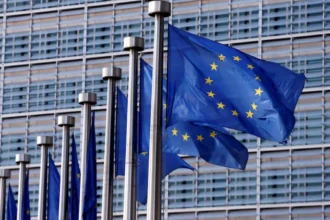

Brussels (Brussels Morning Newspaper) – The European Commission has opened a formal antitrust investigation to evaluate whether Alphabet’s Google has violated European Union competition regulations by using the content of web publishers, as well as content uploaded on YouTube, to train its artificial intelligence models.
The Commission expressed concern that Google might be utilising online content created by publishers without providing them with sufficient compensation or the opportunity to object to the use.
🔴The 🇪🇺 Commission opened an antitrust investigation into Google’s use of online content for AI 🔍
— EU Competition (@EU_Competition) December 9, 2025
We’re assessing whether publishers’ and creators’ content was used in unfair conditions and if this put rival AI developers at a disadvantage.
More info👇https://t.co/rI7gH2LpM5 pic.twitter.com/PgyZulvzD2
Why does the Commission fear unfair conditions for creators?
According to the Commission,
“the investigation will notably examine whether Google is distorting competition by imposing unfair terms and conditions on publishers and content creators, or by granting itself privileged access to such content, thereby placing developers of rival AI models at a disadvantage.”
“Google may be abusing its dominant position as a search engine to impose unfair trading conditions on publishers by using their online content to provide its own AI-powered services such as ‘AI Overviews’, which are AI-generated summaries,”
EU antitrust chief Teresa Ribera told a conference.
“This case is once again a strong signal of our commitment to protecting the online press and other content creators, and to ensuring fair competition in emerging AI markets,”
she said.
If found guilty of violating EU antitrust laws, the U.S. tech giant could be fined up to 10% of its annual global revenue.
Could Google’s AI overviews give it a competitive advantage?
Google’s AI Overviews are summaries produced by AI that are displayed to users in over 100 countries above conventional hyperlinks to pertinent webpages. In May of last year, it started incorporating ads into AI Overviews. Independent publishers filed a complaint in July, which prompted the EU to look into Google, Reuters reported.
How does this probe connect to earlier DMA investigations?
The European Commission officially started looking into Google’s violations of the Digital Markets Act (DMA) on March 25, 2024. The Google Play Store and Google Search were the two main topics of the investigation.
According to the Commission’s preliminary findings, Google gives its own services—such as shopping, hotels, flights, and other vertical search services—more prominence in search results than rival services. Since self-preferencing is forbidden for gatekeeper platforms like Google, it is a violation of the DMA.
How has Google defended itself against DMA-related criticism?
Google cautioned EU antitrust authorities and its detractors in July of this year that important EU regulations intended to control Big Tech are impeding innovation and hurting European consumers and companies.
Google’s attorney, Clare Kelly, spoke at a workshop hosted by the European Commission, allowing Google detractors to request clarifications,
“We remain genuinely concerned about real-world consequences of the Digital Markets Act (DMA), which are leading to worse online products and experiences for Europeans.”
She claimed that because European users are unable to directly access airline websites, Google’s current changes—which came about as a result of talks with the Commission and its detractors—have caused them to pay more for travel tickets.
Kelly added that there has been a 30% decrease in direct booking traffic for European hotels, restaurants, and airlines. Users have been grumbling about laborious workarounds in the interim.