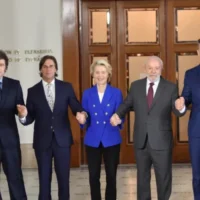

Damascus (Brussels Morning Newspaper) January 09, 2026 – European Commission President Ursula von der Leyen and European Council President António Costa visited Damascus marking the first high-level EU trip since Bashar al-Assad’s overthrow pledging Europe would do everything possible to support Syria’s recovery and reconstruction. The leaders met interim President Ahmed al-Sharaa announcing a €620 million financial package for 2026-2027 covering humanitarian aid, early recovery and bilateral cooperation. Discussions established a three-pillar framework including political dialogue, economic engagement and financial assistance amid recent Aleppo clashes.
- Landmark Damascus visit establishes post-assad cooperation framework
- Three-pillar framework details political economic financial commitments
- Sanctions lifting timeline enables rapid cooperation restart
- Al-Sharaa faces minority protections pressures amid Aleppo fighting
- Economic cooperation pillar targets investment bank activities resumption
- Humanitarian aid early recovery components address urgent needs
- Political dialogue pillar supports Syrian-led transition processes
- Brussels conference pledges set financial baseline expansion
- EU officials prior visits lay engagement groundwork foundation
- EIB market access discussions advance private investment mobilisation
Von der Leyen became the first top EU official visiting post-Assad Syria accompanied by Costa meeting al-Sharaa to discuss reconstruction, humanitarian access and refugee returns. The Syrian presidency confirmed talks covered cooperation dimensions aligning with the EU-Jordan joint declaration supporting the peaceful Syrian-led transition. The visit followed the ninth Brussels Conference pledging €5.8 billion for Syria and neighbours with the EU committing nearly €2.5 billion for 2025-2026.
Landmark Damascus visit establishes post-assad cooperation framework
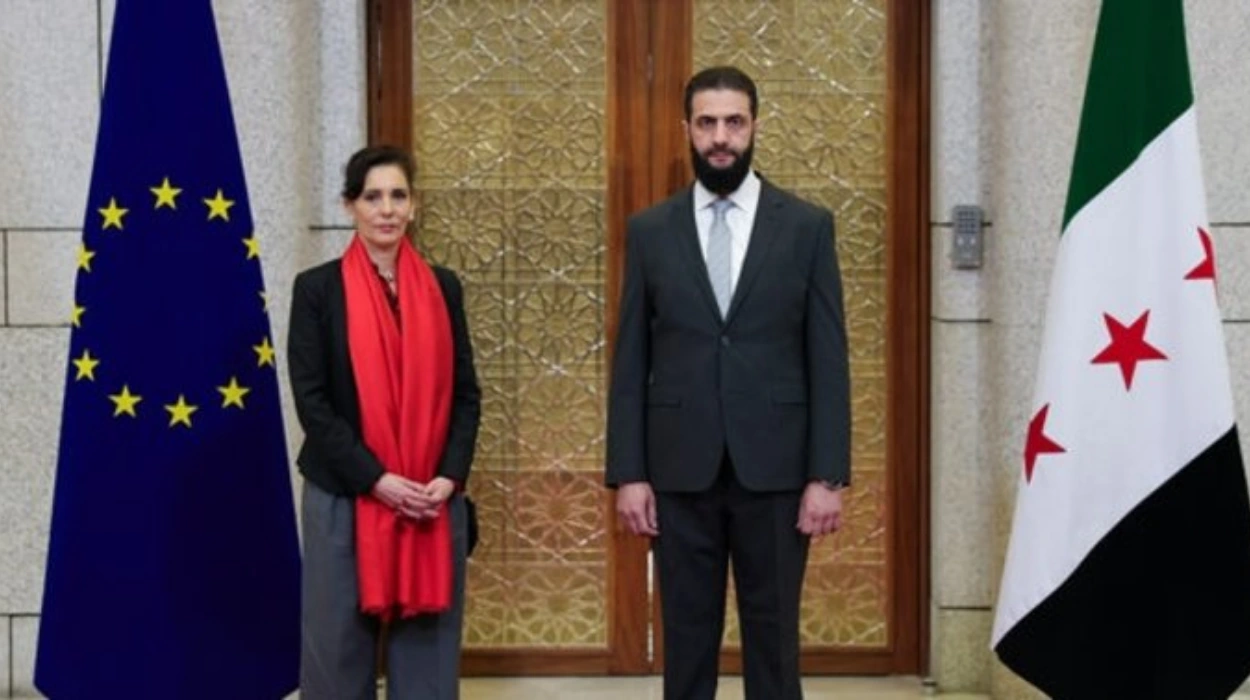
Von der Leyen and Costa arrived in Damascus Friday hosting talks with al-Sharaa representing the highest-level Western engagement since December 2024 regime change. The three-pillar structure launches high-level political dialogue, economic cooperation via European Investment Bank resumption and €620 million financial support targeting essential services restoration. EU fully lifted economic sanctions May 2025 after February suspension reversing 2011 measures imposed responding pro-democracy suppression.
Syrian presidency statement detailed reconstruction humanitarian refugee discussions confirming alignment Thursday EU-Jordan commitments. Von der Leyen emphasised Syrians deserve rebuilding prospects facilitating safe voluntary returns through regional UNHCR coordination.
Olga Nesterova shared von der Leyen’s statement. Olga Nesterova said in an X post,
“Von der Leyen: ‘In Damascus today. After decades of fear and silence, Syrians began a long journey toward hope and renewal. Europe will do everything it can to support Syria’s recovery and reconstruction.'”
Von der Leyen: “In Damascus today. After decades of fear and silence, Syrians began a long journey toward hope and renewal. Europe will do everything it can to support Syria’s recovery and reconstruction.” pic.twitter.com/4KH770tXyj
— Olga Nesterova (@onestpress) January 9, 2026
Three-pillar framework details political economic financial commitments
Political partnership initiates high-level dialogue exploring EU recovery reconstruction and civil peace support. Economic pillar advances trade cooperation post-sanctions lifting inviting EIB resuming Syria activities and market access discussions. Financial component delivers €620 million emphasising humanitarian aid early recovery and bilateral assistance rebuilding state institutions.
Von der Leyen noted Syrians began a hope renewal journey after fear of silence decades witnessed firsthand Damascus devastation. Cooperation intensifies Türkiye Jordan Lebanon UNHCR facilitating dignified voluntary returns creating real homecoming prospects.
Sanctions lifting timeline enables rapid cooperation restart
EU economic sanctions fully removed May 2025 initial suspension February 2025 following al-Sharaa offensive deposing al-Assad. Measures imposed in 2011 responded to violent pro-democracy demonstrations suppression. Policy reversal precedes US Caesar Act repeal last month enabling EIB operations private investments.
Ninth Brussels Conference March partners pledged €5.8 billion Syria region aid EU €2.5 billion 2025-2026 allocation. New €620 million package builds prior commitments addressing $216 billion reconstruction cost per World Bank estimates.
Al-Sharaa faces minority protections pressures amid Aleppo fighting
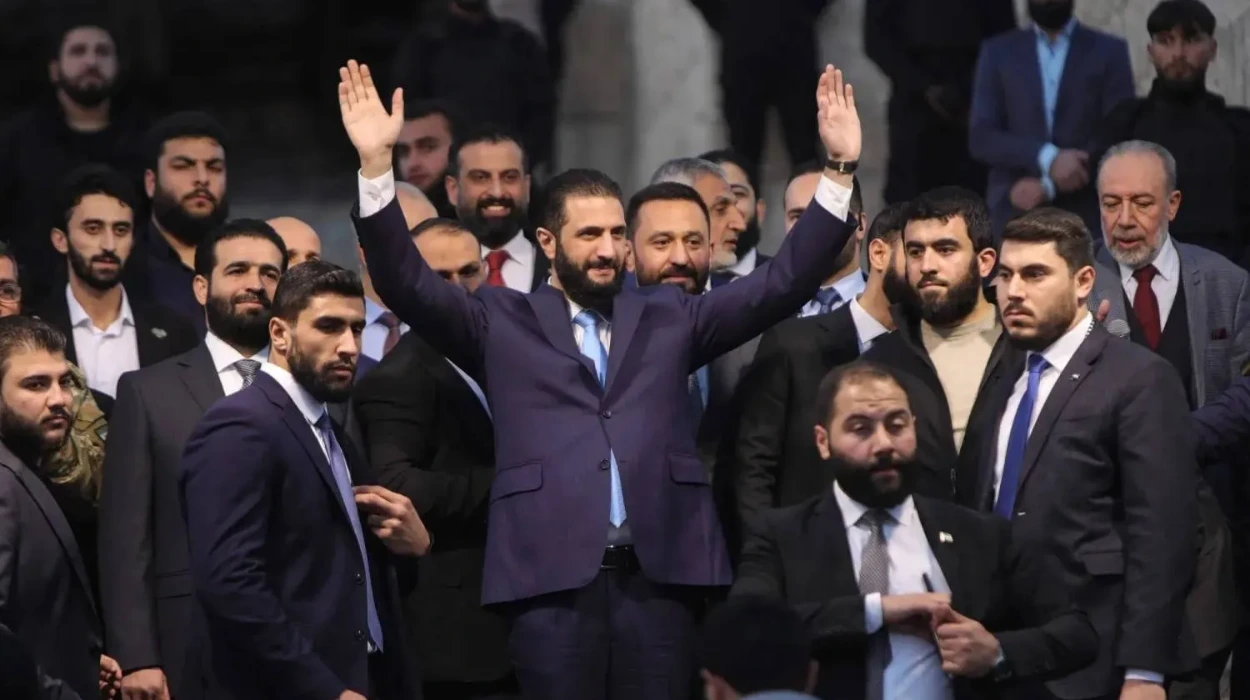
Recent government troops and Kurdish forces clashes shook Aleppo prompting von der Leyen describing escalations worrisome urging dialogue continuation. Al-Sharaa establishes state control protecting minorities including Kurds facing transition pressures. EU officials have made multiple visits since the overthrow to support inclusive Syrian-owned processes.
Damascus timing underscores stability priorities preserving transition gains. Von der Leyen Costa meetings deepen political economic ties post-sanctions landscape.
Levant24 highlighted von der Leyen’s commitment. Levant24 said in X post,
“President of the European Commission, Ursula von der Leyen: After decades of fear and silence, Syrians began a long journey toward hope and renewal. Europe will do everything it can to support Syria’s recovery and reconstruction.”
President of the European Commission, Ursula von der Leyen:
After decades of fear and silence, Syrians began a long journey toward hope and renewal. Europe will do everything it can to support Syria’s recovery and reconstruction. pic.twitter.com/4sGenQqqrG
— Levant24 (@Levant_24_) January 9, 2026
Economic cooperation pillar targets investment bank activities resumption
EIB invited discussing Syria cooperation restart post-sanctions facilitating private sector essential services investments. Bilateral support complements humanitarian allocations restoring state functions addressing war devastation scale. Von der Leyen confirmed technical assistance hub establishment within the Syrian Foreign Ministry strengthening civil servants proficiency.
The World Bank estimates $216 billion reconstruction underscoring package significance. EU-Jordan summit precedes Damascus reinforcing regional stability partnerships.
Humanitarian aid early recovery components address urgent needs
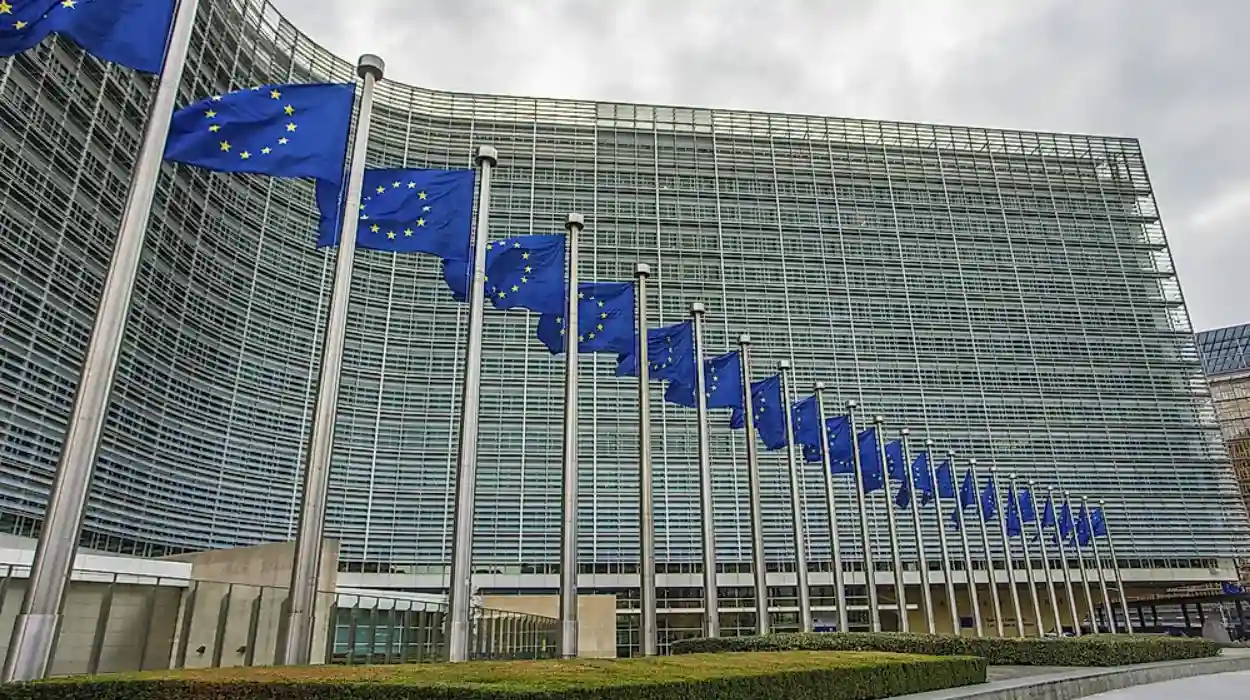
The European Union has unveiled a comprehensive €620 million humanitarian aid package that integrates early recovery components to address Syria’s most urgent needs following recent political shifts. This initiative prioritises unhindered humanitarian access while restoring essential services such as electricity, water, and sanitation infrastructure, which have long been devastated by conflict and neglect.
Bilateral assistance forms a cornerstone of the package, focusing on rebuilding key institutions to create enabling conditions for refugee returns. By bolstering administrative capacities and service delivery, the EU aims to stabilise communities and encourage sustainable repatriation, addressing the plight of millions displaced both within Syria and across borders.
Funds will support rapid rehabilitation of power grids, water treatment plants, and sewage systems, directly impacting daily life for vulnerable populations.
European Commission President Ursula von der Leyen embarks on a regional tour, culminating in a Friday meeting with Lebanese President Michel Aoun. Discussions will emphasise prosperity, security, and stability, extending the aid framework to neighbouring Lebanon, which hosts over 1.5 million Syrian refugees. This diplomatic push underscores Europe’s commitment to a coordinated response, preventing spillover effects like renewed migration pressures or regional instability.
Political dialogue pillar supports Syrian-led transition processes
High-level dialogue launches 2026 exploring EU civil peace reconciliation assistance modalities. Syria charts new course post-2011 war beginning aligning EU-Jordan peaceful transition commitments. Al-Sharaa offensive controls territory facing minority protections implementation.
EU foreign ministers December advanced new political partnership per Kaja Kallas. Investors require legal stability certainty per foreign affairs minister assessment.
Beirut visit Friday meets President Aoun enhancing EU-Lebanon prosperity security cooperation. Damascus Amman Beirut itinerary underscores Syria reconstruction regional importance. First EU-Jordan summit tackles shared challenges turbulent times per Costa. Syrian civil servants gain EU partners technical expertise through Foreign Ministry hub entry point.
Brussels conference pledges set financial baseline expansion
The Brussels Conference on March 9 marked a pivotal moment in international support for Syria and its neighbours, establishing a financial baseline for expanded aid with €5.8 billion pledged collectively, including €2.5 billion from the EU specifically allocated for 2025-2026. This framework sets the stage for scaling up assistance, building on previous commitments while addressing the protracted crisis exacerbated by years of conflict, displacement, and economic collapse.
Partner countries and organisations signalled a structured path forward, emphasising coordination to avoid duplication and maximise impact in regions hosting millions of Syrian refugees, such as Turkey, Lebanon, Jordan, and Iraq.
The pledges reflect a pragmatic shift towards sustainable recovery rather than short-term palliatives, recognising that humanitarian needs persist alongside reconstruction demands in a post-Assad landscape. For 2026-2027, an additional €620 million targets precise humanitarian and early recovery interventions, focusing on critical sectors like health, education, water sanitation, and shelter.
This tranche prioritises host communities strained by refugee inflows, aiming to mitigate social tensions and prevent secondary crises such as food insecurity or disease outbreaks. EU High Representative Kaja Kallas underscored that sanctions relief alone cannot catalyse economic revival; investor confidence demands political stability, governance reforms, and verifiable progress on human rights. Brussels thus positions itself as a diplomatic lodestar, conditioning future disbursements on milestones like transitional justice and minority protections, while urging donors to align with UN-led mechanisms for transparency.
EU officials prior visits lay engagement groundwork foundation
German Foreign Minister Annalena Baerbock French Jean-Noël Barrot visited January representing a 27-member bloc. Humanitarian Commissioner Hadja Lahbib Damascus trip January 17 first post-Assad Commissioner visit. Multiple engagements support Syrian-led owned transition pathways.
Von der Leyen Costa landmark trip elevates commitments to the highest political level. World Bank’s $216 billion figure quantifies 14-year civil war devastation and infrastructure destruction. The EU package addresses immediate essential services alongside institution building. Technical assistance hub builds Syrian capacities and EU partner expertise leveraging. Investor legal system trust stability certainty essential economic revival per Kallas assessment.
Türkiye Jordan Lebanon UNHCR cooperation intensifies safe dignified voluntary returns. Von der Leyen emphasised real rebuilding prospects home creation. €620 million underpins return enabling conditions essential services restoration.
Von der Leyen stated a new peaceful inclusive safe Syria goal requiring time healing and rebuilding. Three pillars structure political economic financial engagements supporting regional reintegration. The Damascus presidency confirmed reconstruction humanitarian refugee cooperation coverage. EU maximum support underscores post-Assad transition priorities and stability pathways.
EIB market access discussions advance private investment mobilisation
Sanctions removal enables EIB Syria activities cooperation agreement restart. Private sector investments target economic revival essential services delivery. Bilateral framework complements multilateral Brussels Conference disbursements scaling.
Syrians deserve hope and renewal possibilities per von der Leyen Damascus assessment. Von der Leyen’s worrisome escalation description urges parties preserving transition gains engagement. Government Kurdish forces recent fighting underscores minority protections implementation challenges. The EU supports inclusive processes protecting all Syrians rights. The Damascus visit reinforces stability and reconstruction civil peace priorities.