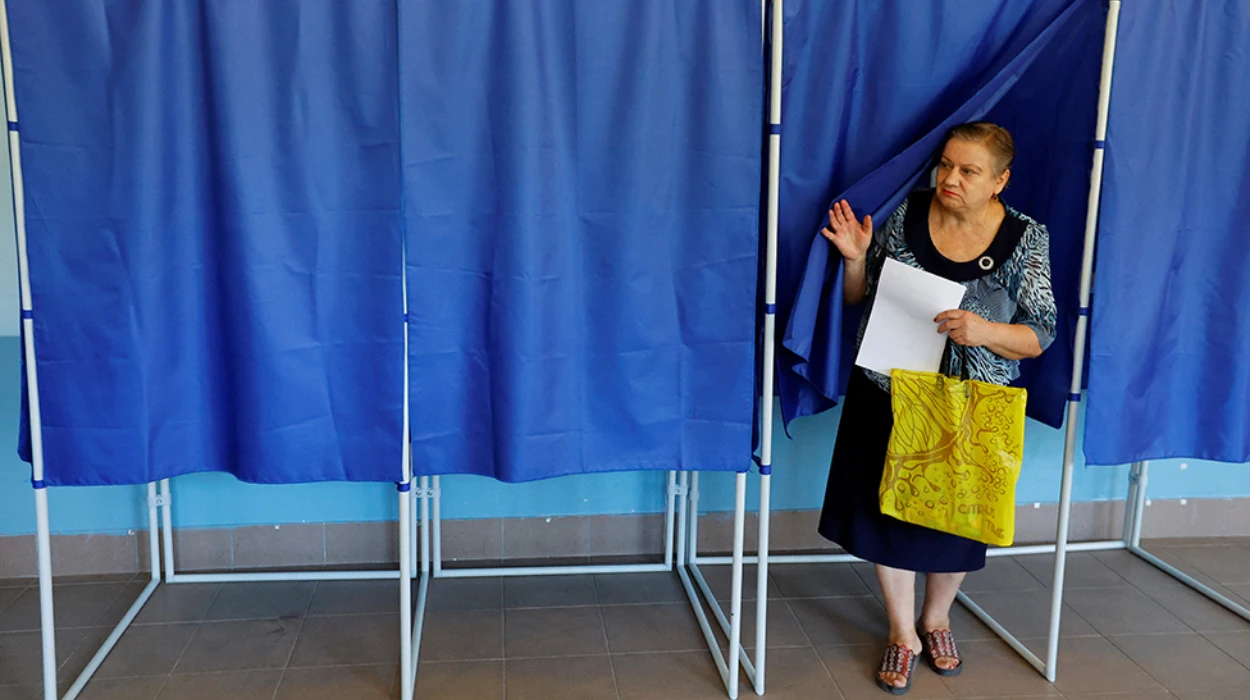
Brussels (Brussels Morning Newspaper) September 21, 2026 – The European Union and international partners, including the United Kingdom, Australia, Canada, New Zealand, and Norway, have strongly condemned Russia’s parliamentary elections held in occupied Ukrainian territories, branding the ballots a gross violation of international law and sovereign independence.
In tandem with the joint international criticism, European Union foreign policy leadership announced plans to impose targeted sanctions on individuals who organized the voting process or ran as candidates within occupied regions, while the ruling United Russia party maintained its parliamentary dominance following the three-day vote.
International Condemnation Of State Duma Ballots In Occupied Territories
The international community issued coordinated statements denouncing the organization of elections for the Russian State Duma across Russian-controlled areas of Ukraine. The three-day ballot, which concluded on Sunday, September 20, 2026, spanned the Autonomous Republic of Crimea, the city of Sevastopol, and parts of the Donetsk, Luhansk, Zaporizhzhia, and Kherson regions.
In a joint statement, the governments of the United Kingdom, Australia, Canada, New Zealand, and Norway categorized the exercise as part of a wider system of occupation. The participating nations emphasized that conducting Russian federal elections inside temporarily occupied territories of Ukraine represents a direct violation of Ukraine’s sovereignty, territorial integrity, and the United Nations Charter.
Similarly, the European Union reaffirmed its position that it does not and will never recognize either the holding of the votes in those regions or their official outcomes. Highlighting the legal framework surrounding the military conflict, the EU stressed that military occupation does not confer sovereignty to the Russian Federation, and that staging elections cannot alter the international status of the land.
European Union Sanctions Announced Against Organizers And Candidates
Responding directly to the implementation of the vote, European Union foreign policy leadership confirmed that punitive measures would be deployed against those facilitating the process. Brussels outlined that sanctions will apply to individuals involved in organizing the sham ballots or standing as candidates within the temporarily occupied territories of Ukraine.
Furthermore, the restrictive measures target individuals deemed responsible for undermining the possibility of holding free and fair elections inside the Russian Federation itself. The announcement follows statements from European Commission officials emphasizing that bodies and individuals linked to the execution of the voting procedures will be held accountable under European foreign policy frameworks.
Domestic Repression And Restriction Of Democratic Opposition Within Russia
Beyond the disputed territorial ballots, the European Union and foreign policy representatives criticized the overarching electoral environment within Russia, characterizing the vote for the 450-seat lower house of parliament as a major new blow to domestic democracy. Observers noted that the outcome was predetermined in an increasingly authoritarian political climate marked by intensive internal and transnational repression.
European officials pointed out that Russian authorities systematically excluded democratic opposition forces from participating in political life. Specifically, the federal electoral list barring of candidates from the Yabloko party—recognized as one of the remaining opposition groups holding an anti-war platform—further restricted voter choice. The deliberate exclusion of political alternatives effectively deprived the Russian electorate of a genuine choice regarding the future trajectory of the country.
Absence Of Independent Monitoring And Preliminary Election Results
The electoral process faced additional scrutiny regarding transparency due to Moscow’s decision not to invite election monitors from the Organization for Security and Co-operation in Europe (OSCE). The European Union expressed regret over this omission, noting that it violated binding commitments undertaken by OSCE participating states and denied voters and institutions an independent and impartial assessment of the proceedings.
According to preliminary data released by the Russian Central Election Commission and chaired by Ella Pamfilova, overall voter turnout reached approximately 59.32 percent for the three-day election cycle. The data indicated that the ruling United Russia party secured 57.83 percent of the vote, positioning the party to claim a constitutional majority with 355 out of the 450 total seats in the State Duma. The ongoing legislative dominance preserves the ruling party’s parliamentary control, which has remained firmly established since 2003 amidst sustained state oversight.