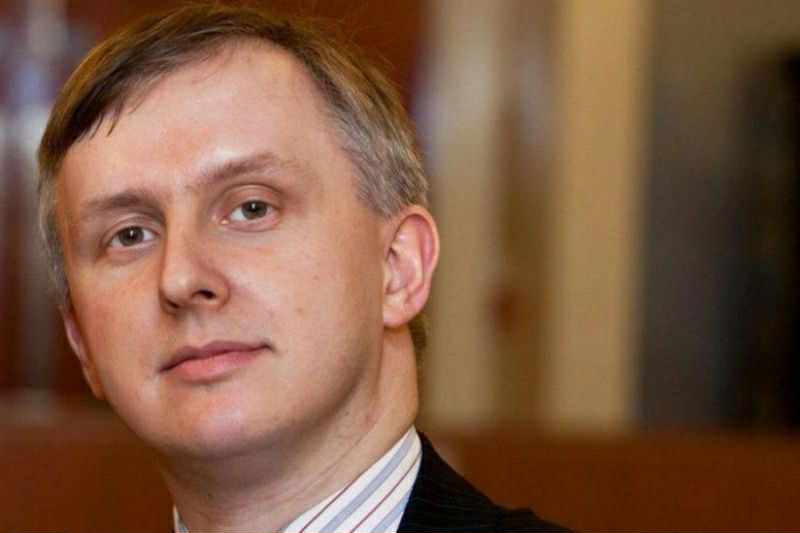

Albania (Brussels Morning) In the heart of Tirana, a tempest brews—one that has captured not only a city’s attention but the watchful eyes of an entire continent. Erion Veliaj, the three-term mayor whose urban vision helped transform Albania’s capital into a modern, green and digitally open city, has now spent nearly a year behind bars without trial.
What should have been a routine judicial matter has expanded into a seismic test of Albania’s justice system and, increasingly, the credibility of Europe’s enlarging frontier.
Recent months have intensified the drama: since June and again in October 2025, two major legal analyses by Kasowitz LLP and Mishcon de Reya have dissected the case with mounting alarm; Albania’s Constitutional Court overturned attempts to remove Veliaj from office in early November; Istanbul’s mayor Ekrem İmamoğlu issued a letter of support on 11 November; and a monitoring delegation from the Congress of Local and Regional Authorities was reportedly denied access to Veliaj by SPAK during its 17–19 November mission.
These developments, each significant on their own, collectively paint the portrait of a political-judicial crisis that has deepened rather than stabilised with time.
Veliaj is no ordinary politician. Under his leadership, Tirana shook off much of its post-communist greyness and resurfaced as a vibrant European capital filled with parks, pedestrian zones, innovative public services and a distinct civic identity.
Yet today, his prolonged detention—stretched out with no indictment and no trial date—casts a shadow larger than Albania itself. Beneath the surface lie disturbing questions about how justice is being administered.
Reports by Kasowitz and Mishcon de Reya detail patterns of political interference, lack of due process and disproportionate use of pre-trial detention that resonate far beyond Albania’s borders.
The concerns have been echoed internationally. Alastair Campbell, long involved in European and Balkan affairs, has warned that Veliaj’s detention undermines the rule of law. Ekrem İmamoğlu’s intervention, however, carries even stronger symbolic weight.
The Istanbul mayor, himself in pre-trial detention following charges widely seen as politically driven, faces a parallel fate: two elected mayors, in two countries, both removed from public life not by voters but by prosecutorial systems whose motives are increasingly questioned.
Their experiences sit within a wider regional pattern in which justice and politics collide in ways that challenge democratic norms. For European policymakers, especially those shaping the next chapter of EU enlargement, the dilemma becomes unavoidable: can a country credibly claim readiness for membership while its justice system appears capable of incapacitating elected officials through opaque procedure?
Veliaj’s detention may be legal in form, but its application is troubling in substance. Albania now has the highest pre-trial detention rate in Europe, with estimates ranging from 57 to 62 percent of detainees held without trial. What should be an exceptional measure has become systemic.
Bail requests in Veliaj’s case are repeatedly denied without transparent reasoning, defence team’s lack full access to evidence, and his restrictions far exceed those applied to co-accused facing similar allegations.
The Constitutional Court’s ruling in early November underscored this discomfort by overturning attempts to strip him of his mandate. Yet SPAK reacted swiftly, barring him from attending council meetings and effectively neutralising the impact of the decision.
The broader implication was unavoidable: in Albania today, even a constitutional ruling can be bypassed through prosecutorial manoeuvre.
This dynamic reflects a troubling choreography long suggested by observers. Both Kasowitz and Mishcon de Reya point to procedural irregularities and decisions timed around political and international developments, creating the impression of a justice system susceptible to external pressures rather than guided solely by law.
The opacity of the process—including unrecorded bail denials and evidentiary restrictions—undermines any claim to impartiality and raises doubts about Albania’s readiness to align with European judicial standards.
Europe, too, faces uncomfortable questions. The Venice Commission’s crucial report in October—an intervention originally triggered by the detention of İmamoğlu, the same mayor who wrote to Veliaj in solidarity—warned that excessive pre-trial detention of elected officials erodes democratic legitimacy and compromises constitutional order.
Yet while its warnings have been applied forcefully in Türkiye, the response regarding Albania has been notably muted, even as Veliaj’s detention has now surpassed that of his Turkish counterpart. Compounding this silence are reports that SPAK refused access to the Congress of Local and Regional Authorities during its recent monitoring mission.
For a nation that aspires to join the European Union, such resistance to oversight sends a troubling signal.
EU enlargement policy consistently praises Albania’s judicial reforms and vetting processes, but it also highlights persistent delays, lack of transparency and risks of political instrumentalization. Veliaj’s case has become the clearest example of how anti-corruption mechanisms—if left unchecked—can shift from tools of accountability to levers of political control.
Erion Veliaj’s detention is no longer simply an Albanian legal issue; it has become a litmus test for the region and for the European Union itself. At stake is the credibility of Europe’s rule-of-law commitments and the democratic trajectory of a country seeking entry into the European family. The question now is whether Albania’s justice system can rise above political manipulation to provide genuine fairness, and whether the EU can uphold its own principles without turning a blind eye to contradictions within its enlargement process.
In this unfolding drama, Veliaj stands both as protagonist and symbol—a mayor caught in the crosshairs of judicial power and political rivalry, whose fate could shape not only the future of Tirana, but the very integrity of Europe’s promise to its aspiring members.
Dear reader,
Opinions expressed in the op-ed section are solely those of the individual author and do not represent the official stance of our newspaper. We believe in providing a platform for a wide range of voices and perspectives, even those that may challenge or differ from our own. We remain committed to providing our readers with high-quality, fair, and balanced journalism. Thank you for your continued support.