

Edward Theodore Gein, often referred to as Ed Gein, is one of America’s most infamous criminals a serial killer and body snatcher whose gruesome crimes in the mid-20th century in Wisconsin have fascinated and horrified the public.
Known by nicknames such as the “Plainfield Ghoul” and the “Butcher of Plainfield,” Gein’s acts of exhuming corpses and confessing to murder inspired a wide range of cultural portrayals, including characters in works by Alfred Hitchcock and influencing actors like Charlie Hunnam in various portrayals of dark characters.
This article provides an in-depth exploration of Ed Gein’s life, crimes, psychological profile, trial, and his enduring legacy in popular culture.
Early Life and Background
Edward Theodore Gein was born on August 27, 1906, in La Crosse County, Wisconsin. He was the second of two sons to George Philip Gein and Augusta Wilhelmine Gein. Raised in a strict and isolated household on a 155-acre farm in the town of Plainfield, Wisconsin, Ed and his brother Henry grew up under the oppressive rule of their deeply religious mother, who preached about sin, immorality, and the evils of the outside world.
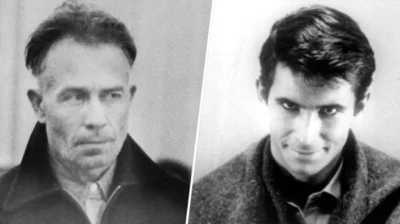
Augusta’s intense religiosity and disapproval of women shaped much of Ed’s early worldview, isolating him socially and psychologically.
The Gein family environment was harsh. Ed’s father was an alcoholic who often beat his sons. Augmented by Augusta’s domineering presence, Ed had minimal social interactions outside his family. His father died in 1940, leaving Ed and Henry to continue living on the farm. Henry’s mysterious death in 1944, officially ruled as accidental asphyxiation despite suspicious head bruises, left Ed alone with his mother, whom he cared for devotedly until her death in 1945.
Descent Into Darkness: Psychological Factors
Following his mother’s death, Gein’s personality and mental state deteriorated significantly. He devoted himself to preserving her memory and reportedly began reading pulp magazines with themes of cannibalism and grotesque acts. His increasing social isolation, combined with psychotic tendencies, led to disturbing behaviors such as grave robbing and creation of trophies fashioned from human remains.
Psychiatrists later diagnosed Gein with schizophrenia. His upbringing and trauma contributed to an obsessive and delusional mindset, particularly fixated on his mother. Among the most chilling aspects of his behavior was his attempt to “become” his mother by creating a “woman suit” made from human skin, suggesting deep psychological fragmentation.
The Crimes: Murders and Body Snatching

Ed Gein’s criminal activities came to light in 1957 when Bernice Worden, a hardware store owner, disappeared. Worden’s vehicle was spotted leaving the rear of the store, and when her son visited, he found the store ransacked with bloodstains present. Police investigation led to Gein’s arrest and a shocking search of his farmhouse.
Inside Gein’s home, authorities uncovered an array of macabre artifacts made from human remains, including lampshades, bowls, masks, and clothing fashioned from skin, as well as skulls mounted on bedposts. Worden’s decapitated body was found hanging upside down in a shed on Gein’s property.
Gein confessed to killing two women, Bernice Worden and Mary Hogan, but also admitted to exhuming multiple corpses from local graveyards to create his grotesque trophies. While he denied sexual contact with the bodies, his acts of mutilation and desecration shocked the public and law enforcement.
The Trial and Institutionalization
Upon his arrest, Gein pleaded not guilty by reason of insanity. Initially found incompetent to stand trial, he was institutionalized at the Central State Hospital for the Criminally Insane. By 1968, he was deemed fit to participate in his defense, leading to a bench trial instead of a jury trial.
During proceedings, the defense emphasized Gein’s schizophrenia and psychosis, arguing that his crimes stemmed from severe mental illness. The judge found Gein guilty of murder but legally insane, committing him to a mental hospital for the remainder of his life.
Cultural Impact and References
Ed Gein’s shocking crimes have sparked numerous cultural depictions and inspired iconic fictional characters. Alfred Hitchcock’s film Psycho drew from Gein’s story, particularly in the character of Norman Bates. The “monster Ed Gein” archetype influenced the creation of Buffalo Bill in The Silence of the Lambs, as well as Leatherface in The Texas Chainsaw Massacre.
Actors like Charlie Hunnam and others have portrayed or been inspired by Gein-esque characters in film and television, embedding his story in the lexicon of American horror. The blend of real horror and psychological complexity has kept the fascination alive decades after his death.
Legacy and Reflections
Gein died on July 26, 1984, in a psychiatric institution but left behind a legacy of fear and morbid curiosity. His crimes sparked reforms in death penalty laws and forensic investigations. More importantly, they raised awareness about the impact of severe childhood trauma, mental illness, and isolation.
The case of Ed Gein remains a chilling reminder of how complex psychological factors can culminate in horrific acts, and how society must attend carefully to mental health and social support systems.
Dear reader,
Opinions expressed in the op-ed section are solely those of the individual author and do not represent the official stance of our newspaper. We believe in providing a platform for a wide range of voices and perspectives, even those that may challenge or differ from our own. We remain committed to providing our readers with high-quality, fair, and balanced journalism. Thank you for your continued support.