
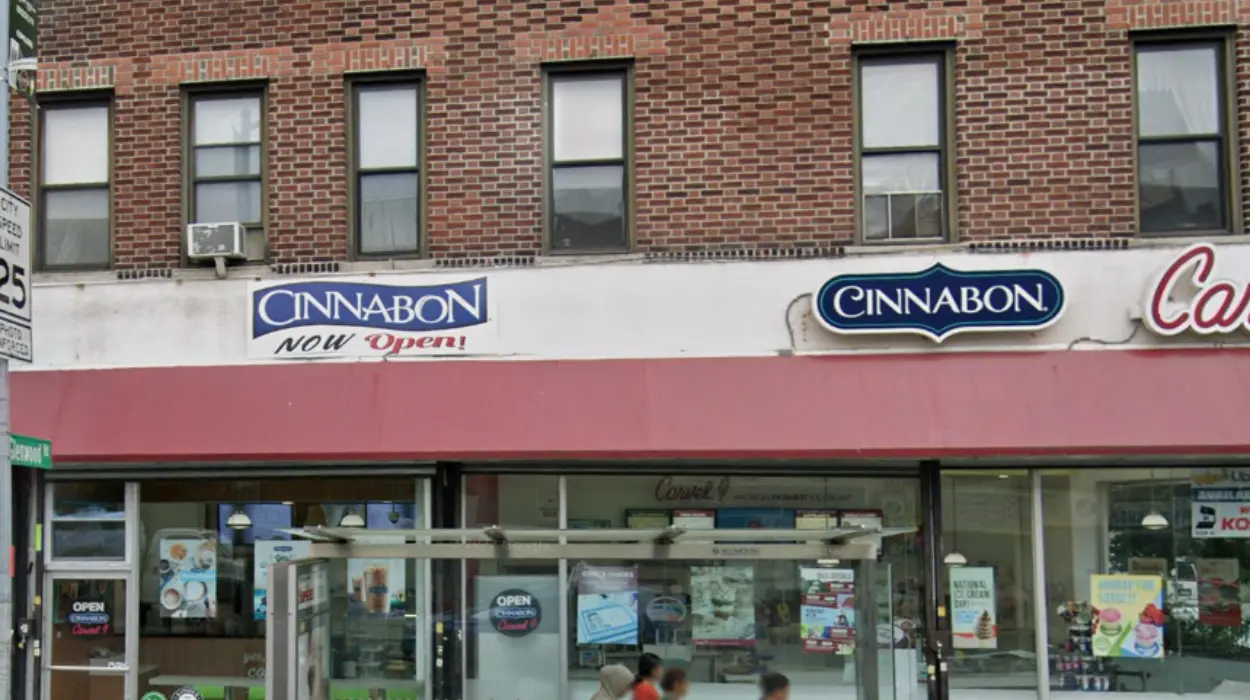
The American bakery chain Cinnabon, famed worldwide for its cinnamon rolls, operates in Israel through a ballot model, having launched its first store in Tel Aviv in 2011. This presence, marked by hookups with original investors like Ronen Sorinov’s ROK Investments and strict adherence to kosher instruments, is primarily a marketable bid aligned with the company’s global expansion strategy. Despite this, allegations and debate have surfaced regarding whether Cinnabon implicitly supports Israeli government programs due to its business operations within Israeli homes.
The straightforward answer is that Cinnabon as a brand doesn’t officially plump or financially support the Israeli government or its political or military conduct. The company focuses on feeding to original request demands, including the provision of kosher-pukka products, without public commentary on the Israeli- Palestinian conflict. While it sometimes appears in grassroots boycott conversations and social media activism, these are n’t part of a systematized crusade led by major boycott movements like BDS, which prioritize companies with direct ties to Israeli governmental or military support.
Thus, Cinnabon’s Israeli operations are better understood as part of global business activity respecting local consumer culture rather than as political advocacy. The controversy mainly arises due to social sensitivities around Israeli-Palestinian relations and corporate responsibility perceptions.
The ethical debate surrounding Cinnabon’s presence
The complex sociopolitical history of the region and the implications of a multinational franchise having a presence in Israel without visibly discussing or mentioning its sociopolitical history lie at the center of the ethical debate regarding the presence of Cinnabon in Israel. Customers wishing to have Cinnabons’ popular cinnamon rolls were elated as it opened its first Israeli kosher premises in Tel Aviv. However, this euphoria was soon cast into shadow by the ethical implications of the role and responsibility of multinational companies in war zones.
The critics can point to the conspicuous nothingness of Cinnabon with regard to social responsibility and the Israeli-Palestinian conflict that casts doubt on how well the brand fits in with the ongoing conflicts of the region. Although the company has made considerable financial success and plans the view up to ten shops to be built, Cinnabon has not made any formal promise to either help the local communities affected by the violence or to offer any stance on the bigger political problem.
Given that the company is run by a local investment firm that has substantial holdings in the Israeli market, some people see this silence as tacit involvement.
However, the absence of overt backing or contributions to Israeli political or military purposes complicates Cinnabon’s case. The franchise largely functions as a business endeavour in Israel, concentrating on meeting local kosher certification requirements to serve Israeli customers while avoiding openly discussing political issues.
Cinnabon’s market presence and franchise expansion in Israel
Cinnabon entered the Israeli market in 2011 by opening its first franchise store in Tel Aviv through a partnership with Ronen Sorinov’s ROK Investments. The brand committed to meeting kosher certification standards to align with local consumer preferences. Globally, Cinnabon operates in over 50 countries, including diverse markets such as Egypt and Russia, where franchise owners report substantial success.
The Israeli cinnamon market itself is growing steadily, projected at an annual growth rate of around 7.6% in 2025, suggesting a healthy consumer base for bakery products despite political tensions. This business-focused presence underscores Cinnabon’s strategy of culturally sensitive expansion rather than political affiliation.
BDS and boycott calls
The Boycott, Divestment, and Sanctions (BDS) movement targets companies and organisations that are found to collaborate in supporting the occupation, apartheid, and human rights by Israel against Palestinians, by discouraging international corporations and organisations through boycotted actions. The campaign aims at making these businesses accountable to their collaboration by deliberately focusing on businesses that directly back the military, financial, or infrastructure apparatus of Israel through boycotts returning on them pressure.
Cinnabon is not on the list of targets that the BDS movement has turned into a top priority of the boycott.
Companies engaged in direct military or intelligence support, infrastructure development, and financial support for apartheid and occupation regimes are given preference by the movement. Rather, brands with verified connections to these actions should be boycotted. However, because Cinnabon has franchises in Israel and is therefore perceived by some as implicitly supporting the normalisation of Israel’s dictatorship, it does occasionally show up in grassroots organic boycott efforts and social media activist demands.
BDS did not initiate these spontaneous movements; however, Cinnabon in Israel and its relations to Israeli markets allowed it to acquire certain grassroots support. Though Cinnabon is a part of a multinational organisation, Grupo Bimbo, that has operations around the world, including Israel, there is no publicly established evidence that grupo bimbo or Cinnabon monetarily or logistically makes contributions to the Israeli government or military practices that BDS is exploring this aspect to investigate. Companies like McDonald’s, Coca-Cola, and other organizations whose affiliations with the military or the governments are confirmed will be under numerous boycott and pressure campaigns led or aided by BDS, especially those that directly assist or donate to Israeli military forces.
Grupo Bimbo’s financial overview
Cinnabon is part of the Grupo Bimbo corporate family, a multinational bakery giant with revenues exceeding $21 billion USD projected for 2025. Despite operating franchises including those in Israel, Grupo Bimbo maintains a policy of corporate neutrality regarding geopolitical conflicts. Neither Cinnabon nor Grupo Bimbo has publicly supported or opposed Israeli governmental policies or military actions. This aligns with many MNCs’ preferred strategy of focusing on business and local regulations (such as kosher certification) rather than political engagement. Financially robust, Grupo Bimbo continues to grow globally while avoiding direct commentary on Middle Eastern political disputes.
Corporate response and stance
None of Cinnabon nor its parent company has issued any corporate responses with regard to their political, humanitarian, or ethical orientation. Most MNCs prefer focusing on local market issues (such as kosher requirements in Israel) rather than focusing on the geopolitical conflicts per se. The non-engagement strategy means that the outright boycott list is not targeted by companies, although consumer awareness efforts are being implemented by the advocacy groups.
The allegations of Cinnabon financing Israel are discussed extensively on social media and other activist websites. However, most of these discussions have not been substantiated and are only speculative, with no clear business interest giving the outline of their position. Similar to other multinational companies, Cinnabon seems to adopt a non-political market approach, where it does not make any public statement on geopolitical matters, yet it supports the local market niche, such as the kosher certifications available in Israel.
Perceptions and social media discourse
It is not unusual to find boycott calls against Cinnabon on social media platforms such as Twitter, Reddit, Instagram, and TikTok, as they are part of a larger trend to encourage people not to patronize or engage in business with companies that are located in Israel. There are hashtags which activists often use to garner support and raise awareness, such as the #StopTheGenocide, the # BoycottIsrael, and the #BoycottCinnabon. Many of them on social media have started the argument that the presence of Cinnabon in Israel is tantamount to being complicit in the Israeli treatment of the Palestinians, and that the purchase of Cinnabon products is taking a silent partnership in such an enterprise.
Discussions frequently contain conjecture and false information; despite the lack of supporting documentation, some people assert that Cinnabon openly endorses Israeli government or military acts. Others advise supporters to check reports before boycotting in order to prevent false information. Supporters of Palestinian solidarity view boycotting Cinnabon as a political and moral protest against occupation and apartheid. This kind of consumer action is in line with other groups that promote ethical consumption as well as the grassroots elements of the BDS movement.
Is it time to boycott Cinnabon?
The decision to boycott or not boycott Cinnabon will likewise be based on the beliefs that you hold regarding CSR and the impact of companies that conduct business in war or conflict zones. Considering the support of a brand just on the economic activities within the Israeli territory, one can come to the conclusion that its presence there alone is a valid enough reason to avoid using it. But at least through the month of August 2025, what information is out there shows that Cinnabon has not publicly or directly supported the policies, government, or armed forces of Israel, whether in terms of political or monetary backing.
Consumer Polarization
Online platforms exhibit divided opinions on Cinnabon’s operations. Some equate its Israeli franchise presence with complicity in political oppression, urging boycotts, while others argue franchise independence and corporate neutrality. Conservative voices contend boycott campaigns reflect political bias against Israel.
This digital discursive environment complicates public perception management and brands’ reputational risks linked to socio-political controversies over local franchise activities.
Conclusion
Grupo Bimbo and Cinnabon have adopted a low profile, and neither has taken any official position in boycotts regarding their economic activities in Israel or the conflict between the Israelis and Palestinians. Such a non-engagement strategy is aligned with the interests of many international corporations that prefer to remain neutral in the sensitive political controversies in the process of managing business in foreign countries.