
The Treaty of Verdun, signed in 843, stands as a landmark agreement in medieval European history. It effectively ended the Carolingian civil war and sought to divide the vast empire of Charlemagne among his grandsons. However, historians continue to debate whether the treaty truly fulfilled its intended purpose of establishing lasting peace and a stable political order.
Introduction: Context and Background of the Treaty of Verdun
Following the death of Charlemagne in 814, his son Louis the Pious inherited a unified Carolingian Empire stretching across much of Western and Central Europe. Louis attempted to maintain the unity of the empire while allocating territorial control to his sons during his lifetime. This created tensions and rivalries as sons competed for power and land, leading to internal strife.
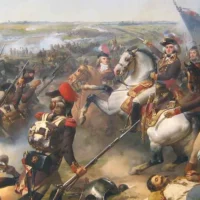
After Louis’s death in 840, his three surviving sons Lothair I, Louis the German, and Charles the Bald vied for control. Lothair, the eldest, claimed imperial overlordship over the entire realm, but his brothers rejected this and waged civil war against him. Following several bloody conflicts, including the decisive Battle of Fontenoy in 841, the brothers agreed to negotiate a formal division of the empire to avoid further destruction.
The Provisions of the Treaty of Verdun
Signed on August 10, 843, the Treaty of Verdun divided the Carolingian Empire into three distinct kingdoms. Lothair I retained his imperial title and was granted a central portion known as Francia Media or Middle Francia.
This territory stretched from the North Sea through the Low Countries, Lorraine, Burgundy, Provence, and included the Kingdom of Italy along with key cities such as Aachen and Rome. Although Lothair maintained the title of emperor, his overlordship over his brothers was largely symbolic. Louis the German received lands east of the Rhine River, called Francia Orientalis or East Francia, encompassing much of what is now modern-day Germany.
This territory later evolved into the Kingdom of Germany, a core part of the Holy Roman Empire. Charles the Bald gained control of the western lands, known as Francia Occidentalis or West Francia, which roughly corresponds to modern France. He also held Aquitaine through fealty from Pepin II.
The Treaty mirrored the traditional Frankish practice of partible inheritance, in which realms were divided among heirs rather than passed solely to the eldest son, recognizing the fragmented political realities caused by divided loyalties and civil war, with the goal of stabilizing governance.
Was the Treaty of Verdun Successful in Its Purpose?
The Treaty of Verdun had mixed success in achieving its original goals. Initially, it succeeded in bringing an end to the open warfare among the sons of Louis the Pious by establishing formal boundaries and domains, which prevented further immediate bloodshed and rivalry within the Carolingian dynasty.
However, the treaty also exposed the fragility of the Middle Kingdom Lothair’s Middle Francia. This territory’s long, narrow shape, poor communication lines, and natural barriers such as the Alps made cohesive governance difficult. Following Lothair’s death, Middle Francia fragmented into contested regions like Lotharingia (Lorraine), which became a longstanding source of conflict between the emerging powers of France and Germany.
Despite its shortcomings, the treaty laid the foundation for modern Europe. West Francia developed into the Kingdom of France, East Francia became the basis of the Holy Roman Empire and modern Germany, while the Italian territories of Middle Francia endured centuries of fragmentation.
Nevertheless, the Treaty of Verdun did not prevent further disputes or divisions among the Carolingian heirs. Subsequent agreements including the Treaties of Prüm (855), Meerssen (870), and Ribemont (880) continued to subdivide and reshape the empire, showing that Verdun was only the first step in a long process of territorial fragmentation.
Legacy and Long-Term Impact
Despite its imperfections, the Treaty of Verdun was a pivotal moment in European political history. It marked the definitive end of Charlemagne’s empire as a unified political entity, highlighting the challenges of sustaining vast medieval empires without centralized administration.
The treaty also laid the groundwork for the longstanding French-German rivalry, as the contested territories of Middle Francia particularly Lotharingia, which corresponds to modern-day Lorraine and Alsace became focal points of conflict between France and Germany.
This territorial dispute influenced numerous European conflicts well into the 20th century. Additionally, the partition accelerated political fragmentation across the continent, leading to the emergence of smaller kingdoms, duchies, and principalities.
This decentralization fostered the rise of feudalism and significantly shaped medieval European political structures. Culturally and linguistically, the division promoted distinct developments: West Francia evolved into the Romance language-speaking realm that became France, while East Francia consolidated Germanic languages and cultures, setting the stage for the future German states.
Did the Treaty of Verdun Fulfill Its Purpose?
The Treaty of Verdun achieved its short-term goal of ending civil war among Louis the Pious’s heirs, formally dividing the Carolingian Empire and establishing separate kingdoms with recognized rulers. However, it failed to create a lasting political unity or stable imperial structure.
Middle Francia’s geographic vulnerabilities and fragmented governance led to further conflicts and partitions, and the treaty ultimately paved the way for the dissolution of the Carolingian Empire into the precursors of modern European nations.
Nonetheless, the treaty’s legacy is profound. It influenced the political geography of Europe, sowed the seeds for national identities, and shaped centuries of diplomacy and conflict. While it fell short of creating enduring unity, the Treaty of Verdun was a necessary and foundational moment in the complex evolution of Europe’s political landscape.
Dear reader,
Opinions expressed in the op-ed section are solely those of the individual author and do not represent the official stance of our newspaper. We believe in providing a platform for a wide range of voices and perspectives, even those that may challenge or differ from our own. We remain committed to providing our readers with high-quality, fair, and balanced journalism. Thank you for your continued support.