
Copenhagen, Denmark — January, 2026. Writing for Brussels Morning Newspaper, large crowds gathered across Denmark’s capital and other major cities on Wednesday as citizens took to the streets to express solidarity with Greenland amid renewed global attention on the Arctic region. The demonstrations reflected growing public concern over geopolitical rhetoric and strategic competition surrounding Greenland’s future, marking one of the most visible civic mobilizations on Arctic sovereignty in recent years. The Denmark Greenland protests unfolded peacefully, drawing attention from European leaders, analysts, and international media.
From early morning, demonstrators assembled in central Copenhagen, carrying Greenlandic flags, banners calling for respect of self-determination, and placards emphasizing democratic values. The rallies were organized by a coalition of civil society groups, students, and environmental organizations, all united by a shared message: Greenland’s political future should be shaped by its own people, free from external pressure. Observers noted that the scale and tone of the Denmark Greenland protests signaled a deep resonance within Danish society that extends beyond party politics.
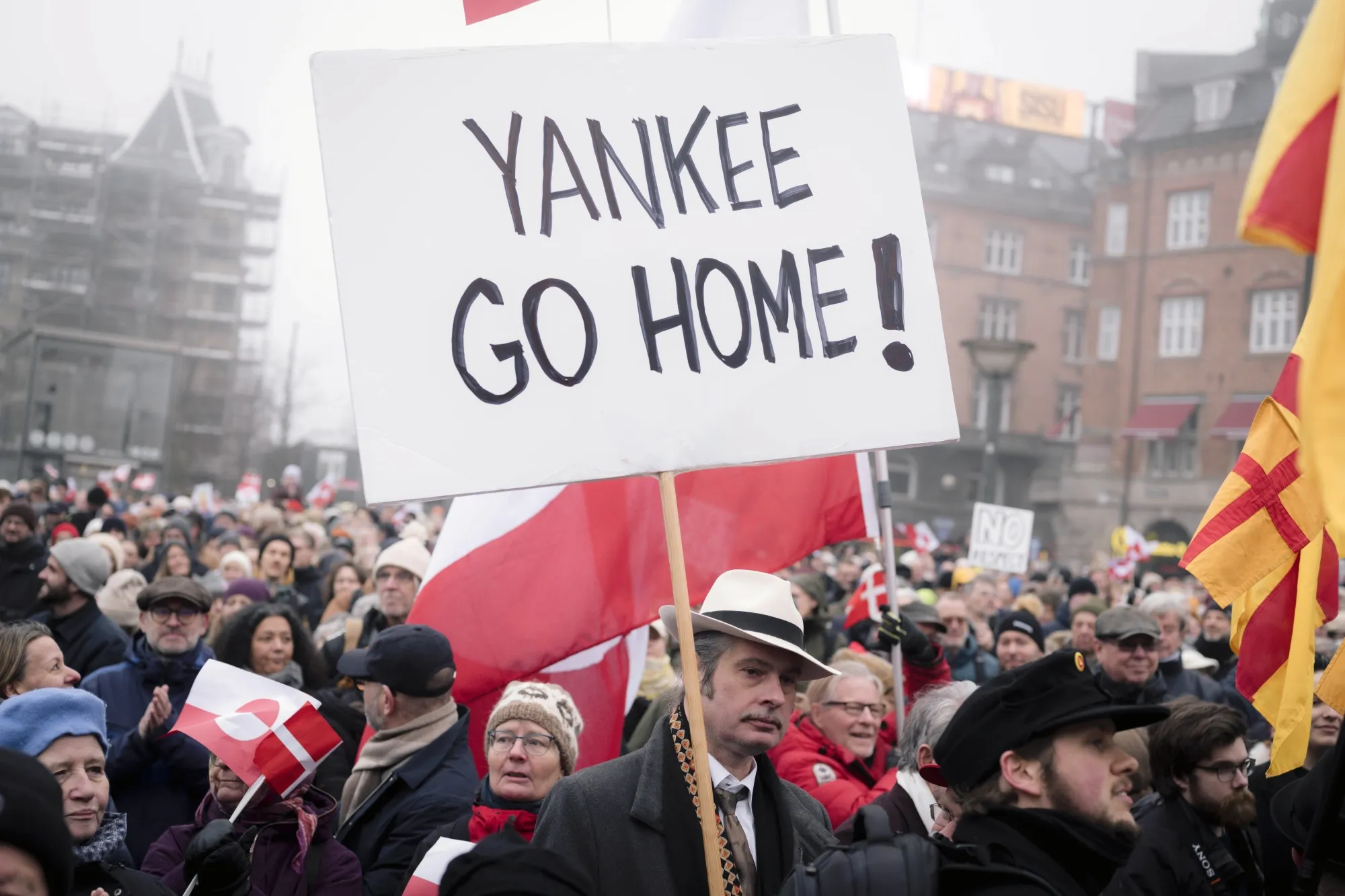
Public Squares Become Centers of Civic Expression
Copenhagen’s main public squares transformed into forums of discussion and symbolic unity. Speakers addressed the crowd from temporary stages, while participants listened attentively, many wrapped in winter coats against the early spring chill. The atmosphere was calm yet resolute, reflecting Denmark’s long tradition of peaceful civic engagement.
Participants ranged from university students and academics to families with children, illustrating broad demographic involvement. Organizers emphasized that the gatherings were not aimed at confrontation but at reinforcing principles of sovereignty, mutual respect, and democratic choice. In this context, the Denmark Greenland protests became a platform for citizens to articulate concerns that might otherwise remain confined to policy circles.
The choice of Copenhagen as the focal point carried symbolic weight. As Denmark’s political and cultural center, the city provided a visible stage for public sentiment on Greenland’s status within the Kingdom of Denmark and the wider international system.
Greenland’s Autonomy at the Heart of the Debate
Greenland functions as an autonomous territory within the Kingdom of Denmark, exercising control over most domestic matters while Denmark manages defense and foreign affairs. This arrangement has evolved over decades and remains central to discussions triggered by the Denmark Greenland protests.
Demonstrators repeatedly emphasized that autonomy is not merely a legal framework but a lived reality for Greenland’s population. Speakers highlighted Greenland’s parliament, language, and cultural institutions as expressions of self-rule that deserve full respect on the global stage.
Political analysts observing the rallies noted that such public demonstrations can reinforce Denmark’s diplomatic stance by showing that respect for Greenland’s autonomy is backed by popular support, not only governmental policy.
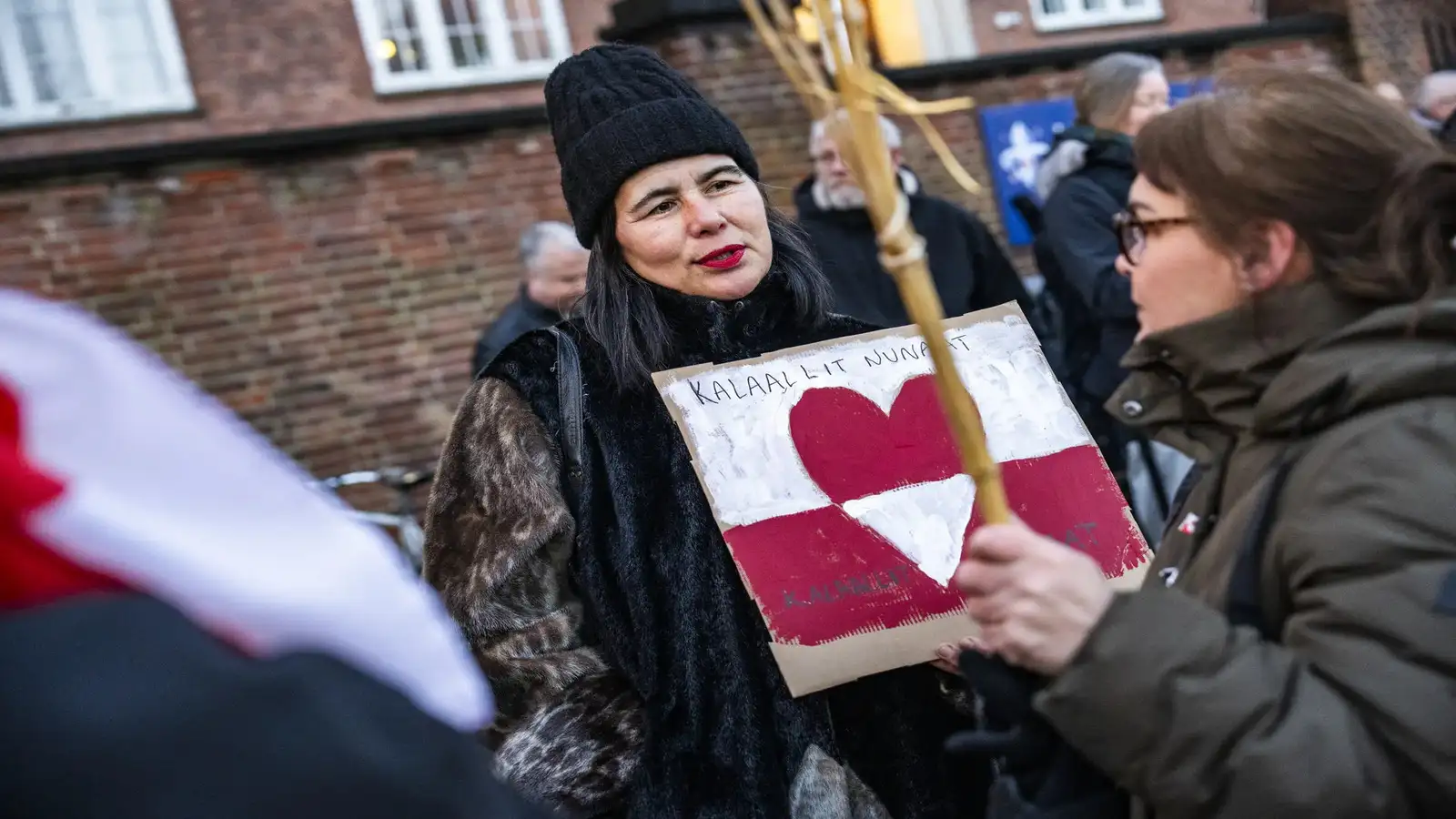
Arctic Geopolitics and Strategic Competition
The Arctic region has gained increasing attention due to climate change, emerging shipping routes, and access to natural resources. Greenland’s geographic position places it at the center of these developments, attracting interest from major global powers.
The Denmark Greenland protests reflected public unease that intensified competition could marginalize local voices. Protesters warned that framing Greenland solely through a strategic or economic lens risks overlooking social, environmental, and cultural dimensions.
Experts have pointed out that melting ice has transformed the Arctic into a more accessible region, prompting renewed military and economic planning. Demonstrators argued that any such planning must prioritize environmental protection and the rights of indigenous communities.
Response to Foreign Takeover Rhetoric
While no formal initiatives exist to alter Greenland’s status, past remarks about acquiring the territory have resurfaced in public discourse. These comments, associated with former US President Donald Trump, continue to provoke strong reactions across Europe.
During the rallies, speakers rejected the notion of Greenland being treated as a negotiable asset. The Denmark Greenland protests served as a reminder that international law and democratic consent underpin modern relations between states and territories.
One organizer addressed the crowd with a single statement that captured the collective sentiment:
“Greenland’s future belongs to its people, not to foreign ambitions.”
The quote was met with sustained applause, encapsulating the core message of the demonstrations.
Media Attention and European Reaction
The protests attracted significant coverage from Danish and international media outlets. Images of crowds holding Greenlandic flags circulated widely, prompting discussion across European capitals about Arctic governance and sovereignty.
Commentators noted that the Denmark Greenland protests resonated with broader European concerns about respect for international norms. In a region shaped by historical struggles over borders and self-determination, the demonstrations struck a familiar chord.
Social media amplified the message further, allowing participants to share personal reflections and historical context. Analysts suggested that such visibility can influence diplomatic narratives by highlighting public expectations.
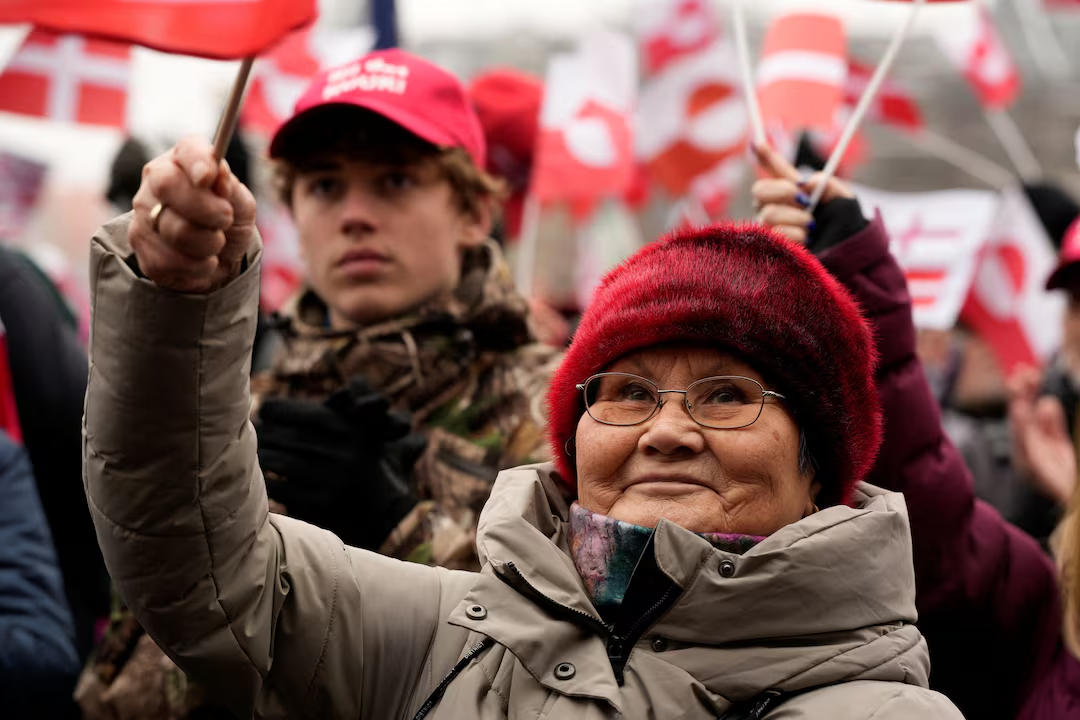
Voices From Greenland Respond
Reactions from Greenlandic leaders and civil society groups were closely followed. Several representatives welcomed the demonstrations as expressions of solidarity rather than interference. The Denmark Greenland protests were interpreted by many in Greenland as supportive gestures that reinforced the principle of self-determination.
At the same time, Greenlandic voices emphasized the importance of partnership built on equality and respect. Solidarity, they noted, is most meaningful when it empowers local decision-making rather than overshadowing it.
This nuanced response underscored the delicate balance between support and autonomy in Denmark–Greenland relations.
Denmark’s Domestic Political Landscape
Within Denmark, the protests sparked renewed discussion about foreign policy responsibilities and historical context. Lawmakers across the political spectrum commented on the demonstrations, acknowledging that they reflected genuine public concern.
Some political figures argued that the Denmark Greenland protests highlighted the need for clearer communication strategies to counter speculative rhetoric from abroad. Others emphasized sustained investment in Greenland’s social and economic development as a foundation for long-term stability.
The events also prompted debate about Denmark’s role within NATO and European security frameworks, particularly as Arctic considerations become more prominent.
Climate Change as a Central Theme
Climate change featured prominently in protest messaging. Greenland is experiencing rapid environmental transformation, affecting infrastructure, ecosystems, and traditional livelihoods.
Participants linked sovereignty with sustainability, arguing that decisions about resource use must prioritize long-term environmental stewardship. The Denmark Greenland protests connected geopolitical concerns with climate responsibility, broadening their significance.
Environmental organizations present at the rallies stressed that Arctic development should proceed cautiously, with local communities playing a leading role in shaping outcomes.
Indigenous Rights and Cultural Preservation
Indigenous rights advocates highlighted the importance of cultural preservation in any discussion about Greenland’s future. Greenland’s Inuit population has deep historical ties to the land, and protesters emphasized that these ties must be respected.
The Denmark Greenland protests included calls for stronger international recognition of indigenous voices in Arctic governance. Speakers argued that respecting sovereignty also means safeguarding language, traditions, and social structures.
Observers noted that this focus added moral depth to the demonstrations, linking contemporary politics with historical responsibility.
Implications for International Cooperation
Experts suggest that public movements like the Denmark Greenland protests can influence the tone of international cooperation. While protests alone do not determine policy, they shape the context in which decisions are made.
Denmark’s public stance may strengthen its credibility as an advocate for rules-based engagement in the Arctic. Analysts noted that transparency and public accountability are increasingly valued in international relations.
The demonstrations also highlighted the role of civil society in addressing complex global challenges traditionally managed by governments.
Historical Context of Denmark–Greenland Relations
Understanding the protests requires acknowledging the historical evolution of Denmark–Greenland relations. From colonial administration to modern autonomy, the relationship has undergone significant transformation.
The Denmark Greenland protests reflected an awareness of this history, with speakers emphasizing lessons learned and progress achieved. Many called for continued efforts to address historical imbalances through dialogue and partnership.
Historians observing the rallies noted that public acknowledgment of the past can contribute to more equitable relationships in the future.
Youth Engagement and Future Perspectives
Young people played a visible role in organizing and participating in the demonstrations. Student groups emphasized that Arctic politics will shape their future, particularly in relation to climate change.
The Denmark Greenland protests provided a platform for youth voices advocating long-term thinking over short-term strategic gains. Participants called for policies that consider environmental and social impacts decades ahead.
This generational perspective added urgency to the demonstrations, highlighting stakes that extend beyond current political cycles.
International Law and Sovereignty Principles
Legal experts referenced international law during the rallies, emphasizing principles of self-determination and territorial integrity. These principles form the backbone of the global system governing relations between states and territories.
The Denmark Greenland protests reinforced these norms by demonstrating public commitment to their application. Observers suggested that such demonstrations can bolster diplomatic arguments grounded in legal frameworks.
By invoking law alongside morality, protesters strengthened the legitimacy of their message.
The Arctic as a Shared Responsibility
Many speakers framed the Arctic as a shared global responsibility rather than a frontier for competition. Climate impacts in the region have worldwide consequences, from sea-level rise to weather patterns.
The Denmark Greenland protests highlighted the need for cooperative approaches that balance development with preservation. Participants urged governments to prioritize multilateral solutions over unilateral actions.
This framing positioned Greenland not as an isolated territory but as a key stakeholder in global environmental stability.
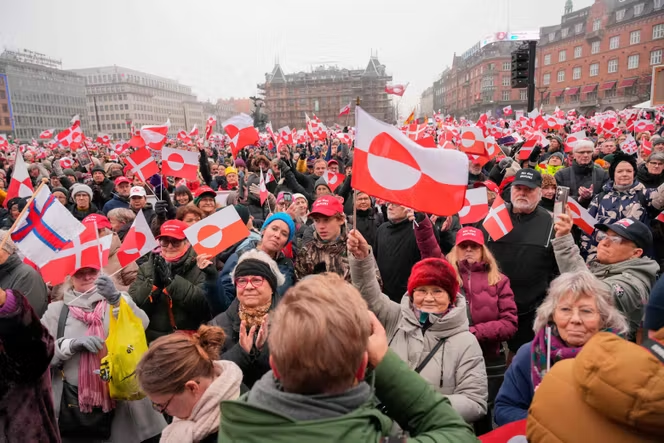
A Message Beyond Copenhagen
Although Copenhagen was the epicenter, smaller demonstrations occurred in other Danish cities, reinforcing the nationwide scope of the movement. Local organizers adapted messages to regional contexts while maintaining a unified theme.
The Denmark Greenland protests thus transcended geographic boundaries, reflecting a shared national conversation. Observers noted that such coordination suggests sustained engagement rather than a single-day event.
The movement’s reach underscored its potential influence on future public discourse.
Looking Ahead in Arctic Politics
As global interest in the Arctic continues to grow, questions raised by the demonstrations are unlikely to fade. The Denmark Greenland protests may serve as a reference point for future debates on sovereignty, sustainability, and ethical engagement.
Analysts suggest that public opinion will play an increasingly important role in shaping Arctic policy. Governments may find it harder to ignore civic voices as transparency becomes a key expectation.
The demonstrations highlighted the interconnectedness of local action and global politics.
Civic Action in a Changing World
The Copenhagen rallies illustrated how civic action can reaffirm principles without escalating conflict. In an era of rapid geopolitical change, silence can be interpreted as indifference.
The Denmark Greenland protests demonstrated that public expression remains a powerful tool in democratic societies. By articulating values collectively, citizens can influence narratives and expectations.
For Denmark and Greenland alike, the events underscored the importance of continued dialogue grounded in respect.
A Defining Moment for Public Solidarity
In the final analysis, the demonstrations marked a defining moment in Denmark’s public engagement with Arctic issues. The Denmark Greenland protests were not solely about external rhetoric but about affirming a vision of international relations based on consent and dignity.
As Arctic politics evolve, the message from Copenhagen remains clear: Greenland’s future is not a bargaining chip but a matter of democratic choice. The rallies sent that message from the streets to the world, shaping a conversation that is likely to endure well beyond 2026.