
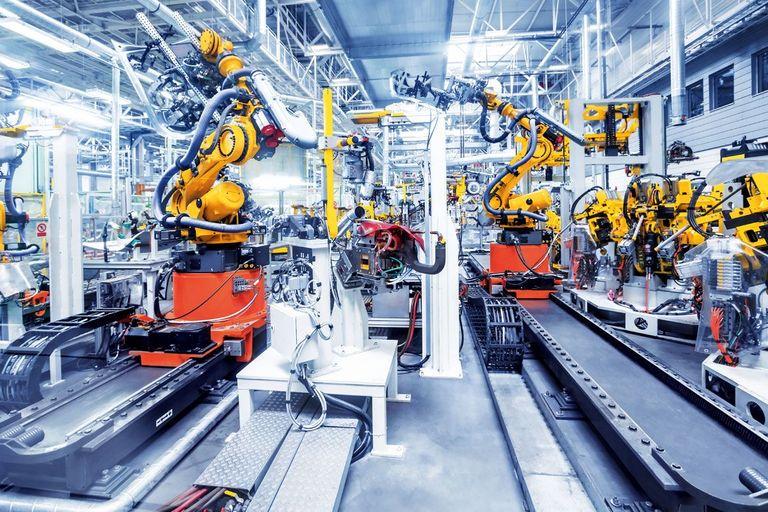
Over roughly four decades, China has carried out one of the largest economic transformations on record. Since 1978 it has grown at close to 9 percent a year, lifted hundreds of millions of people out of poverty and become the world’s second largest economy. It now accounts for almost a fifth of global output and remains the single biggest contributor to world growth.
Those numbers are widely cited. What deserves closer attention is how the results were produced, because the process holds more practical value for other countries than the totals do. The lesson is not a model to be imported wholesale. It is a way of working that can be adapted anywhere.
Much of the Western argument still tries to force China’s experience into a neat conclusion, proof that the state should lead or that markets should. This misses what happened. China did not follow a blueprint. It experimented. Reform of farms came before reform of factories. A handful of coastal zones were opened as controlled tests before their lessons were applied nationally. Policies that worked were expanded, and those that failed were quietly abandoned. The approach built political support, limited disruption and let the system learn as it went.
For developing countries that is the practical lesson. Success depends less on designing a perfect policy than on building institutions that can notice their own mistakes and correct them. A second lesson cuts against a debate that consumed development economics for half a century. The choice between state and market was always a false one. Markets provide competition, incentives and the energy of entrepreneurs. Governments provide what markets neglect: stable finances, infrastructure, education and patience. The two work best as partners, not rivals.
The third lesson should give today’s policymakers pause, because openness did much of the heavy lifting. Foreign investment, exposure to competition and access to world markets turned a closed economy into the planet’s manufacturing center and, increasingly, a technological one. The pattern across modern history is consistent. Countries that connected themselves to the world grew faster, and those that walled themselves off fell behind. This is precisely the wisdom the wealthy world is now discarding.
The strangeness of the moment lies there. For decades rich countries lectured the developing world that tariffs, subsidies and industrial policy led to stagnation, and that opening up led to prosperity. Now many of those same countries are reaching for the very tools they once condemned. The World Trade Organization has called this a kind of hypocrisy, the wealthy pulling up the ladder they climbed and preferring a system based on power to one based on rules. American tariffs have risen to their highest average level since the 1930s, and the World Bank warns that this could be the weakest decade for global growth since the 1960s.
A paradox is worth naming. The loudest threat to the open trading order now comes not from the powers said to oppose it but from the country that built it. Beijing has understood this and declined to shout. It does not present itself as a replacement for the United States. It keeps relying on the sea lanes, markets and rules that its own growth requires, and lets others draw their conclusions. Meanwhile it has made itself hard to do without, dominating solar panels, batteries and electric vehicles, financing infrastructure across the Global South and slowly widening the use of its currency.
None of this means China’s path is smooth or repeatable. The forces that drove its early decades, a young workforce, rapid urbanization and very high investment, have weakened. The population is aging. Property, once a quarter of the economy, is in its fifth year of decline. Households are cautious and consumption is soft. Growth this year is running near 5 percent, at the top of the official target, yet China’s own statistics bureau describes an economy of strong supply and weak demand. The easy gains are gone.
So the country has set itself a harder task. Its latest five-year plan shifts the sources of growth from labor and capital toward innovation and productivity, raising research spending by more than 7 percent a year and pushing into quantum computing, biomanufacturing, advanced energy and artificial intelligence. China graduates more than 5 million science and engineering students a year. The question is no longer how to escape poverty but how to reach the technological frontier, which no amount of spending alone can guarantee.
The larger lesson outlasts every caveat. Development is never a finished project. The countries that succeed are not those that discover a permanent formula but those that keep adjusting to conditions at home and abroad. China’s rise cannot be copied. Its method, solving real problems, learning from failure and staying open, can be. In an anxious and fragmenting world, that may be the most valuable thing it has to offer.