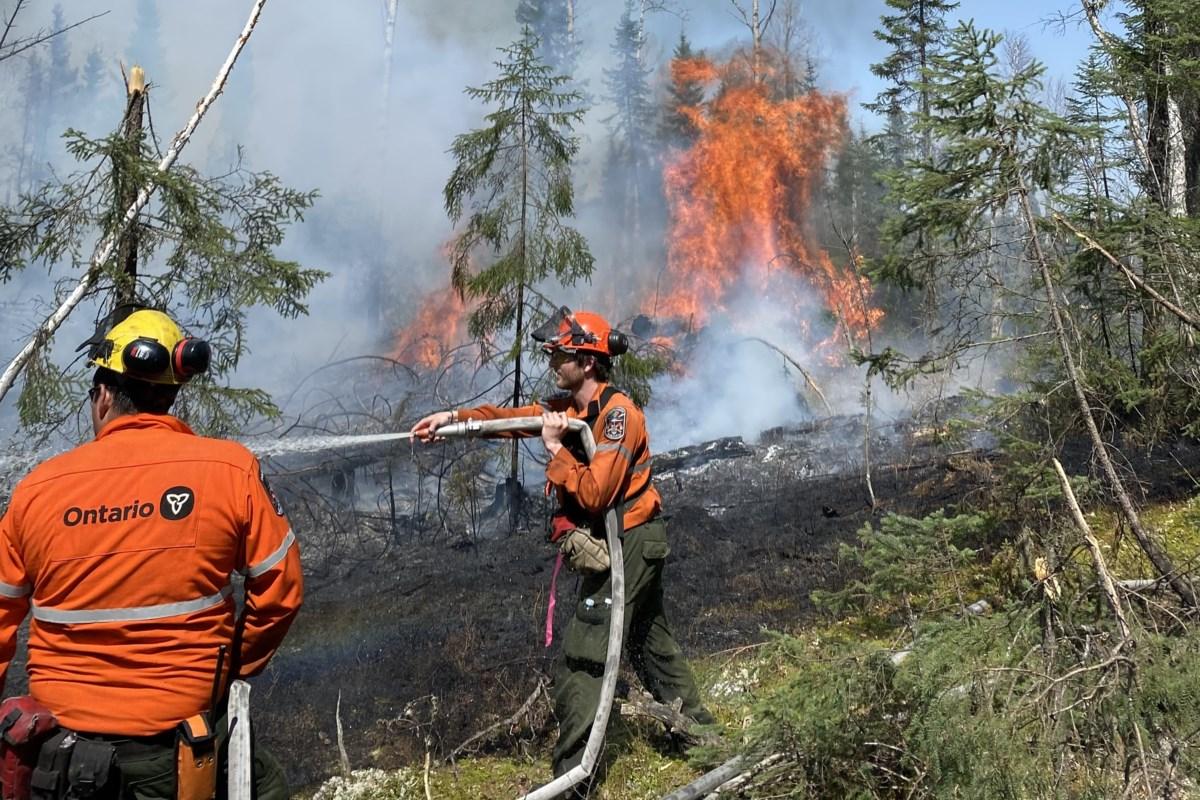
Ontario, Canada, July 20 Brussels Morning Newspaper — Canadian wildfire smoke today continued affecting parts of the United States as expanding wildfires across northern Ontario produced widespread smoke that crossed the border. Canadian fire agencies remain focused on containing numerous active fires while health officials in both countries warn residents about deteriorating air quality caused by fine smoke particles.
Ontario Wildfires Continue to Expand
Firefighters remain deployed across northern Ontario, where dry weather, warm temperatures and shifting winds have made suppression efforts more difficult. Several communities remain under evacuation orders or alerts as crews work to protect homes, infrastructure and critical services.
Smoke generated by the fires has spread across the Great Lakes region into parts of the Midwest and Northeast, reducing visibility and contributing to unhealthy air quality in several U.S. states.
Smoke Prompts Air Quality Alerts
Air quality advisories remain in effect across multiple regions as smoke continues to move south. Public health officials recommend that children, older adults and people with asthma, heart disease or other respiratory conditions limit prolonged outdoor activity when smoke concentrations increase.
Residents are also advised to keep windows closed where possible, use indoor air filtration systems and monitor local air quality forecasts before spending extended periods outdoors.
Emergency Response Remains Underway
Canadian authorities continue deploying ground crews, water bombers and helicopters to contain the largest fires. Weather conditions remain the biggest factor affecting fire behaviour, with limited rainfall forecast for some of the hardest-hit areas.
Emergency management agencies in Canada and the United States continue coordinating smoke forecasts and public safety updates as wildfire activity evolves throughout the region.
Outlook for the Coming Days
Officials say wildfire conditions could continue to change as temperatures and wind patterns shift. Additional smoke may affect communities downwind until significant rainfall helps reduce fire activity. Residents are encouraged to follow official wildfire updates and local air quality advisories throughout the week.