Wallonia (Brussels Morning Newspaper) – Walloon journalist Christophe Deborsu’s documentary on Verviers unemployment highlights struggles of residents facing federal benefit cuts affecting 100,000 people from January 2026, defended by Bert Kruismans against political criticism.
As VRT News reported, the documentary “Unemployed, Are We All Fraudsters?” by Walloon journalist Christophe Deborsu is drawing strong reactions in Wallonia, Belgium. The documentary looks at unemployment and social security benefits in the region.
Deborsu interviews residents of Verviers who live on unemployment or disability allowances. They talk about their daily struggles and how they manage on limited support. Starting in January 2026, the first group of people will lose unemployment benefits because of federally set time limits. Officials mentioned that over 100,000 people will be affected.
What does Deborsu’s Verviers documentary reveal about Wallonia’s unemployment?
The documentary has drawn criticism from some politicians. They say it reinforces negative stereotypes about unemployed people. Critics argue it portrays Walloons as lazy or fraudulent. Bert Kruismans, a Walloon columnist and comedian, rejects these claims. He says the film shows the real struggles of people living on social benefits.
“Christophe makes TV, not a sociological study. Of course, he does look for extremes. If you’re making a report on drug issues, you’re more likely to film in Brussels or Antwerp than”,
say, Horebeke.
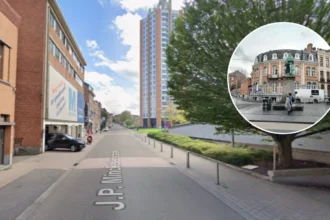
If Brussels-South is often linked to drug problems, Verviers has become a focal point for unemployment in Wallonia. In his documentary, Christophe Deborsu visits the poorest street in the city. Columnist and comedian Bert Kruismans calls this a logical choice for the report.
“Verviers, Dison, Pepinster… that’s serious misery. It’s not a cross-section of Wallonia, but a region that’s in dire straits.”
So, no provocation,
“except perhaps for a provocative title. But he’s really hit the nail on the head.”
According to officials, unemployment is a sensitive and highly relevant issue in Wallonia. The topic has been present since the region’s economic decline in the 1970s. For many years, discussions about work and social benefits were framed as Flanders versus Wallonia. Over time, Flemish narratives portraying Walloons as lazy were widely accepted and repeated in Wallonia itself.
“Since last year’s elections, Walloons have been discussing among themselves the fact that there are Walloons who don’t work. A different wind is blowing through Wallonia, more from the right than the left.”
Kruismans says the debate around unemployment is changing. One reason is political. The Parti Socialiste (PS) no longer leads the Walloon government. MR and Les Engagés now hold key positions. At the federal level, the N-VA also influences discussions about social and economic issues. As a result, the conversation is no longer only about Flemish versus Walloon perspectives.
“You can see that Bart De Wever and his entire party have toned down their community narrative and are less emphasising the fact that Walloons don’t want to work.”
The debate now emphasises understanding the social and economic realities instead of repeating old stereotypes or historical narratives.
“People have been woken up by the federal measure. But for some viewers, it’s a rude awakening.”
Wallonia’s economic decline began in the late 1960s and early 1970s when coal mines and steel factories started closing because of international competition. From 1974 to 1977, industrial jobs fell sharply, and unemployment in some districts rose from 4.9 % to 17.2 %. In 1966, Flanders’ GDP per capita surpassed Wallonia’s for the first time, and the gap has continued to grow since then. These changes caused major regional imbalances and reshaped Belgium’s economic and political landscape.