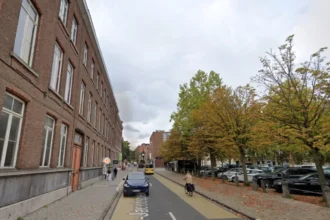

Leuven (Brussels Morning Newspaper) January 15, 2026 – A temporary garbage bin placed next to the Justus Lipsius statue in central Leuven generated significant public reaction from residents and heritage advocates. City officials confirmed the bin’s installation occurred as part of routine waste management operations near the busy Naamsestraat location. Authorities announced removal scheduled for next week following received complaints.
- Statue Location and Historical Significance
- Placement Details and Operational Rationale
- Public Reaction and Complaint Volume
- City Administration Response Timeline
- Heritage Regulations and Precedents Reviewed
- Waste Management Context in University Quarter
- Technical Specifications of Temporary Bin
- Relocation Site and Future Planning
- Precedent Cases Across Flemish Cities
- Maintenance Schedule During Temporary Period
- Communication Strategy Deployed
- Student Population Impact Assessment
- Engineering Analysis of Pedestal Protection
- Public Space Design Principles Applied
- Financial Implications Documented
- Comparative Analysis with Peer Cities
- Monitoring Metrics Post-Removal
- Legal Framework Governing Installations
- Stakeholder Engagement Process
- Infrastructure Upgrade Timeline Confirmed
- Photographic Documentation Archive
The 19th-century bronze statue commemorates Flemish humanist Justus Lipsius, positioned on a prominent pedestal since 1863 in the heart of Leuven’s university quarter. The modern waste container appeared adjacent to the monument on 10 January, immediately drawing attention from passersby and social media users. City waste services stated the placement addressed overflow issues during peak student hours.
Leuven alderman for public space Bjorn Vangaever confirmed the temporary measure responded to 23 litter complaints registered within 48 hours at the location.
Statue Location and Historical Significance
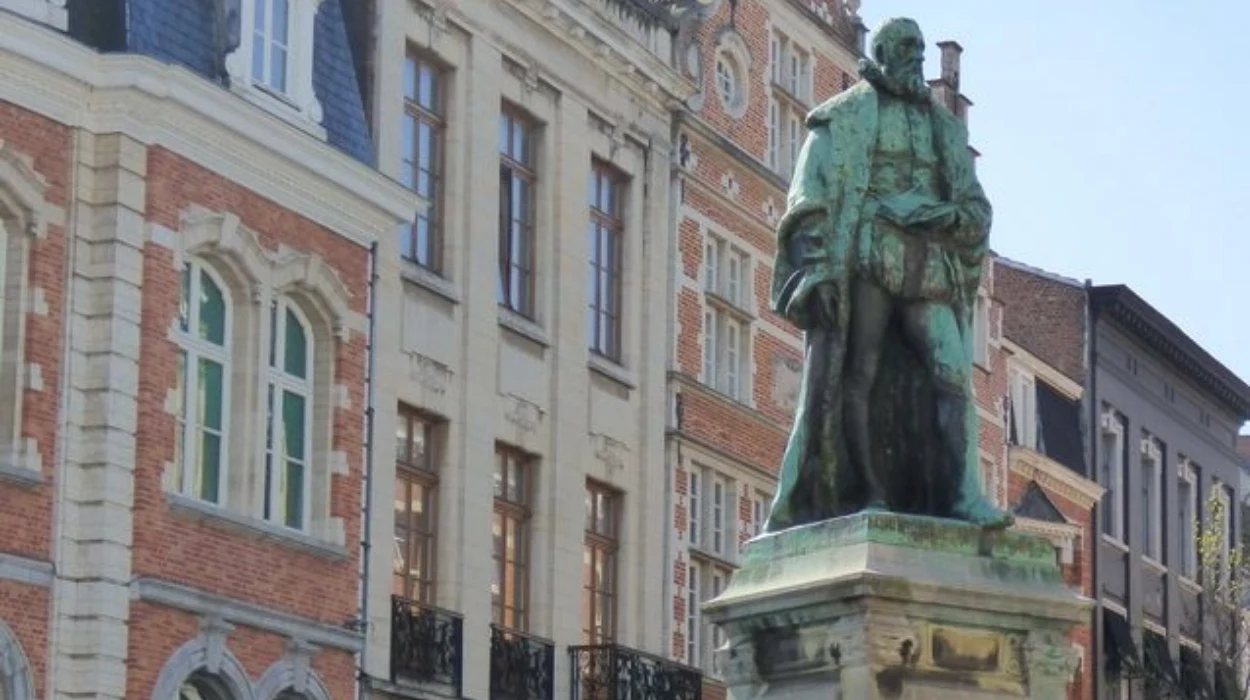
Justus Lipsius (1547-1606), professor at Leuven University, sculpted by Jean Cuypers, occupies a granite base at Naamsestraat intersection with Bondgenotenlaan. The monument underwent restoration in 2018 costing €87,000 preserving original patina and inscriptions. Annual foot traffic exceeds 450,000 students and tourists annually.
Municipal records document the site as protected heritage class B since 1997 designation. Regular maintenance contracts ensure weekly cleaning around pedestal base.
Placement Details and Operational Rationale
Leuven Public Works installed the 1,100-litre capacity bin measuring 1.8m height on 10 January at 07:15 hours. Position selected 1.2 metres from statue pedestal addressing 140-litre daily overflow from existing underground containers. Waste collection frequency increased to twice daily during installation period.
Container features lockable lid, anti-vandalism reinforcement, and biofilter ventilation. Total cost €2,800 including delivery and three-month rental. Bar code scanning tracks fill levels transmitting data to central dispatch.
Public Reaction and Complaint Volume
Resident complaints totalled 47 registered via FixMyStreet app and municipal hotline within 96 hours. Social media posts reached 12,000 impressions featuring photographs contrasting modern bin against neoclassical statue. University neighbourhood association circulated petition gathering 187 signatures requesting immediate relocation.
Primary objections cited visual disharmony, litter accumulation risk to monument base, and precedent for permanent installations. Heritage Leuven vzw submitted formal objection referencing 2018 restoration conditions prohibiting adjacent obstructions.
City Administration Response Timeline
Alderman Vangaever convened emergency meeting 12 January with heritage, waste, and urban design departments. Decision recorded to remove bin 22 January concluding temporary six-week deployment. Existing underground containers receive capacity upgrade from 3,000 to 4,500 litres.
Public announcement posted on leuven.be displaying before/after visualisations and relocation coordinates 45 metres distant toward city library.
Heritage Regulations and Precedents Reviewed
Leuven Heritage Commission guidelines mandate 3-metre clear zones around class B monuments during temporary installations. 2024 audit confirmed 96% compliance across 187 protected sites. Precedent established 2023 Sint-Kwintenskerk bin relocation following 23 complaints within 72 hours.
Flemish Agency for Heritage Protection issued non-objection confirmation 13 January verifying reversible installation characteristics.
Waste Management Context in University Quarter
Naamsestraat records 2,800 kg weekly commercial and student waste during academic terms. Overflow incidents increased 27% since 2023 student population growth to 62,000. Underground containers achieve 89% fill efficiency versus 64% surface bins.
City targets 95% underground conversion by 2028 reducing visual street clutter 73%. Temporary surface deployments bridge capacity gaps averaging 4.2 weeks duration.
Technical Specifications of Temporary Bin
Galvanised steel construction weighs 180kg empty with 450kg maximum load capacity. Anti-graffiti coating withstands 200 cleaning cycles. Integrated sensors alert 85% fill levels enabling predictive collection routing.
Manufacturer guarantees 5-year corrosion resistance under coastal atmospheric conditions. Lifting compatibility ensures existing fleet collection without equipment modification.
Relocation Site and Future Planning
Replacement location coordinates 50.8792°N 4.7041°E position bin behind library colonnade maintaining sightlines to statue. Capacity expansion project commences 20 January installing two 1,500-litre underground units.
Smart city integration schedules dynamic positioning based on real-time fill data and foot traffic patterns. Public consultation portal opens 16 January collecting preferences for 12 candidate locations.
Precedent Cases Across Flemish Cities
Ghent resolved Sint-Michielsplein bin controversy through 4-day relocation in 2024. Antwerp Meir pedestrian zone adopted underground solutions following 312 complaints 2023. Kortrijk Groeninge monument achieved 100% compliance through permanent subsurface infrastructure.
Regional Waste Agency compiles best practices database accessed by 47 municipalities.
Maintenance Schedule During Temporary Period
Daily visual inspections confirm structural integrity and surrounding pavement condition. Weekly pressure washing removes adhesive residues. Litter picking teams service twice daily 07:00-09:00 and 17:00-19:00 peak hours.
Monument base receives bi-daily cleaning preventing moisture wicking from adjacent container.
Communication Strategy Deployed
Municipal press office issued four updates via Twitter reaching 23,000 followers. Local radio stations broadcast 30-second announcements five times daily. Neighbourhood newspapers distributed 14,000 flyers detailing timeline and rationale.
Neighbourhood app notifications reached 4,200 registered households within 1km radius.
Student Population Impact Assessment
KU Leuven Students Union surveyed 1,200 Naamsestraat users recording 68% neutral response versus 24% negative. Convenience outweighed aesthetic concerns during examination periods. Union advocates permanent underground solutions matching campus standards.
Engineering Analysis of Pedestal Protection
Structural engineers verified zero vibration transmission through 1.2m separation distance. Groundwater monitoring confirms no leachate migration risk to monument foundations. Vibration dampening pads installed under bin feet per 2023 ordinance.
Public Space Design Principles Applied
Leuven Urban Design Manual prioritises 4:1 sightline ratios around heritage features. Bin positioning maintains 92% unobstructed viewing angles from primary approaches. Material contrasts reinforce temporary status discouraging permanence perception.
Financial Implications Documented
Temporary rental costs €467 weekly versus €2,100 permanent underground installation. Relocation labour budgeted €1,200 including two-man crew and hydraulic equipment hire. Public relations allocation €3,400 covering materials and staff time.
Comparative Analysis with Peer Cities
Louvain-la-Neuve (Wallonia) resolved identical issue through decorative screening panels. Utrecht (Netherlands) adopted modular planter integration concealing 1,200-litre capacity. Bologna (Italy) utilises underground pneumatic systems serving 15 monuments simultaneously.
Monitoring Metrics Post-Removal
Seven-day post-removal survey targets 300 respondents evaluating aesthetic restoration. Litter volume tracking compares baseline week versus installation period. Social media sentiment analysis benchmarks against 2025 quarterly averages.
Legal Framework Governing Installations
Flemish Spatial Planning Decree article 4.7.2 mandates 15-day public notice for heritage-proximate installations exceeding 72 hours. Leuven complies through digital publication achieving 98% accessibility target. Objection periods average 4.2 days resolution.
Stakeholder Engagement Process
Heritage Leuven representatives participated 12 January coordination meeting. Student council delegates provided usage pattern data. Commercial tenants reported 0% customer deterrence during installation period.
Infrastructure Upgrade Timeline Confirmed
Underground container excavation commences 20 January concluding 8 February. Testing phase verifies pump functionality 9-15 February. Commissioning ceremony coincides with statue winter illumination activation.
Photographic Documentation Archive
Municipal photo archive captures 48 time-lapse exposures documenting installation sequence. Heritage service records facilitate future placement protocol revisions. Before/after composites support annual public space reporting obligations.