Mechelen, Belgium, 19 September, (Brussels Morning Newspaper) – Belgium’s Flemish Green party Groen has called for a national climate command unit to coordinate climate policy across the country, saying fragmented responsibilities between federal and regional authorities are hampering effective action. Party chairman Aimen Horch announced the proposal on Saturday as Groen opened its new political year in Mechelen.
Groen proposes one national climate team
Under Groen’s proposal, civil servants currently working on climate matters at different levels of government would be seconded to one inter-federal team. The group would work on a coordinated national climate policy without requiring another reform of Belgium’s federal structure.
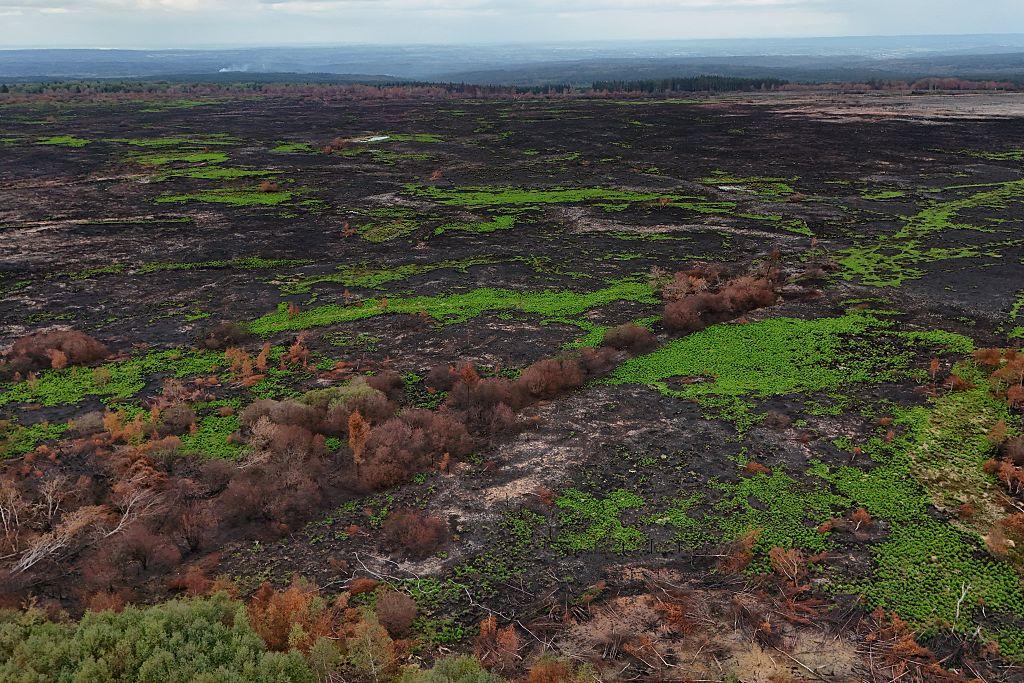
Belgium’s climate and environmental responsibilities are divided across several governments. The issue returned to prominence after August’s major wildfire in the Hautes Fagnes, which affected several thousand hectares and required Belgian emergency services as well as assistance from other regions and abroad.
Horch argued that Belgium’s institutional structure makes accountability more difficult during climate emergencies.
“After six state reforms, we have more climate ministers than firefighting aircraft.”
He added that climate policy was so fragmented that ministers could point towards another level of government rather than taking responsibility for action.
Hautes Fagnes fire intensifies climate debate
Groen cited the Hautes Fagnes wildfire as evidence that stronger coordination is required. Horch claimed relevant ministers had received repeated warnings before the fire, although that allegation represents Groen’s political assessment rather than the conclusion of an independent inquiry.
The federal government had already taken steps towards improving wildfire preparedness. In March 2026, it allocated an additional €850,000 to the FIRE4BE project, designed to improve wildfire prevention through a national database, risk modelling, mapping and stronger detection and warning capabilities.
Crucke backs stronger climate coordination
Federal Climate Minister Jean-Luc Crucke has separately called for improved cooperation following the Hautes Fagnes fire. His office said Belgium’s federal coalition agreement already provides for an inter-federal plan aimed at improving coordination over risks that cross institutional boundaries.
Crucke has requested a detailed assessment by Belgium’s National Crisis Centre of the country’s preparedness and response to major wildfires.
“Climate risk can no longer be considered a marginal risk. It must be fully integrated into our structure for prevention, anticipation and crisis management.”
The minister has also said authorities should examine what worked during the Hautes Fagnes response and identify weaknesses in prevention, information sharing, warning systems and coordination.
Groen points to existing Belgian cooperation model
Groen says Belgium would not need another state reform to establish its proposed climate command unit.
Horch pointed to IRCEL, Belgium’s inter-regional environmental agency for air-quality monitoring, as evidence that authorities can cooperate across regional boundaries while retaining existing constitutional powers.
The proposal comes as climate coordination remains under parliamentary scrutiny. A written question submitted to the Walloon Parliament on 16 September specifically addressed inter-federal climate coordination following the Hautes Fagnes fire.
Climate coordination now faces political debate
Groen’s proposal remains an opposition initiative and has not been adopted by Belgium’s federal or regional governments.
Any climate command unit would require cooperation between the authorities responsible for climate and environmental policy. Meanwhile, the federal government’s existing work on an inter-federal climate adaptation plan and the review of the Hautes Fagnes response are expected to shape the continuing debate over how Belgium prepares for extreme weather.