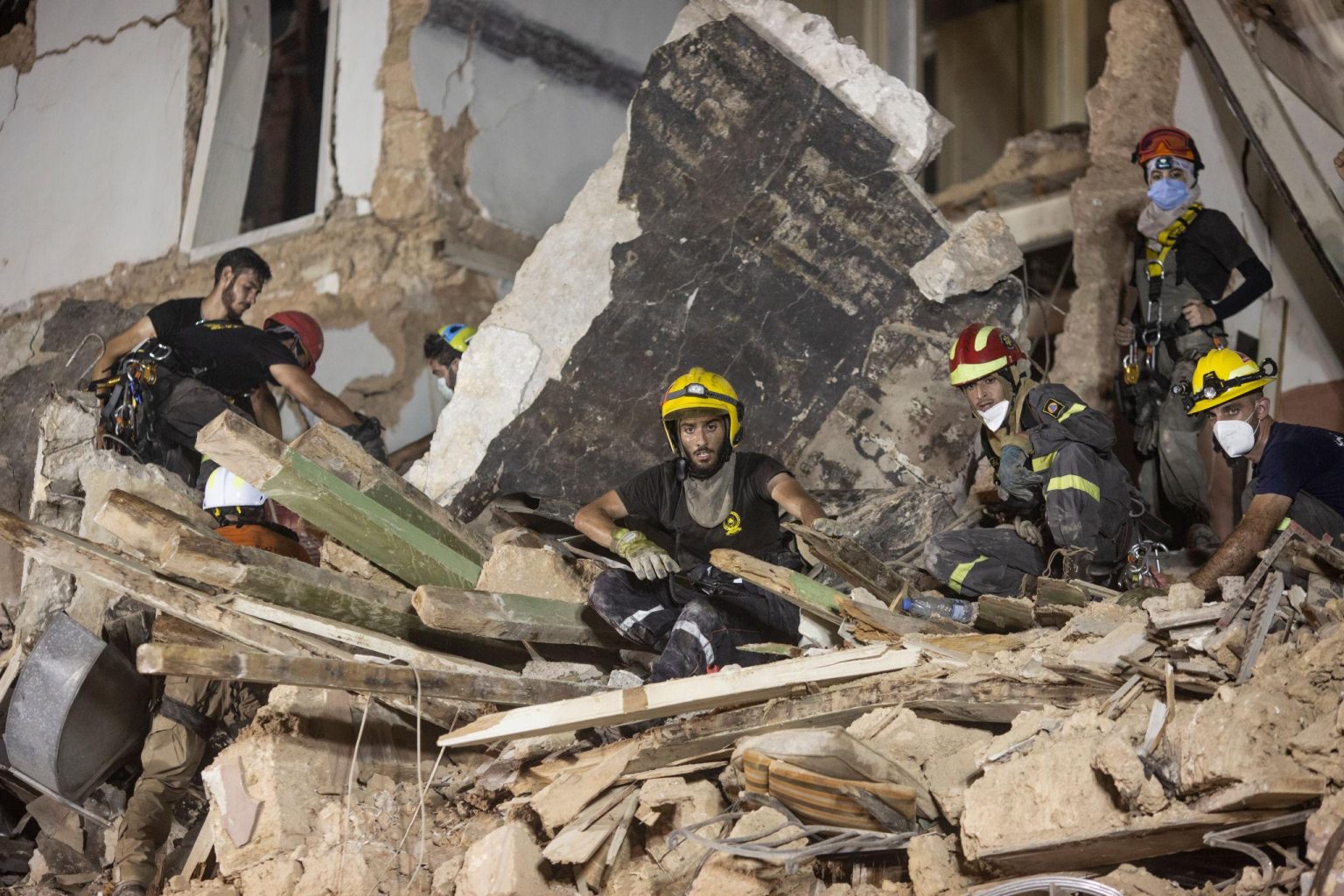
Beirut, Lebanon, June 18 – Brussels Morning Newspaper — Lebanon first responders are working through the remains of a destroyed headquarters, recovering personal belongings, historic records, photographs, and other treasured items buried beneath the rubble. While emergency teams continue assessing structural damage, many responders say preserving memories has become just as important as clearing debris after the facility suffered extensive destruction.
The damaged headquarters served as an operational center for emergency personnel responsible for responding to fires, rescues, medical emergencies, and disaster relief efforts. Although the building sustained severe damage, responders have shifted part of their mission toward rescuing irreplaceable items that represent years of public service and personal sacrifice.
“Every photograph, every badge, and every recovered item tells the story of people who dedicated their lives to serving their communities,”
one emergency official said during the recovery operation.
Recovery Efforts Extend Beyond Structural Cleanup
Emergency crews continue removing debris carefully to protect items that survived inside the damaged building.
Rather than focusing solely on reconstruction, responders are taking time to recover:
- Family photographs
- Service medals
- Unit records
- Emergency equipment
- Historical documents
- Personal uniforms
- Community awards
- Memorial displays
Many of these items represent decades of service by firefighters, rescue personnel, emergency medical workers, and volunteers who operated from the headquarters.
Officials say every recovered object helps preserve the history of an organization that has supported communities through numerous emergencies.
Headquarters Served as Community Emergency Hub
Before its destruction, the headquarters functioned as a central coordination point for emergency operations.
Personnel stationed there responded to a wide range of incidents, including:
- Fire emergencies
- Building collapses
- Medical emergencies
- Search and rescue missions
- Natural disasters
- Public safety incidents
The building also stored equipment, historical archives, training materials, and operational records accumulated over many years.
Its loss represents not only physical damage but also the disappearance of an important part of the organization’s institutional history.
Volunteers Join Recovery Operations
Recovery efforts have attracted assistance from volunteers, former responders, and community members.
Many individuals have joined cleanup activities to help identify photographs, historical documents, and personal belongings before heavy equipment removes larger sections of debris.
Officials say community participation has provided emotional support for emergency workers facing the difficult task of recovering memories from a place that served as both a workplace and a second home.
Preserving History Amid Destruction
Historians and emergency management specialists note that preserving organizational records remains an important part of disaster recovery.
Recovered documents may include:
- Incident reports
- Historical photographs
- Personnel records
- Training certificates
- Community recognition awards
These materials help document the organization’s long history while preserving valuable information for future generations.
Efforts are also underway to digitally preserve recovered records whenever possible to reduce the risk of future losses.
Emotional Impact on Emergency Workers
Many first responders involved in the cleanup have expressed the emotional difficulty of searching through the remains of a building where they spent years serving the public.
For some, recovering a damaged photograph or uniform carries significant personal meaning.
The recovery process has become both a practical operation and an opportunity to honor colleagues whose dedication helped protect communities during emergencies.
Mental health support remains available for responders participating in recovery activities.
Rebuilding Plans Under Discussion
Authorities have begun evaluating options for rebuilding the destroyed headquarters.
Future plans are expected to prioritize:
- Improved structural resilience
- Modern emergency communications
- Updated training facilities
- Enhanced equipment storage
- Greater disaster preparedness
Officials say reconstruction will aim to preserve the organization’s legacy while providing improved operational capabilities for future emergency response.
Community Support Continues Growing
Public support has remained strong as recovery operations continue.
Residents have donated supplies, offered volunteer assistance, and expressed appreciation for emergency workers who continue serving despite losing their own operational facility.
Community leaders have emphasized that rebuilding the headquarters represents an investment in future public safety while honoring decades of dedicated emergency service.
Recovery Symbolizes Hope
Although the headquarters remains heavily damaged, responders say each recovered item represents resilience rather than loss.
Photographs, medals, equipment, and historical records remind both emergency workers and local residents of the commitment shown by generations of first responders.
Officials believe preserving those memories will play an important role as reconstruction efforts move forward.