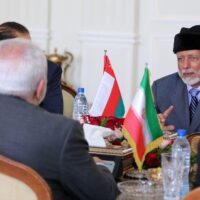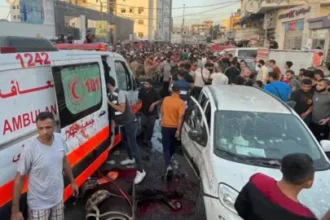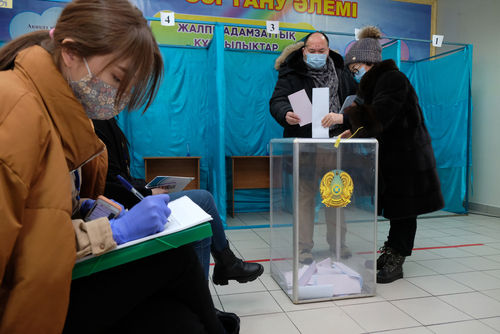

Washington, United States — February 6, 2026. According to Brussels Morning Newspaper, the United States has reaffirmed that Trump diplomacy with Iran remains the preferred approach in 2026, even as senior officials stress that military options remain available if talks fail. The statement comes amid heightened regional uncertainty, with diplomatic, economic, and security pressures converging on Washington’s foreign policy calculations.
A Strategic Message From Washington
US officials described the renewed emphasis on diplomacy as deliberate and calculated. Rather than signaling retreat, the administration framed engagement as a tool to manage risk while maintaining leverage. Officials emphasized that dialogue does not replace deterrence but works alongside it.
Supporters of Trump diplomacy with Iran argue that sustained communication reduces the likelihood of miscalculation, particularly during periods of heightened military readiness in the Middle East.

Iran’s Position Amid Regional Complexity
Iranian leaders have responded cautiously to Washington’s messaging, signaling conditional openness to engagement while reiterating concerns about sovereignty and sanctions. Tehran’s approach reflects domestic political pressures as well as broader regional dynamics, including proxy conflicts and shifting alliances.
Analysts say Trump diplomacy with Iran is unfolding within one of the most complex regional environments in years, making incremental progress more likely than rapid breakthroughs.
Military Deterrence Remains Intact
Despite diplomatic overtures, US military posture in the region remains unchanged. Naval deployments, intelligence surveillance, and coordination with allies continue as part of Washington’s broader security framework.
A senior US official said,
“Diplomacy works best when it is supported by credible strength and consistent messaging.”
History of US–Iran Diplomatic Engagement
Relations between the United States and Iran have been marked by cycles of confrontation and limited engagement for more than four decades. Moments of dialogue have often emerged during periods of crisis, sometimes facilitated through indirect or backchannel diplomacy.
Advocates believe Trump diplomacy with Iran reflects lessons drawn from these past efforts, particularly the importance of keeping communication channels open even when formal relations are strained.
Reaction From Allies and Global Partners
European and Middle Eastern allies have largely welcomed Washington’s emphasis on engagement. Many governments have warned that escalation would carry significant consequences for energy markets, maritime security, and regional stability.
Diplomats say Trump diplomacy with Iran may influence broader strategic calculations across the Gulf, particularly as states assess the balance between deterrence and dialogue.
Domestic Political Debate in the United States
Inside Washington, Iran policy remains politically sensitive. Lawmakers remain divided between those advocating maximum pressure and those urging diplomacy to avoid another prolonged conflict.
Administration officials argue that Trump diplomacy with Iran aligns with public sentiment favoring negotiation over military intervention.

Economic Signals and Market Reaction
Financial markets responded cautiously to US messaging. Energy prices showed limited volatility, reflecting guarded optimism that diplomatic engagement could reduce immediate risks to global supply chains.
Economists note that diplomatic signals, even absent formal talks, can influence investor confidence during periods of geopolitical uncertainty.
Regional Security Calculations
Across the Middle East, governments are closely watching Washington’s approach. For many, US-Iran relations shape defense planning, alliance coordination, and economic forecasting.
Progress under Trump diplomacy with Iran could open space for broader regional engagement, while failure may reinforce entrenched rivalries.
Confidence Building as a Diplomatic Tool
Experts caution that meaningful progress is likely to come through incremental measures. Improved communication channels, crisis-management mechanisms, and narrowly defined technical understandings are seen as realistic starting points.
Such steps may not generate headlines but are often critical to reducing the risk of unintended escalation.
Global Stakes Beyond the Region
Beyond the Middle East, the international community views US-Iran engagement as a test of diplomacy in an increasingly polarized global environment. The outcome may influence how future crises are managed between rival powers.
A regional analyst observed,
“When major powers choose dialogue, even cautiously, it sets a precedent others pay attention to.”
Strategic Outlook for the Remainder of 2026
As 2026 continues, Washington faces the challenge of sustaining engagement without undermining leverage. Officials emphasize patience, noting that diplomatic progress often unfolds unevenly.
The continuation of Trump diplomacy with Iran reflects a strategic choice to manage risk through engagement rather than escalation.
Balancing Pressure With Persistence
Policy makers stress that diplomacy does not mean abandoning pressure. Sanctions enforcement, intelligence cooperation, and alliance coordination remain central to US strategy.
This balance, officials argue, allows engagement to proceed while safeguarding national and regional security interests.
Beyond Confrontation A Measured Diplomatic Path
Ultimately, Washington’s approach reflects a calculation that dialogue, even when limited, offers a way to contain tensions in a volatile geopolitical environment.
The future of Trump diplomacy with Iran will depend on sustained political will, disciplined messaging, and the ability to prevent crises while talks continue.
Managing Expectations in a Fragile Diplomatic Phase
Diplomatic engagement between long-standing rivals rarely delivers immediate or dramatic outcomes, and current US officials have emphasized that expectations should remain realistic. In the context of Trump diplomacy with Iran, policymakers stress that progress is more likely to emerge gradually, through sustained interaction rather than sudden breakthroughs. The present phase is widely viewed as one focused on risk management rather than final resolution.
Officials involved in strategic planning say patience is essential, particularly as domestic political pressures and regional tensions limit flexibility on both sides. Small, carefully calibrated steps, they argue, can still carry strategic value if they reduce misunderstandings or lower the risk of escalation.
A senior policy adviser noted,
“The objective right now is not a grand agreement, but preventing the situation from getting worse while keeping channels open.”
Communication Channels as a Strategic Safeguard
One of the most significant elements of renewed engagement lies in maintaining open and reliable lines of communication. Even limited exchanges can help clarify intentions, especially during periods of heightened alert when misinterpretation carries serious consequences.
Security analysts point out that many historical crises were driven not by deliberate aggression but by faulty assumptions and misread signals. Ensuring that messages are conveyed clearly and consistently has therefore become a central objective of diplomatic engagement linked to Trump diplomacy with Iran.
As one regional security expert explained,
“When communication breaks down, risk increases exponentially. Dialogue does not solve every problem, but it can stop problems from spiraling.”

Regional Actors Adjust Their Calculations
Across the Middle East, governments are closely assessing how Washington’s diplomatic posture may influence their own security strategies and foreign policy decisions. For allies and partners, clarity from the United States helps guide defense planning, intelligence coordination, and diplomatic outreach.
Some regional leaders have quietly welcomed signs of engagement, viewing dialogue as a stabilizing force at a time when multiple conflicts continue to strain political and economic resources. Others remain cautious, concerned that sudden policy shifts could alter established balances of power or introduce new uncertainties.
Energy Markets and Economic Stability
Beyond security considerations, economic factors continue to shape international attention as Trump diplomacy with Iran unfolds. Energy markets remain particularly sensitive to developments involving major regional powers, with even modest diplomatic signals capable of influencing prices, insurance costs, and long-term investment decisions.
Economists emphasize that stability, rather than rapid agreement, is often the most valuable outcome in such situations. Predictability allows governments and businesses to plan more effectively, helping reduce the broader economic fallout associated with geopolitical uncertainty.
The Role of Diplomacy in Preventing Escalation
Experienced diplomats argue that one of the most underappreciated benefits of engagement linked to Trump diplomacy with Iran is its ability to slow momentum toward conflict. By keeping discussions active, decision-makers gain valuable time to assess options, consult allies, and avoid rushed or reactive judgments.
While this approach does not eliminate disagreements, it can prevent them from escalating into full-scale crises. In this sense, diplomacy functions as a buffer, absorbing pressure that might otherwise lead to confrontation.
Domestic Audiences and Political Messaging
Within the United States, officials remain keenly aware of how diplomatic efforts tied to Trump diplomacy with Iran are perceived by the public. Messaging has been carefully shaped to emphasize strength, caution, and national interest rather than compromise for its own sake.
Political advisers say maintaining public confidence is critical to sustaining any long-term diplomatic strategy. Clear explanations of objectives, limitations, and risks help reduce skepticism and manage expectations at home.
Lessons From Past Diplomatic Efforts
Veteran foreign policy observers note that earlier attempts at engagement offer important lessons for current policy makers. Over time, successful diplomacy has often depended less on sweeping agreements and more on consistent, disciplined interaction carried out away from public confrontation. This approach, analysts say, remains relevant as Trump diplomacy with Iran draws on past experience to manage complex negotiations.
Maintaining private communication channels, avoiding inflammatory rhetoric, and allowing negotiators room to maneuver have repeatedly proven essential. These lessons continue to shape how diplomatic initiatives are structured and communicated in today’s strategic environment.
International Perception and Credibility
Globally, the manner in which Washington conducts its diplomacy carries implications far beyond any single bilateral relationship. Allies and competitors alike assess credibility based on consistency, restraint, and follow-through, particularly as Trump diplomacy with Iran unfolds under intense international scrutiny.
A clear and steady approach helps reinforce confidence among partners while signaling seriousness to adversaries. Abrupt shifts, by contrast, can undermine trust and complicate broader strategic objectives across multiple regions.
A Long-Term View of Stability
Policy makers stress that lasting stability rarely emerges from isolated diplomatic initiatives. Instead, it develops through sustained engagement, effective crisis management, and gradual confidence building over time. In this context, Trump diplomacy with Iran is widely viewed as part of a longer process rather than a short-term solution.
While immediate outcomes may appear limited, officials argue that the cumulative impact of dialogue can reshape relationships, reduce hostility, and lower the likelihood of conflict even in the absence of comprehensive agreements.