
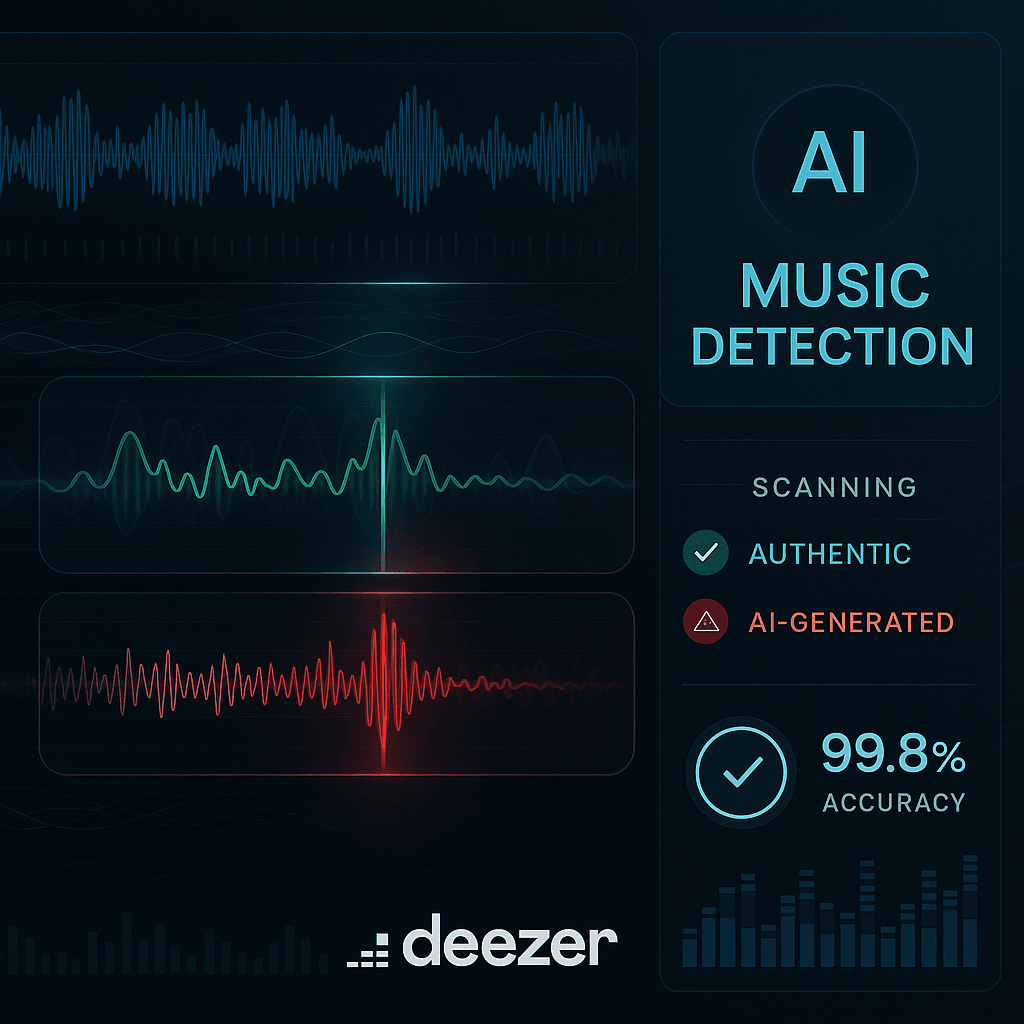
Paris, France — January. In a significant development for the global music industry, Deezer confirmed a licensing agreement with Sacem that places AI music detection at the center of how digital tracks are identified, classified, and monetized. The move reflects mounting pressure on streaming platforms and rights organizations to respond to the rapid growth of artificial intelligence in music creation while maintaining fairness for human artists.
France becomes one of the first major markets to formally integrate this level of technological oversight into national royalty systems, positioning the country as a reference point for future policy and industry standards.
The Changing Landscape of Digital Music Creation
Artificial intelligence has moved from experimental use to mainstream adoption in music production. Tools capable of generating melodies, harmonies, lyrics, and even synthetic vocals are now widely available, lowering barriers to entry and increasing the volume of music uploaded to digital platforms each day.
This surge has created both opportunity and uncertainty. While new technologies enable creative exploration, they also complicate attribution and compensation. The rise of AI music detection reflects the industry’s recognition that existing systems were not designed to manage machine-generated works at scale.
Why France Has Become a Testing Ground
France’s cultural policy has long emphasized the protection of creators and intellectual property. With a strong tradition of collective rights management, the country offers an ideal environment to pilot advanced identification systems within a regulated framework.
By adopting AI music detection, Sacem gains a clearer picture of how content is produced and distributed across streaming services. This transparency aligns with national and European objectives to modernize copyright enforcement without stifling innovation.
Inside the Deezer Sacem Licensing Agreement
The agreement allows Sacem to deploy Deezer’s proprietary technology across its monitoring and data analysis processes. The system evaluates audio files uploaded to platforms, examining structural and production characteristics to determine whether a track originates from human or automated creation tools.
For Deezer, licensing AI music detection represents an evolution from internal platform management to industry-wide collaboration. The company has signaled that similar arrangements could follow in other regions as demand grows.
Technology Designed for Scale and Accuracy
At the core of the system are machine learning models trained on extensive datasets that include both traditional recordings and machine-generated compositions. These models are updated continuously to keep pace with evolving generative tools.
Unlike manual review processes, AI music detection operates at scale, allowing millions of tracks to be analyzed efficiently. This capability is increasingly essential as upload volumes continue to rise across streaming services worldwide.

Artist Concerns and Industry Response
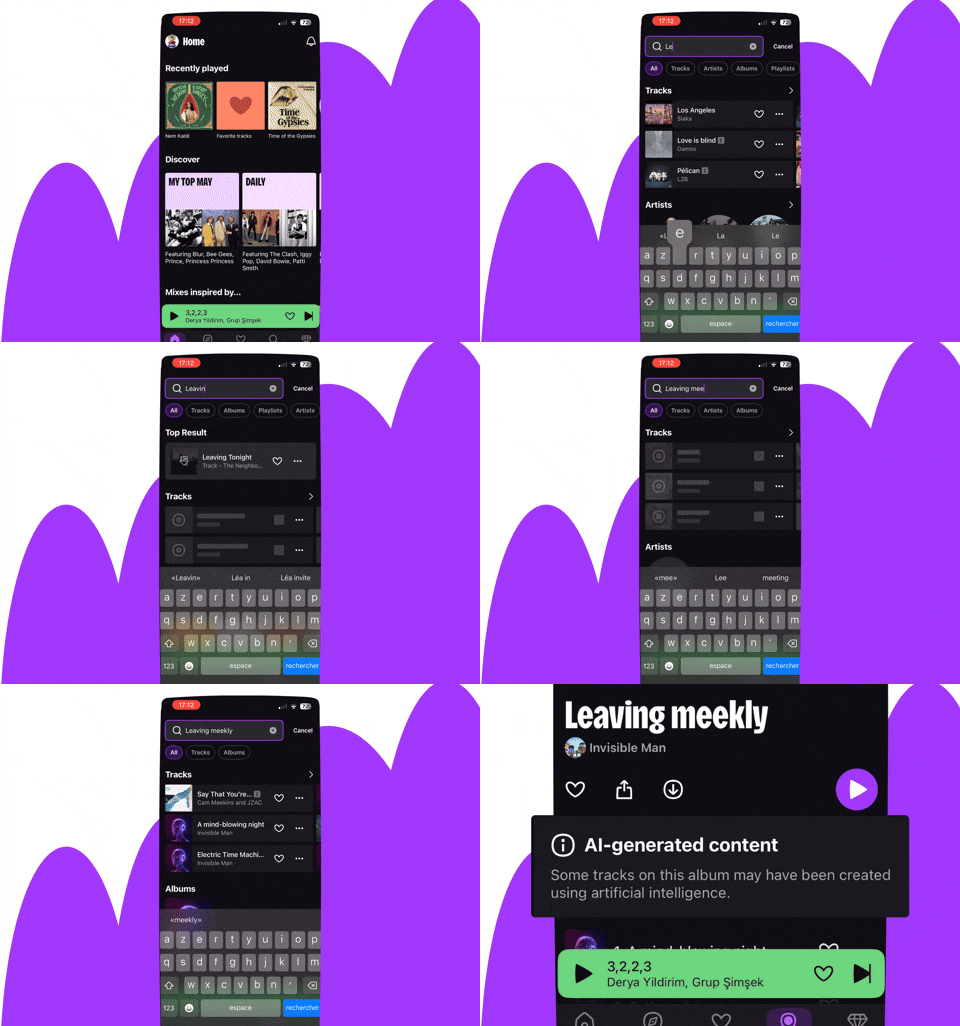
Many artists and songwriters have expressed concern that automated music could dilute visibility and income for human creators. Without clear labeling, listeners may struggle to distinguish between different forms of authorship.
One senior music policy adviser noted,
“Transparent identification is no longer optional if the industry wants to maintain trust.”
This sentiment underscores why AI music detection is viewed as a foundational tool rather than a temporary fix.
Royalty Distribution in the Age of Automation
Royalty systems rely on accurate usage data to function effectively. Misclassification of tracks can lead to misallocated payments, disputes, and loss of confidence among rights holders.
The integration of AI music detection strengthens the integrity of these systems by ensuring that machine-generated content is identified consistently. This clarity helps protect revenue streams for composers, performers, and publishers who depend on fair distribution models.
Legal and Regulatory Dimensions
Artificial intelligence challenges traditional definitions of authorship and originality. As lawmakers debate how existing copyright frameworks should adapt, reliable data becomes increasingly important.
By operationalizing AI music detection, rights organizations can provide regulators with concrete evidence of how automated content is used commercially. This data may influence future legislation and enforcement strategies across Europe.
Deezer’s Broader Platform Strategy
Deezer has positioned itself as an advocate for responsible technology use within streaming. The company argues that innovation and creator protection are not mutually exclusive.
Expanding AI music detection beyond internal moderation allows Deezer to contribute to industry-wide standards while reinforcing its credibility with artists, labels, and policymakers.

International Implications of the French Model
Although the agreement is rooted in France, its implications extend far beyond national borders. Streaming platforms operate globally, and AI-generated music circulates without geographic constraints.
Industry observers suggest that the French deployment of AI music detection could serve as a blueprint for other markets seeking balanced approaches to innovation and rights protection.
Economic Stakes for the Music Industry
The financial impact of artificial intelligence on music remains uncertain. While automated tools can reduce production costs, they also risk over-saturating platforms and devaluing creative labor.
Accurate classification through AI music detection supports more transparent economics by clarifying which works qualify for traditional royalty treatment and which fall under new categories.
Challenges Facing Detection Systems
Despite advances, no system is immune to error. As generative tools become more sophisticated, distinguishing between human and machine-created music grows more complex.
This reality means AI music detection must evolve continuously, supported by ongoing research, data sharing, and collaboration between technology providers and rights organizations.
Balancing Innovation and Cultural Value
France’s approach reflects a broader philosophical debate about the role of technology in cultural production. Rather than rejecting new tools, stakeholders are seeking frameworks that preserve artistic value while embracing change.
The adoption of AI music detection illustrates how governance can adapt without undermining creative freedom or technological progress.
A Signal to Streaming Platforms Worldwide
The Deezer Sacem agreement sends a clear message to the global streaming industry: transparency and accountability are becoming competitive necessities.
Platforms that integrate AI music detection may be better positioned to build trust with creators and audiences alike, particularly as public awareness of artificial intelligence grows.
Looking Ahead to Industry Standards
As more data becomes available, shared standards for identifying and labeling automated music may emerge. Such standards could reduce fragmentation and simplify compliance across markets.
The success of AI music detection in France will likely influence how quickly these standards develop and how widely they are adopted.
Cultural and Ethical Considerations
Beyond economics and law, the rise of automated music raises ethical questions about creativity, originality, and cultural heritage.
Tools like AI music detection help ensure that these conversations are grounded in evidence rather than speculation, enabling informed decision-making across the sector.
Toward a More Transparent Digital Music Ecosystem
The 2026 agreement between Deezer and Sacem represents a milestone in how the music industry responds to technological disruption.
By embedding AI music detection into rights management infrastructure, stakeholders take a decisive step toward transparency, fairness, and sustainability in the digital era.
A Defining Moment for Music Governance
As artificial intelligence continues to shape creative industries, the need for balanced oversight will only intensify.
France’s early adoption of AI music detection may ultimately be remembered as a turning point that helped align innovation with respect for human creativity, setting a precedent for music markets worldwide.