
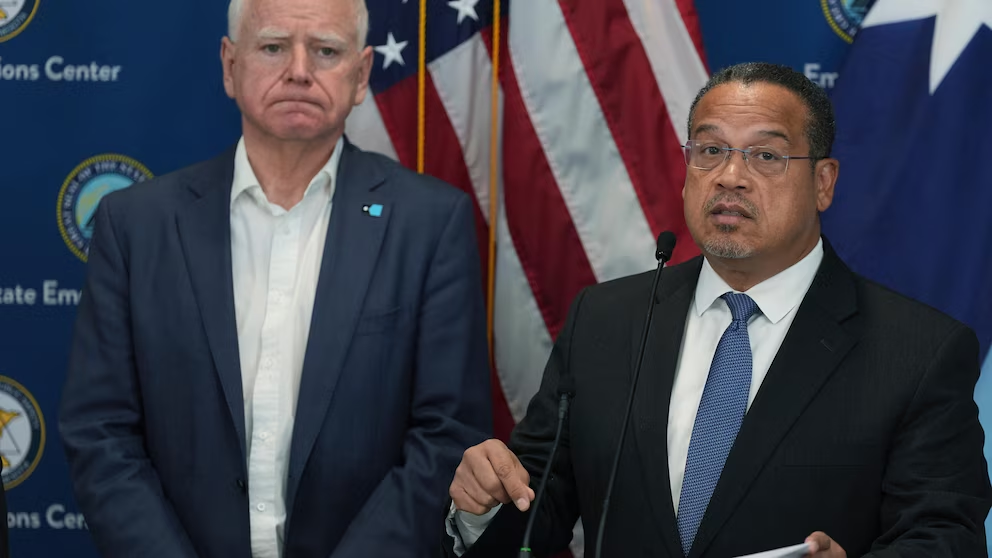
Minnesota, January 2026 — The US immigration court ruling has emerged as a defining legal moment in Minnesota, placing federal enforcement practices under intense judicial scrutiny while drawing national political attention. The ruling comes after weeks of tension following an aggressive federal immigration operation that resulted in fatalities, protests, and a rare legal confrontation between state officials and Washington authorities.
As Minnesota’s legal challenge reached the federal bench, the US immigration court ruling became central to debates about constitutional authority, civil liberties, and the limits of federal power within U.S. states. The case now stands as a benchmark for how immigration enforcement will be conducted in politically divided regions.
Background: How Minnesota Became the Legal Battleground
Minnesota found itself at the heart of the national immigration debate after federal agents intensified enforcement actions in the Minneapolis–St. Paul area. The crackdown was part of a wider strategy to demonstrate federal control over immigration enforcement amid rising political pressure.
The situation escalated when two U.S. citizens were killed during enforcement encounters, sparking immediate public backlash. State officials responded by filing a lawsuit questioning the legality and scope of the operation. This legal action ultimately led to the US immigration court ruling, which now governs how federal agencies may proceed within Minnesota’s borders.
Federal Enforcement Strategy Under Legal Review
The enforcement surge brought thousands of federal personnel into Minnesota, raising concerns about jurisdiction, coordination with local law enforcement, and operational transparency. State attorneys argued that federal agencies failed to properly consult state authorities before deploying large-scale operations.
At the center of the dispute is whether federal immigration powers allow such actions without state cooperation. The US immigration court ruling evaluates this question by weighing executive authority against constitutional limits designed to protect state sovereignty.
Judicial Examination of Constitutional Boundaries
The federal court reviewed extensive legal arguments from both sides. Minnesota’s legal team emphasized the Tenth Amendment and argued that unchecked federal action risks undermining democratic accountability at the state level.
Federal lawyers countered that immigration enforcement remains an exclusive federal responsibility under U.S. law. The US immigration court ruling reflects the court’s effort to balance these competing interpretations without undermining established immigration statutes.
Legal analysts describe the ruling as cautious but impactful, signaling that federal authority may be subject to procedural limitations when enforcement actions affect public safety.
Political Response From Washington
Former President Donald Trump reacted forcefully, defending the enforcement operation and reaffirming his administration’s commitment to strict immigration control. He announced the deployment of Tom Homan, a move interpreted as an effort to reinforce federal oversight amid mounting criticism.
The US immigration court ruling did not directly challenge the political rationale behind the crackdown, but it raised questions about implementation methods. This distinction has fueled further debate within Congress and among legal scholars.
Public Reaction and Civil Unrest
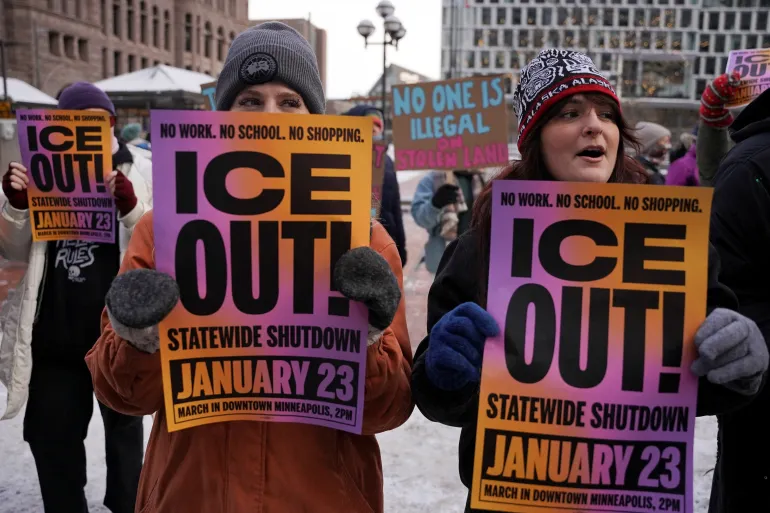
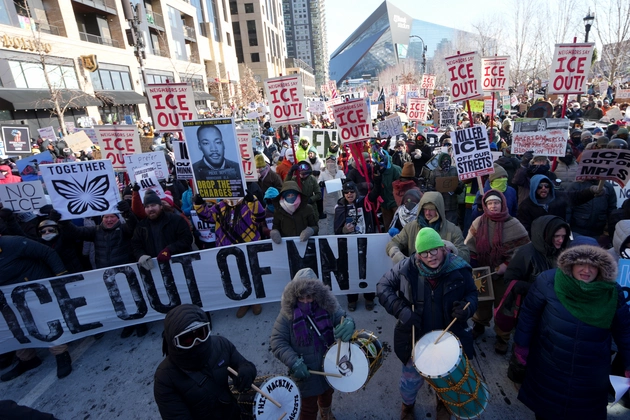
Public demonstrations erupted across Minneapolis following the fatalities, with protesters demanding accountability and transparency. Community leaders argued that enforcement tactics disproportionately affected minority neighborhoods and undermined trust in government institutions.
As protests intensified, the US immigration court ruling became a focal point for activists calling for structural reforms. Demonstrators emphasized that judicial oversight is essential when enforcement operations involve lethal force.
One Quote From the Legal Proceedings
A senior constitutional law expert involved in the hearings stated,
“This ruling is not about weakening immigration law, but about ensuring that enforcement operates within constitutional guardrails.”
National Implications Beyond Minnesota
Although the case originated in Minnesota, its impact extends far beyond state borders. Other states closely watched the proceedings, anticipating how similar legal challenges might unfold elsewhere.
The US immigration court ruling is now cited in policy discussions in California, Texas, and New York, where state and federal authorities have previously clashed over immigration enforcement priorities.
Legal scholars suggest the ruling may influence how future enforcement operations are structured, especially in states with strong local opposition.
Federal Agencies Adjust Operational Approach
Following the court’s guidance, federal agencies initiated internal reviews of enforcement protocols. These reviews focus on use-of-force policies, coordination with state officials, and oversight mechanisms.
While operations have not ceased entirely, the US immigration court ruling has introduced new compliance expectations that could reshape enforcement nationwide.
Economic and Social Consequences
Minnesota’s business community expressed concern over the instability caused by prolonged protests and enforcement uncertainty. Employers in agriculture, manufacturing, and service industries warned that labor disruptions could affect regional economic performance.
Community advocates argue that the US immigration court ruling offers an opportunity to rebuild trust while ensuring lawful enforcement that does not destabilize local economies.
Legal Experts Weigh Precedent Value
Legal experts emphasize that while the ruling does not overturn federal immigration authority, it establishes procedural benchmarks. Courts may now expect federal agencies to demonstrate proportionality and coordination in future cases.
The US immigration court ruling is increasingly referenced in academic analysis as a case study in federalism and administrative law.
Congressional Attention Intensifies
Members of Congress from both parties called for hearings to assess the broader implications of the case. Lawmakers emphasized the need for clarity in immigration enforcement standards to prevent similar crises.
The ruling has fueled legislative proposals aimed at defining clearer limits on federal operations within states.

Media Coverage and Global Interest
International media outlets covered the case extensively, portraying it as evidence of internal political tensions within the United States. Observers noted that the US immigration court ruling reflects broader struggles between central authority and regional governance.
What Happens Next in Minnesota
While the court’s decision addressed immediate enforcement concerns, the legal battle is far from over. Appeals remain possible, and additional lawsuits may follow depending on future federal actions.
State officials indicated that they will continue monitoring compliance closely, citing the US immigration court ruling as a safeguard for residents.
A Defining Legal Moment for 2026
As 2026 unfolds, the US immigration court ruling stands as one of the year’s most consequential legal developments. It highlights the evolving relationship between federal authority, state governance, and judicial oversight.
A Turning Point in Immigration Law
This case underscores how immigration enforcement is no longer solely a policy issue but a constitutional one. The ruling signals a future where courts play a more active role in defining the boundaries of federal power—marking a pivotal moment in modern U.S. legal history.