Brussels, Belgium, January 2026 — The global gold market has entered a historic phase as prices surged to unprecedented levels, reflecting a worldwide rush toward safety amid deepening economic uncertainty and geopolitical instability. According to Brussels Morning Newspaper, investors across continents are reallocating capital into gold at a pace not seen in decades, marking a pivotal moment for global financial markets at the start of 2026.
The surge comes as confidence in traditional assets weakens, currencies face volatility, and policymakers struggle to restore stability. Gold, long regarded as a refuge in times of crisis, has once again taken center stage in global investment strategies.
A Historic Rally Reshapes the Gold Landscape
The rally unfolding in early 2026 is more than a price spike; it represents a structural transformation in how investors perceive risk. The global gold market has moved decisively upward as market participants seek insulation from inflation surprises, debt concerns, and geopolitical shocks.
Market analysts note that gold’s ascent reflects not only fear-driven buying but also long-term repositioning by institutions preparing for prolonged uncertainty. This shift has altered supply-demand dynamics and reinforced gold’s relevance in modern finance.
Economic Pressures Fuel Investor Anxiety
Economic indicators across major economies have painted a mixed picture. Slowing growth, persistent inflation in select regions, and fragile consumer confidence have combined to undermine optimism.
These conditions have strengthened demand within the global gold market, as investors seek assets that are not tied to corporate earnings or government debt. Gold’s independence from monetary policy has become a key attraction during this period of economic re-calibration.
Central Banks Drive Strategic Gold Accumulation
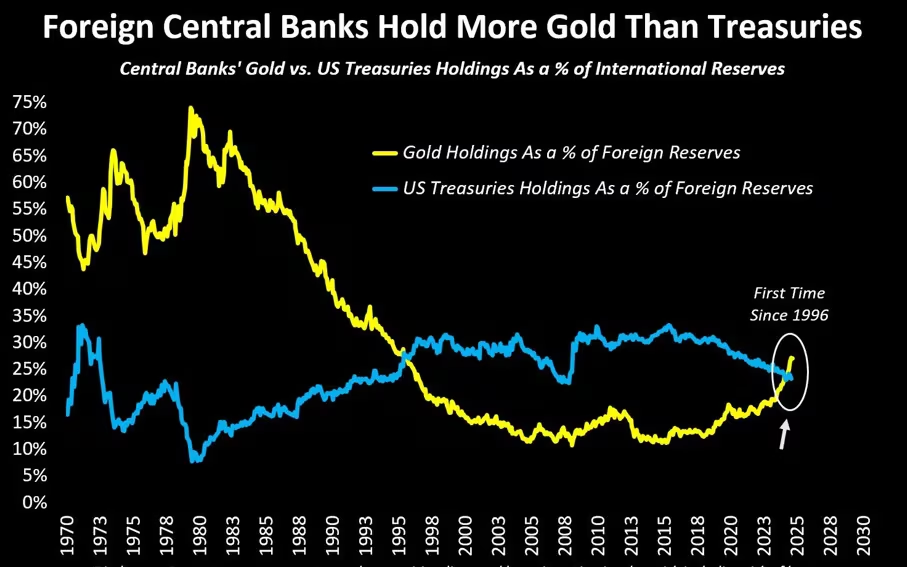
Central banks have emerged as a dominant force in 2026, accelerating gold purchases to diversify reserves and reduce exposure to currency risk. This trend has intensified supply constraints and reinforced upward price momentum.
The global gold market has benefited from this official-sector demand, which signals long-term confidence in gold’s role as a neutral reserve asset. Central bank buying has added credibility to the rally, encouraging private investors to follow suit.
A senior commodities strategist observed,
“Gold is increasingly viewed as a cornerstone of financial security rather than a tactical hedge.”
Supply Limitations Tighten Market Conditions
While demand surges, supply growth remains constrained. Mining companies face rising production costs, regulatory hurdles, and declining ore grades, limiting their ability to respond quickly to higher prices.
These challenges have amplified price sensitivity within the global gold market, where even modest demand increases now generate out sized movements. Recycling activity has risen but remains insufficient to offset structural supply limitations.
Geopolitical Tensions Reinforce Safe-Haven Demand
Ongoing geopolitical tensions have played a critical role in shaping market sentiment. Trade disputes, regional conflicts, and diplomatic uncertainty have heightened risk aversion among investors.
As a result, the global gold market has drawn strong inflows from those seeking protection against political and financial instability. Gold’s universal acceptance and portability make it uniquely suited for periods of heightened geopolitical stress.
Currency Volatility Strengthens Gold’s Appeal
Currency markets have experienced pronounced volatility in 2026, with several major currencies under pressure from fiscal imbalances and shifting interest rate expectations.
This environment has supported the global gold market, as investors turn to gold to hedge against currency depreciation. Gold’s ability to preserve purchasing power across borders has reinforced its status as a reliable store of value.
Impact on Equities, Bonds, and Capital Flows
The strength of gold has had ripple effects across global financial markets. Equity valuations have come under scrutiny, while bond markets reflect uncertainty about future growth and inflation paths.
The rise of the global gold market signals a broader defensive shift in asset allocation. Portfolio managers are reducing exposure to risk-sensitive assets and increasing allocations to commodities and tangible stores of value.
Technology Transforms Gold Accessibility
Technological innovation has played a supportive role in the rally. Digital trading platforms, real-time pricing, and secure custody solutions have made gold more accessible to a wider investor base.
These advancements have enhanced liquidity and transparency within the global gold market, enabling faster responses to macroeconomic developments and reinforcing gold’s integration into modern investment portfolios.
Retail Investors Join the Gold Rush
Retail participation has increased significantly, with individuals purchasing physical gold, coins, and exchange-traded products. This grassroots demand has added momentum to the rally.
The global gold market now reflects a rare alignment of institutional and retail interest, creating a powerful demand base that has sustained price strength through periods of volatility.
Gold’s Cultural and Historical Significance
Beyond financial metrics, gold holds deep cultural and historical significance. For centuries, it has symbolized wealth, stability, and trust across civilizations.
The enduring strength of the global gold market highlights gold’s unique role as both a financial asset and a psychological anchor during times of uncertainty. Its scarcity and permanence continue to resonate with investors worldwide.
Policy Challenges and Market Uncertainty
Policymakers face difficult choices as they attempt to stabilize economies without fueling further inflation or debt accumulation. Market participants remain cautious, closely watching fiscal and monetary signals.
These uncertainties continue to support the global gold market, as investors hedge against policy missteps and unexpected shocks that could disrupt financial systems.
Long-Term Investment Implications
For long-term investors, gold’s performance in 2026 underscores its strategic value within diversified portfolios. While short-term corrections are possible, structural drivers suggest continued relevance.
The global gold market reflects a reassessment of risk and trust in a changing world, where traditional assumptions about growth and stability are being challenged.
A New Era for Precious Metals
The current rally has also renewed interest in other precious metals, though gold remains the primary beneficiary. Its liquidity, depth, and universal acceptance distinguish it from alternatives.
As the global gold market evolves, it continues to set the tone for broader commodity trends and investor sentiment.
Outlook for the Rest of 2026
Looking ahead, analysts expect volatility to remain elevated. Economic data, geopolitical developments, and policy decisions will continue to influence prices.
However, the foundations supporting the global gold market appear robust, suggesting that gold will remain a focal point for investors seeking security and long-term value preservation throughout 2026.
Gold at the Center of Global Finance
As 2026 unfolds, gold has reaffirmed its role as a cornerstone of global finance. Driven by uncertainty, strategic accumulation, and constrained supply, the global gold market stands at the heart of a historic shift in investor behavior. For markets navigating an unpredictable future, gold remains a symbol of stability when confidence is tested.