Abu Dhabi, January 2026, renewed diplomatic engagement was confirmed following a US official statement outlining plans for the next round of talks. According to Brussels Morning Newspaper, the announcement underscores continued efforts to sustain dialogue amid complex regional and international challenges. The talks, scheduled to take place in the United Arab Emirates, signal an ongoing commitment by Washington to structured diplomacy.
The timing of the US official statement places Abu Dhabi once again at the center of high-level international engagement.
Background to the Upcoming Talks
The forthcoming discussions follow earlier rounds of negotiations that focused on de-escalation, coordination, and confidence-building measures. Officials familiar with the process say the talks are designed to maintain communication channels rather than produce immediate breakthroughs.
Analysts note that each US official statement related to the process has emphasized continuity and stability over dramatic diplomatic shifts.
Why Abu Dhabi Remains a Preferred Venue
Abu Dhabi has increasingly emerged as a trusted location for sensitive diplomatic meetings. Its reputation for neutrality, advanced security arrangements, and experience hosting multilateral engagements make it a practical choice.
The selection of the venue, highlighted in the US official statement, reflects a preference for environments that facilitate quiet diplomacy.
The Role of the United States
Washington’s involvement remains central to the process. While the United States is not positioning itself as the sole mediator, it continues to support frameworks that encourage dialogue and reduce misunderstandings.
Diplomatic observers say the tone of the US official statement suggests an emphasis on process management rather than public pressure.
Agenda Expectations and Diplomatic Scope
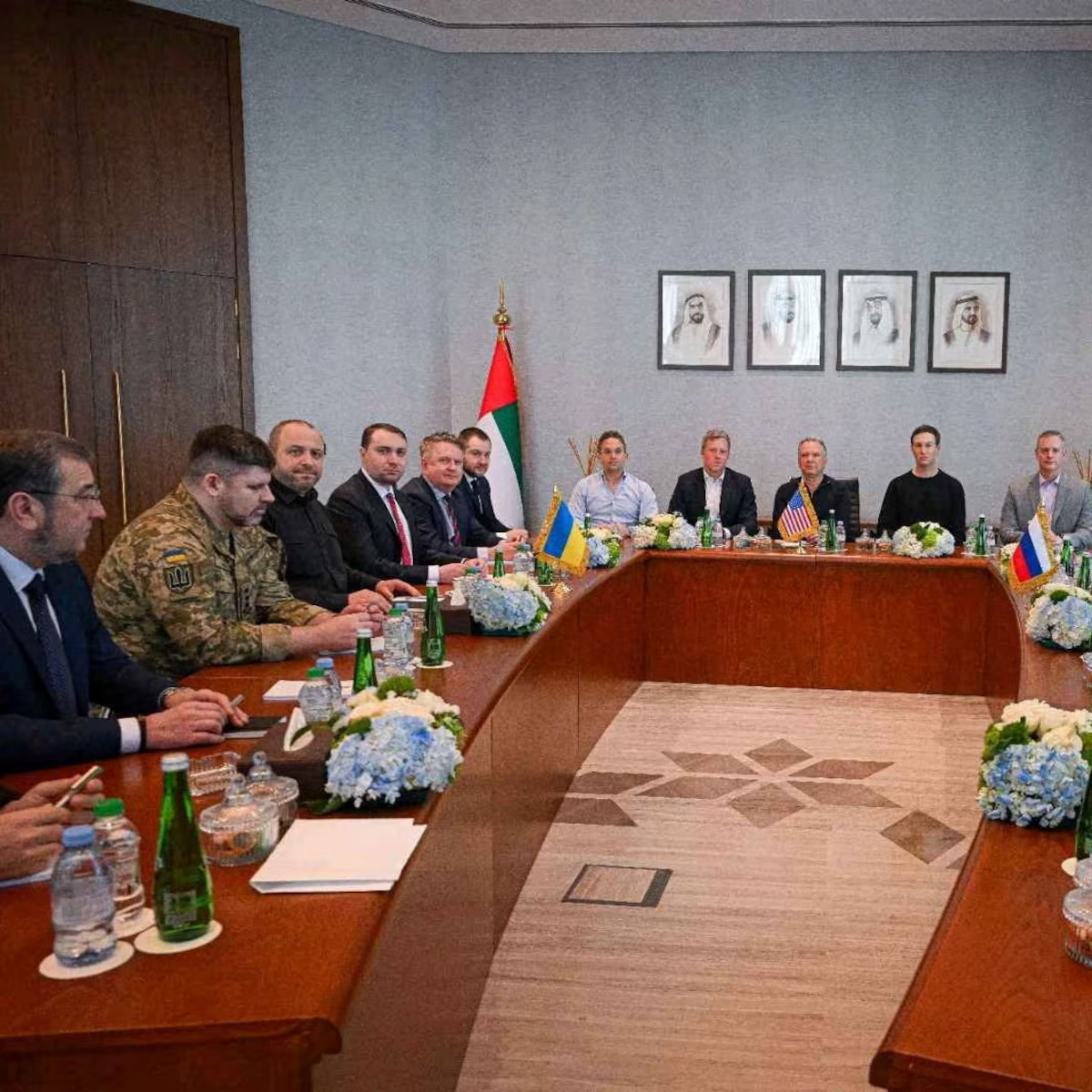
Although full details have not been disclosed, the agenda is expected to cover regional security, humanitarian coordination, and diplomatic confidence-building. Economic cooperation and future engagement mechanisms may also feature.
The measured language of the US official statement indicates a cautious approach aimed at keeping discussions productive.
International Reactions and Early Responses
Initial reactions from diplomatic circles have been reserved but constructive. Several officials welcomed the confirmation of talks, describing continued dialogue as preferable to diplomatic stagnation.
Observers say the US official statement has helped stabilize expectations while avoiding unnecessary speculation.
Strategic Importance of Continued Dialogue
Sustained talks are widely viewed as essential in managing long-running disputes and preventing escalation. Even limited progress can contribute to broader regional stability over time.
In this context, the US official statement serves as a signal that diplomatic engagement remains an active policy tool.
Challenges Facing the Negotiations
Despite renewed engagement, significant obstacles remain. Divergent interests, domestic political pressures, and regional rivalries continue to complicate the diplomatic landscape.
Analysts caution that the US official statement should be seen as an opening rather than a guarantee of tangible outcomes.

Diplomatic Messaging and Public Communication
Publicly confirming the talks carries strategic value. It reassures partners while signaling commitment without revealing sensitive details.
The carefully worded US official statement reflects a balance between transparency and discretion.
Regional and Global Implications
Developments emerging from the talks could have implications beyond the immediate participants. Regional stability, energy markets, and international partnerships are all influenced by diplomatic momentum.
As noted following the US official statement, attention is now focused on whether dialogue can translate into practical cooperation.
One Official Quote
A senior US official said,
“Maintaining open channels of communication is essential, and these talks are part of an ongoing diplomatic effort.”
Diplomatic Timing and the 2026 Context
The scheduling of talks in 2026 reflects broader geopolitical calculations. With multiple global crises competing for attention, sustained engagement requires careful prioritization.
The US official statement situates the talks within this wider international context.
The Role of Quiet Diplomacy
Much of the process is expected to unfold away from public view. Diplomats emphasize that discretion allows participants to explore options without external pressure.
This approach aligns with the tone of the US official statement, which avoided detailed public commitments.
Managing Expectations and Diplomatic Realities
Officials stress that diplomacy is incremental by nature. Progress is often uneven and difficult to measure in the short term.
The US official statement reflects an awareness of these realities, framing the talks as part of a longer process.
Monitoring and Follow-Up
Following the Abu Dhabi meeting, additional discussions may be scheduled depending on developments. Diplomatic teams are expected to assess outcomes before determining next steps.
Each subsequent US official statement will likely provide limited but important signals about direction and momentum.
Media Coverage and Information Flow
International media coverage is expected to intensify as the meeting approaches. However, officials have cautioned against overinterpreting limited information.
The restrained nature of the US official statement suggests an effort to manage the information environment carefully.
Broader Diplomatic Strategy
The talks form part of a wider diplomatic strategy that emphasizes engagement, risk reduction, and multilateral coordination.
Within this framework, the US official statement functions as a procedural marker rather than a policy declaration.
Assessing Diplomatic Effectiveness
Measuring success in diplomacy is complex. Outcomes may include improved communication, reduced tensions, or clearer understanding of positions.
Analysts argue that the US official statement should be evaluated in terms of its contribution to sustained engagement.
The Importance of Continuity
One consistent theme in recent diplomatic efforts has been continuity. Maintaining dialogue over time helps build trust and institutional memory.
This emphasis is evident throughout the US official statement and related briefings.
Looking Ahead After Abu Dhabi
As the scheduled talks approach, attention will turn to participation levels, agenda structure, and follow-up mechanisms. Officials stress that outcomes will shape future engagement.
The US official statement has set expectations for a process-driven approach rather than immediate resolution.
When Dialogue Itself Becomes the Objective
The confirmation of renewed talks in Abu Dhabi highlights the continued reliance on diplomacy to manage complex international challenges. While expectations remain measured, the decision to convene another round reflects a shared interest in engagement over isolation.
In 2026, the US official statement serves as both a signal of intent and a reminder that diplomacy remains a gradual, deliberate process shaped by patience, persistence, and strategic calculation.