How post-communist reflexes, not European values, continue to shape Macedonia’s opposition and undermine its EU ambitions:
The Social Democratic Union of Macedonia (SDSM) presents itself as the country’s most pro-European political force. In its public messaging, the European Union is omnipresent. So are references to democratic values, media freedom, and European standards.
But in Macedonia in 2026, the gap between rhetoric and reality has become impossible to ignore. A party that claims to embody Europe increasingly behaves in ways that contradict the very principles it invokes — particularly when it comes to its treatment of journalists.
This is not a marginal issue. It goes to the heart of Macedonia’s stalled European path and raises uncomfortable questions for Brussels about how democratic backsliding is tolerated when it is wrapped in pro-EU language.
Macedonia remains an EU candidate state, formally committed to integration but politically exhausted by years of blocked progress, deep polarization, and eroding public trust. Had the country not been held back for years by Bulgaria on conditions widely viewed as political rather than democratic, Macedonia would almost certainly already be a member of the European Union. Membership would have imposed institutional discipline and accountability mechanisms that tend to marginalize political actors unwilling to adapt to genuine democratic norms.
Instead, prolonged stagnation has preserved parts of the political class — including SDSM — that survive behind pro-European clichés while reproducing habits inherited from the post-communist system of former Yugoslavia. One of those habits is a deeply ingrained hostility toward independent journalism. Attacking journalists, rather than engaging with criticism, remains an instinctive response — a clear sign that the core values of democracy have still not been internalized.
Public support for EU membership remains strong, especially among younger and urban voters. But patience with political elites is wearing thin. For European partners, Macedonia’s democratic resilience — including respect for media freedom — is no longer an abstract benchmark. It is a credibility test.
Over the past months, SDSM has moved beyond ordinary political criticism and into something more troubling: an effort to shape and police the media space. Senior party figures have publicly targeted journalists and outlets that report on scandals linked to the party leadership. These reactions have not involved factual rebuttals or transparent clarifications. Instead, they rely on labeling, delegitimization, and the suggestion that critical reporting is inherently malicious.
Today, SDSM operates from the opposition benches, but it continues to behave as a party shaped by an older political culture. Originating from the post-communist structures of former Yugoslavia, it has struggled to fully internalize democratic norms that require tolerance of criticism, institutional restraint, and respect for independent media. As electoral support declines, the party has increasingly relied on political influence rather than political persuasion — substituting democratic competition with pressure, labeling, and attempts to control narratives. This has accelerated its loss of public trust.
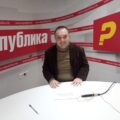
Party leader Venko Filipche and spokesperson Bogdanka Kuzeska have emerged as the most visible enforcers of this approach, positioning themselves as informal “fact-checkers” of the media. I am among the journalists who have been publicly singled out.
The pattern is revealing. SDSM objects not to falsehoods, but to scrutiny. Headlines are reviewed, motives questioned, and journalists accused of toxicity when they report uncomfortable facts.
This goes beyond wounded political pride. It reflects a conception of power in which the media is expected to operate within boundaries implicitly set by political actors.
The damage extends beyond individual journalists or outlets such as Republika. By framing independent media as enemies, SDSM undermines public trust in journalism and weakens one of the few remaining checks on political power.
In a country aspiring to EU membership, the public targeting of journalists by a self-declared pro-European party should be a red flag. Media freedom is not a slogan. It is a functional requirement of democracy.
Macedonia needs a strong and credible opposition. What is unfolding inside SDSM today, however, is not a struggle for power or ideas. It is a struggle with reality.
Dear reader,
Opinions expressed in the op-ed section are solely those of the individual author and do not represent the official stance of our newspaper. We believe in providing a platform for a wide range of voices and perspectives, even those that may challenge or differ from our own. We remain committed to providing our readers with high-quality, fair, and balanced journalism. Thank you for your continued support.