
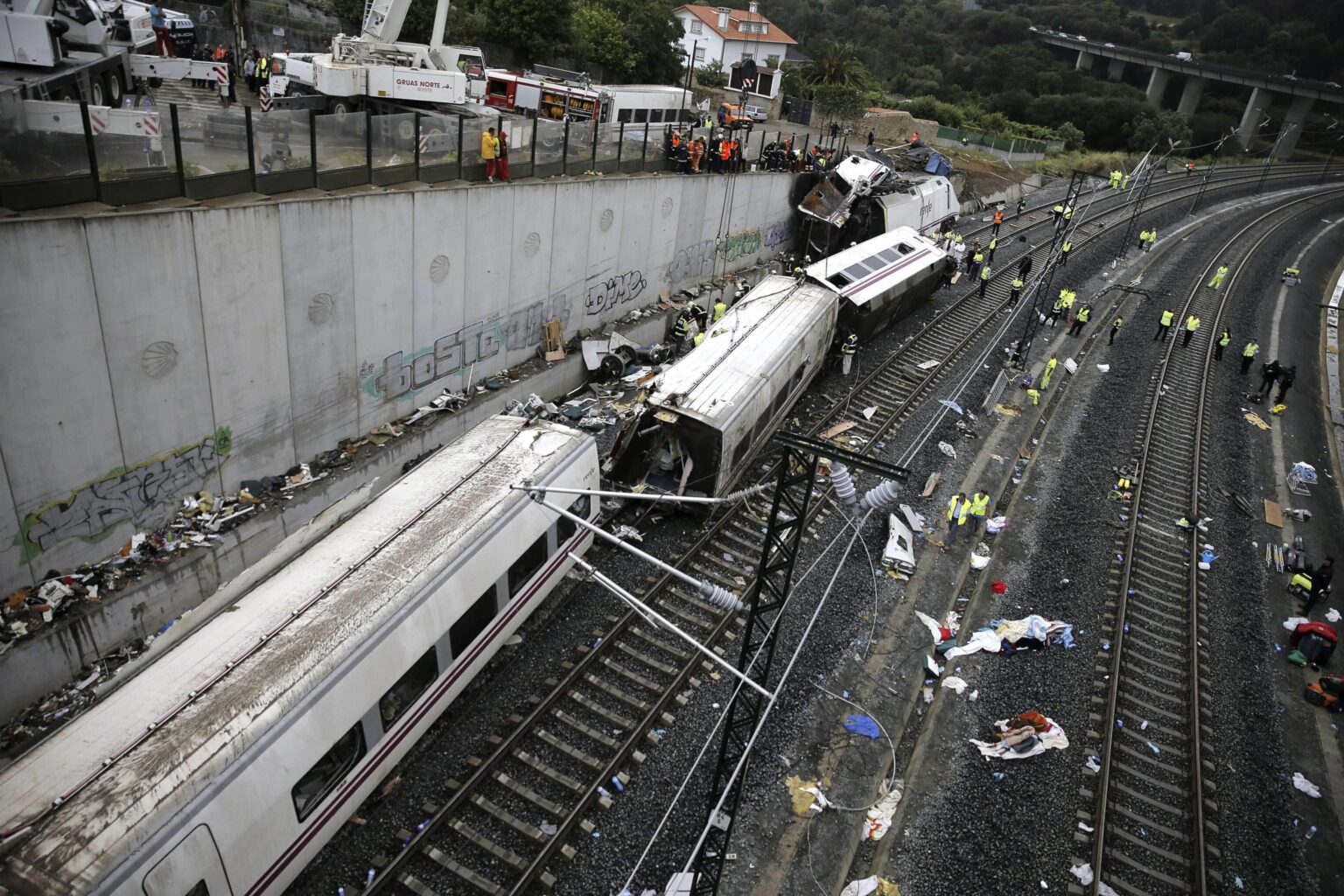
Northern Spain, January 2026, Brussels Morning Newspaper — A devastating Spain train derailment claimed the lives of at least 21 people after two high-speed passenger trains left the tracks on a key northern rail corridor, according to police sources. The crash occurred during peak daytime travel, instantly transforming a routine journey into one of the country’s gravest rail tragedies in recent years.
Emergency crews rushed to the remote stretch of track as mangled carriages lay scattered across the line. Survivors described scenes of panic, with passengers helping one another escape damaged coaches while sirens echoed across the countryside. Authorities confirmed that dozens more were injured, some critically, underscoring the scale of the disaster that has shaken Spain and drawn attention across Europe.
Sequence of Events Leading to the Crash
Initial timelines compiled by emergency officials show that both trains were operating on schedule moments before the derailment. The route is part of Spain’s extensive high-speed network, engineered for efficiency and safety. Yet within seconds, witnesses said they felt violent shaking followed by the sound of metal tearing as multiple cars jumped the rails.
Rail traffic controllers immediately cut power to the line, while automated alerts signaled emergency services. The Spain train derailment unfolded too quickly for passengers to react, highlighting how sudden failures in high-speed environments can have devastating consequences.
Rescue Efforts Under Extreme Conditions
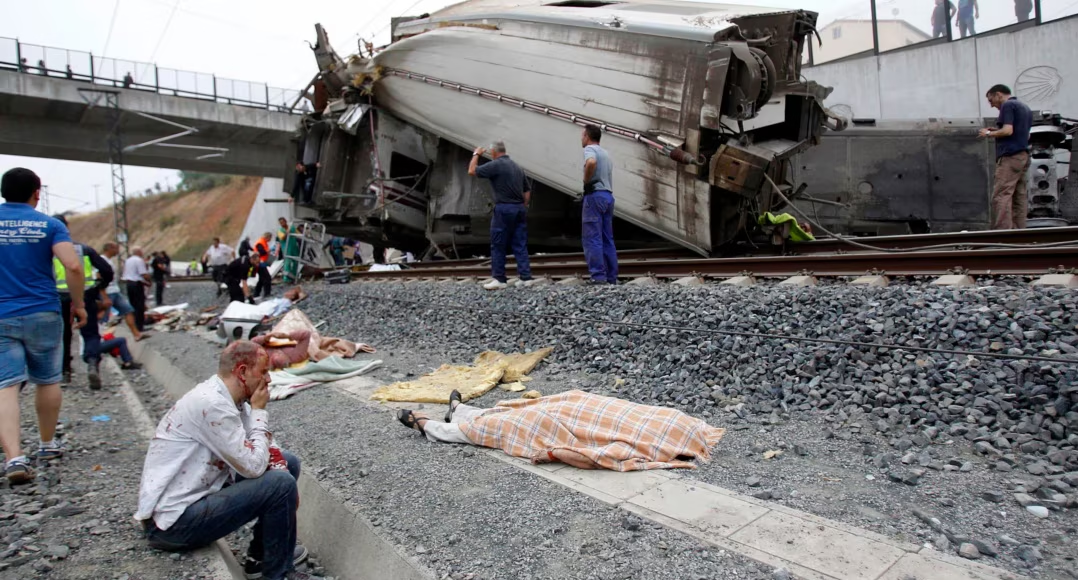
Spain’s emergency response system was activated at the highest level. Firefighters, paramedics, civil protection teams, and police converged from surrounding regions. Helicopters ferried the most seriously injured to major hospitals, while field medics treated others at the scene.
Rescue teams worked for hours using hydraulic cutters to reach passengers trapped inside crushed carriages. Despite challenging terrain and cold winter conditions, officials said coordination between agencies was swift and effective. The response limited further loss of life following the Spain train derailment, though the emotional toll on rescuers was evident.
Hospitals and Medical Response
Hospitals across northern Spain enacted mass casualty protocols. Emergency rooms cleared space, additional surgical teams were called in, and blood donation appeals were issued. Medical staff treated injuries ranging from fractures and burns to severe head trauma.
Health authorities later confirmed that several patients remained in critical condition. Psychological support units were also deployed for survivors and families, recognizing the long-term impact such events can have beyond physical injuries linked to the Spain train derailment.
Victims, Families, and National Grief
Police confirmed that the fatalities included both local residents and foreign nationals. Families gathered at designated information centers, anxiously awaiting updates. Many learned of the tragedy through phone calls and media alerts before official confirmation reached them.
Across Spain, moments of silence were observed at public institutions. Citizens left flowers at railway stations, while vigils were organized in nearby towns. The Spain train derailment has become a shared national trauma, resonating far beyond the immediate crash site.
Official Statement From the Front Line
Authorities emphasized caution as investigations begin. One senior emergency coordinator said,
“Our teams faced extremely difficult conditions, but every possible resource was used to save lives and assist families.”
This single statement encapsulated the official response to the Spain train derailment, balancing urgency with restraint.
Investigation Into Causes and Responsibility
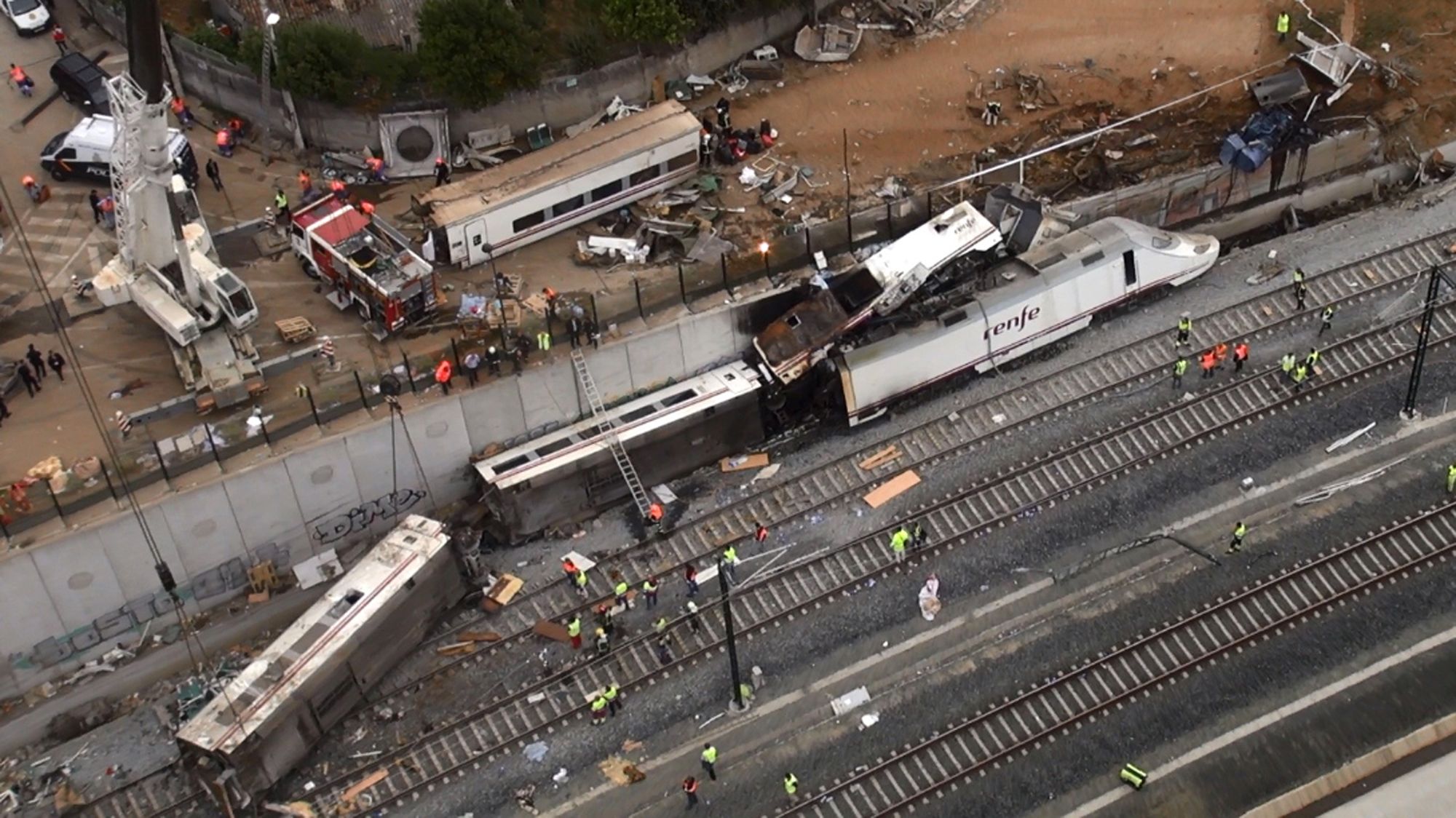
Spain’s rail safety authority has launched a comprehensive inquiry. Data recorders from the trains have been secured, along with signaling logs and maintenance records. Investigators are examining whether technical failure, infrastructure issues, or operational factors played a role.
Independent experts note that high-speed rail systems rely on precise coordination between technology and human oversight. Any breakdown along that chain can have serious consequences, as seen in the Spain train derailment.
Role of Infrastructure and Maintenance
Attention has turned to the condition of the track and surrounding infrastructure. Spain’s high-speed network has expanded rapidly over the past two decades, requiring continuous investment to maintain safety standards.
Rail unions have long warned about the strain placed on maintenance crews and equipment. While no conclusions have been drawn, the Spain train derailment has intensified scrutiny of whether current funding levels are sufficient to sustain such a vast system.
Government Reaction and Policy Review
Senior government officials expressed condolences and promised transparency. The transport ministry ordered immediate inspections of similar rail segments nationwide and announced a temporary review of operating procedures.
Lawmakers across the political spectrum called for accountability. Some demanded parliamentary hearings, arguing that public trust in rail travel depends on clear answers. The Spain train derailment has already become a focal point in broader debates about infrastructure policy.
Impact on Rail Services and Travelers
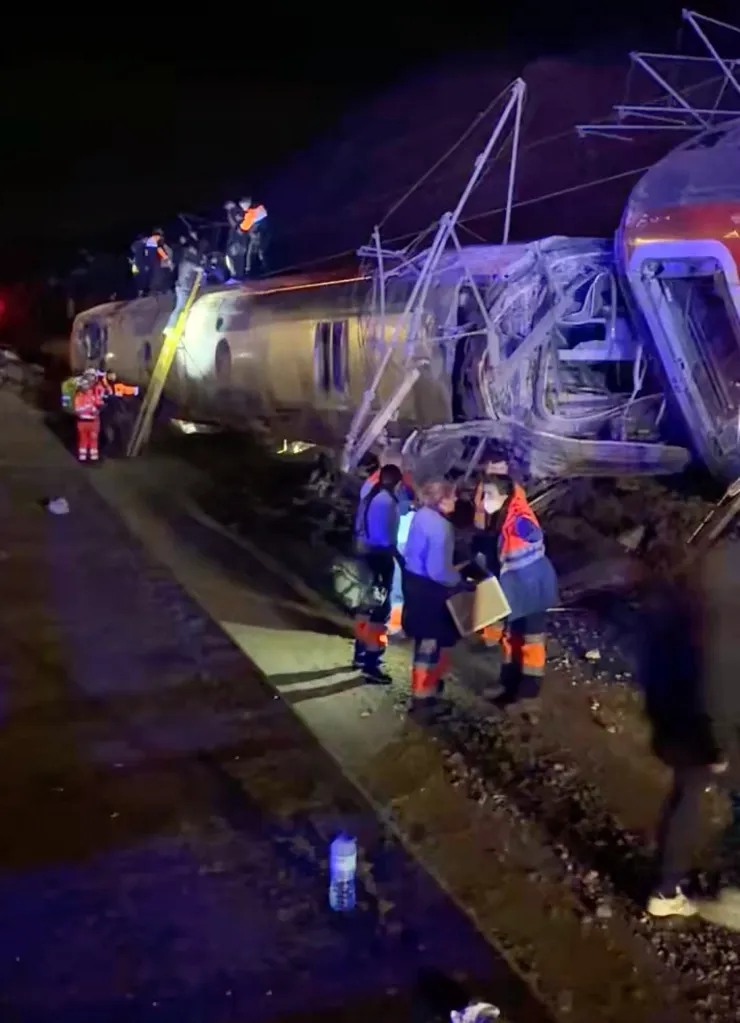
Following the accident, multiple high-speed services were suspended or rerouted. Thousands of passengers faced delays and cancellations, while operators arranged alternative transport and refunds.
Tourism officials acknowledged concerns about the impact on travel confidence. However, analysts stressed that rail remains one of the safest modes of transport overall, even as the Spain train derailment prompts reassessment of risk management.
Public Reaction and Media Coverage
The tragedy dominated national broadcasts and online platforms. Social media users shared firsthand accounts, photos, and messages of solidarity. Hashtags related to the Spain train derailment trended across Europe as news spread internationally.
Media commentators urged responsible coverage, emphasizing respect for victims and avoidance of speculation while investigations continue.
European and International Response
Condolences poured in from European leaders and international organizations. Rail safety agencies from neighboring countries offered technical assistance, reflecting the interconnected nature of Europe’s transport networks.
Experts across the continent are closely following developments, as lessons from the Spain train derailment could influence safety practices beyond Spain’s borders.
High-Speed Rail Safety Under the Spotlight
The accident has reignited debate over high-speed rail safety. Advocates point to the technology’s strong overall record, while critics argue that increasing speeds demand even greater investment in monitoring and maintenance.
Transport specialists suggest expanding predictive maintenance systems and real-time diagnostics to detect faults before they escalate. The Spain train derailment has added urgency to these discussions.
Economic and Social Implications
Beyond immediate human loss, the derailment carries economic consequences. Disrupted transport affects commerce, tourism, and regional mobility. Insurance claims and compensation processes are expected to be complex and lengthy.
Communities near the crash site also face long-term psychological effects. The Spain train derailment has altered daily routines and perceptions of safety for many residents.
Legal Pathways and Accountability
Legal experts anticipate civil claims from victims’ families and injured passengers. Determining liability will depend on investigation findings, including whether negligence or systemic failure is identified.
Authorities stressed that legal processes will follow established procedures, ensuring fairness and transparency in the aftermath of the Spain train derailment.
Restoring Public Confidence
Rail operators have emphasized their commitment to safety, announcing additional inspections and staff briefings. Communication campaigns are expected to reassure passengers as services gradually resume.
Rebuilding trust will be critical. The Spain train derailment has underscored how quickly confidence can be shaken, even in advanced transport systems.
Broader Lessons for Europe
The tragedy serves as a reminder that infrastructure resilience requires constant attention. European policymakers are watching closely, aware that similar networks operate across the continent.
Shared standards, data exchange, and joint safety initiatives may gain momentum following the Spain train derailment, as countries seek to prevent comparable incidents.
A Nation Reflects on Loss and Responsibility
As investigations continue, Spain remains in mourning. The names and stories of the victims are gradually emerging, personalizing a tragedy often reduced to numbers.
The Spain train derailment has forced a national reckoning with questions of safety, oversight, and the true cost of modern mobility.
When Speed Meets Accountability
High-speed rail symbolizes progress and connection, yet this disaster has shown that speed must always be matched by responsibility. The decisions made in the coming months will shape the future of rail travel in Spain.
For families seeking answers and a nation seeking reassurance, the legacy of this tragedy will depend on whether lessons are learned and lives honored through meaningful change.