
Brussels (Brussels Morning Newspaper) January 16, 2026 – The Council of the EU extended sanctions against Hamas and Palestinian Islamic Jihad until January 20, 2027, maintaining asset freezes, travel bans, and financial restrictions on 14 designated individuals and 2 entities. The measures target those supporting or enabling violent actions by the groups, following the October 7, 2023 attacks that killed 1,200 people and took 250 hostages. Decision Implementing Regulation (EU) 2026/215 published in the Official Journal confirms listings unchanged from previous reviews.
- Council decision targets 14 individuals two terrorist entities
- Asset freezes prohibit eu financial institutions transactions
- Hamas leadership designations focus operational commanders
- PIIJ designations cover military council iran coordination
- Travel bans enforced across Schengen area borders
- Financial intelligence units monitor suspicious transactions
- Arms embargo customs controls block prohibited exports
- Quarterly council reviews assess ongoing threat levels
- Europol’s terrorism assessments inform extension decisions
- National implementation varies enforcement mechanisms
The sanctions regime includes Hamas military leaders Yahya Sinwar, Marwan Issa, and PIJ Secretary-General Ziyad al-Nakhalah, designated for terrorist financing and operational roles. EU sanctions coordinator Frédéric de Kerchove stated the extension responds to ongoing threat assessments from member state intelligence and Europol. Financial institutions must block transactions involving listed parties, with arms embargoes and customs controls enforced across the 27 member states.
The EU Council announced the renewal officially. The EU Council said in X post,
“The EU has renewed its sanctions against Hamas and the Palestinian Islamic Jihad until 20 January 2027. Under this sanctions regime, the EU may target those who support, materially or financially, Hamas or the PIJ. More on sanctions against terrorism”
The EU has renewed its sanctions against Hamas and the Palestinian Islamic Jihad until 20 January 2027.
Under this sanctions regime, the EU may target those who support, materially or financially, Hamas or the PIJ.
More on sanctions against terrorism: https://t.co/KBNtdVFLbp pic.twitter.com/0Z2M0MTbmr
— EU Council (@EUCouncil) January 16, 2026
Council decision targets 14 individuals two terrorist entities
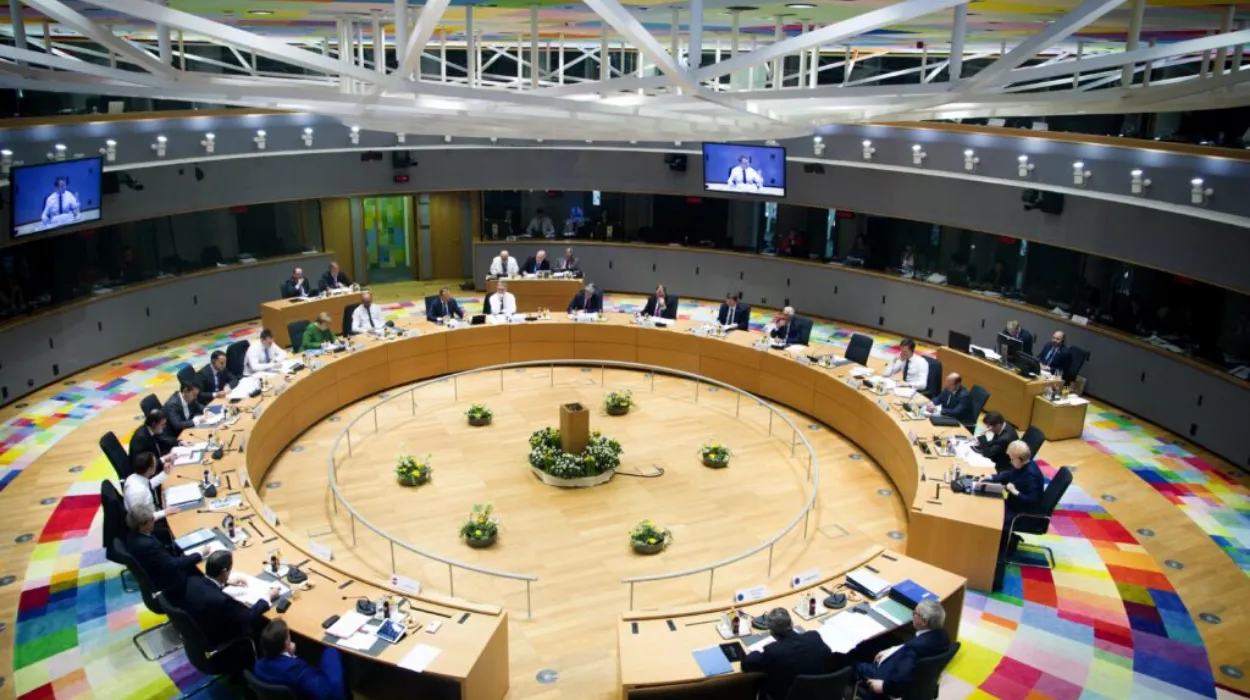
Council Decision (CFSP) 2026/216 renews measures under Common Foreign Security Policy framework originally targeting Hamas military wing since 2001 and PIJ since 2003. Listed individuals include Hamas Gaza operations commander Yahya Sinwar, deputy Marwan Issa, Gaza brigade commanders Muhammad Sinwar and Muhammad Deif, plus PIJ military council members Ziyad al-Nakhalah, Ahmad Abd al-Hadi Ahmad, and Ismail Abu al-Zeid. Entities comprise Hamas Izz ad-Din al-Qassam Brigades and PIJ Saraya al-Quds Forces.
The regime expanded in 2024 to include supporters providing material or financial assistance to the groups’ violent actions. Member states coordinate intelligence through Europol’s Serious International Crime Centre, confirming ongoing operational threats justifying the 12-month prolongation. National authorities enforce asset freezes prohibiting EU-based financial services to listed parties.
Asset freezes prohibit eu financial institutions transactions
Regulation (EU) 2026/215 mandates EU banks and financial entities freeze assets of designated persons and entities without prior notice, with derogations only for basic needs or humanitarian aid approved by competent authorities. Financial intelligence units require suspicious transaction reports involving sanctioned parties, integrated with Egmont Group international networks. Arms embargoes block military equipment and dual-use goods exports to the groups.
EU sanctions database updated with 2026 listings requires enhanced due diligence from compliance officers screening client databases against consolidated lists. Violations carry penalties under national anti-money laundering laws, with European Banking Authority guidelines standardising verification processes across the single market.
EU Council Press detailed the prolongation. EU Council Press said in X post,
“Hamas and PIJ: @EUCouncil prolongs sanctions against those supporting or enabling violent actions of Hamas and PIJ by one year, until 20 Jan ’27. The EU is committed to international law and a just & lasting peace based on the Two-State solution.”
Hamas and PIJ: @EUCouncil prolongs sanctions against those supporting or enabling violent actions of Hamas and PIJ by one year, until 20 Jan ’27.
The EU is committed to international law and a just & lasting peace based on the Two-State solution.
👇https://t.co/SnhqtAKFBi— EU Council Press (@EUCouncilPress) January 16, 2026
Hamas leadership designations focus operational commanders
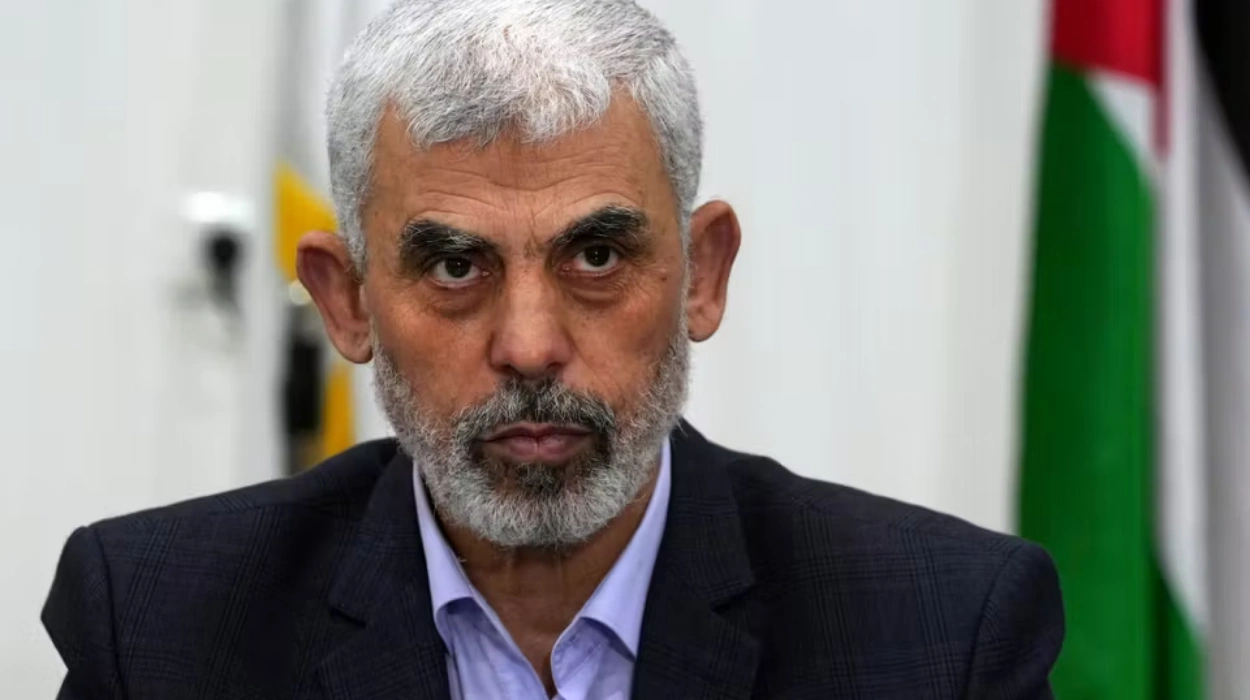
Yahya Sinwar, Hamas leader in Gaza, designated for overall military strategy and October 7 attacks planning. Marwan Issa, deputy military commander, listed for West Bank operations and logistics networks. Muhammad Sinwar commands Gaza Brigade operations including tunnels and rocket production. Muhammad Deif oversees Izz ad-Din al-Qassam Brigades military activities.
Additional Hamas figures Ahmed Omar al-Ghandour and Ayman Nufal lead Gaza City Brigade, while Muhammad Shabana and Hussam Abu Harbid direct Rafah Brigade. Designations cite intelligence on their roles in attacks and hostage situations, maintained through quarterly Council reviews.
PIIJ designations cover military council iran coordination

Ziyad al-Nakhalah, PIJ Secretary-General, designated for Iran funding and weapons coordination. Ahmad Abd al-Hadi Ahmad manages Lebanon operations with Revolutionary Guards links. Ismail Abu al-Zeid oversees Syrian activities and smuggling networks. Saraya al-Quds Forces, PIJ military wing, faces entity-wide asset freezes for rocket attacks.
The 2024 regime expansion allows targeting enablers beyond direct members, including financiers and material supporters. Europol reports confirm PIJ reliance on external funding channels disrupted by sanctions compliance.
Travel bans enforced across Schengen area borders
Designated individuals prohibited from entering or transiting EU territory, with Schengen Information System alerts at external borders. Frontex coordinates risk analysis and interception procedures, integrating biometric data for watchlist enforcement. National police maintain denial lists for air, sea, and land entry points.
Visa bans extend to family members involved in support activities, with consular services screening applications against sanctions databases. INTERPOL red notices facilitate third-country cooperation on travel restrictions.
Financial intelligence units monitor suspicious transactions
Member states’ financial intelligence units process mandatory reports on transactions linked to designated parties, feeding into Europol’s FIU.net platform. European Banking Authority mandates automated screening tools for high-risk clients, with annual compliance audits.
Derogations require competent authority approval for essential expenses, monitored to prevent sanctions evasion. FATF recommendations guide terrorist financing risk assessments integrated into EU anti-money laundering directives.
Arms embargo customs controls block prohibited exports
Common Position 2001/931/CFSP enforces arms embargo prohibiting military equipment transfers to Hamas and PIJ. Customs administrations screen dual-use goods exports using integrated tariff codes, with risk-based inspections at ports and airports.
EU Customs Union Cooperation collaborates with US Treasury OFAC and UN sanctions committees on enforcement intelligence. Violations trigger asset seizures and criminal penalties under national laws.
Quarterly council reviews assess ongoing threat levels
The EU Sanctions Committee’s quarterly reviews serve as a critical mechanism for evaluating ongoing threat levels associated with designated individuals, entities, and regimes under the Common Foreign and Security Policy (CFSP). These structured assessments, convened by the Council of the European Union, integrate intelligence updates submitted by member states’ competent authorities alongside reports from Europol and other agencies like Eurojust.
The process ensures designations remain evidence-based, with committees scrutinizing classified briefings on activities such as terrorism financing, proliferation, or human rights violations. Consensus among all 27 member states is required for renewal every three to six months, preventing automatic perpetuation of restrictions and allowing for dynamic adjustments based on evolving risks. Delisting occurs when verified evidence demonstrates threat cessation such as cessation of hostile actions or compliance with UN resolutions often verified through on-site inspections or third-party monitoring, as seen in past Iran nuclear-related cases.
Proportionality remains a cornerstone, balancing national security imperatives against fundamental rights under the EU Charter of Fundamental Rights. Reviews weigh the impact of asset freezes, travel bans, and arms embargoes against potential humanitarian consequences, incorporating economic analyses from the European Commission to mitigate unintended effects on civilian populations.
Europol’s terrorism assessments inform extension decisions
Europol’s annual EU Terrorism Situation and Trend Report (TE-SAT) serves as a cornerstone for EU member states’ counter-terrorism strategies, providing detailed data on attacks, arrests, convictions, and emerging threats that directly inform decisions on extending sanctions, asset freezes, and financial restrictions against designated groups. The 2025 edition, covering 2024 activities, highlighted persistent Hamas and Palestinian Islamic Jihad (PIJ) operations across Europe, documenting fundraising networks exploiting hawala systems, cryptocurrency wallets, and charitable facades in cities like London, Berlin, and Brussels, alongside radicalisation campaigns via encrypted apps and social media targeting diaspora communities.
TE-SAT 2025 confirmed 142 arrests linked to Hamas and PIJ operatives, including supporters facilitating fund transfers totaling millions of euros from Gulf states to Gaza-based cells, with seizures of propaganda materials glorifying the October 7 attacks. These insights stemmed from cross-border intelligence shared through Europol’s Check4FATA platform, revealing support hubs in Spain, Germany, and Belgium used for recruitment and logistics. Joint Investigation Teams (JITs), coordinated with the U.S. FBI, Mossad, and Shin Bet, traced financing channels via forensic blockchain analysis and undercover buys, yielding evidence of shell companies laundering proceeds from EU-based construction scams and counterfeit goods sales.
National implementation varies enforcement mechanisms
Germany’s Federal Financial Supervisory Authority (BaFin) enforces some of the strictest transaction blocking mechanisms in the EU, mandating immediate freezes on assets linked to terrorist financing suspects under the EU’s anti-money laundering (AML) framework. BaFin’s proactive approach includes automated screening of all cross-border payments against sanctions lists, with real-time blocks triggered by matches to UN or EU designations, ensuring compliance with national laws like the Geldwäschegesetz.
This rigorous enforcement has positioned Germany as a model for transaction monitoring, where false positives are rigorously vetted through a centralized risk assessment unit to minimize disruptions while maximizing interdictions. In contrast, France’s TRACFIN unit, housed within the Ministry of Economy, specializes in handling high-volume suspicious activity reports (SARs) from banks and financial institutions, processing over 100,000 annually.
TRACFIN employs advanced analytics to prioritize reports involving terrorist financing patterns, such as hawala transfers or cryptocurrency conversions, collaborating closely with DGSE intelligence for contextual analysis that feeds into judicial investigations. Cyprus and Malta have significantly strengthened their controls following critical FATF mutual evaluation reports highlighting vulnerabilities to terrorist financing risks, particularly through real estate and gaming sectors.