
In Aleppo in 2026, Syria local negotiations have emerged as a decisive factor shaping daily life for thousands of residents in long-affected neighborhoods. According to reporting by Brussels Morning Newspaper, talks between local authorities and security actors are centered on securing safe passage for civilians in Sheikh Madhouse and Raffishness, two densely populated districts where movement has been restricted for years. The discussions highlight how local dialogue continues to play a crucial role in managing stability where broader political solutions remain distant.
For families living in northern Aleppo, these talks are less about politics and more about everyday survival. Access to hospitals, schools, workplaces, and markets depends heavily on predictable movement routes. The renewed focus on dialogue reflects a recognition that practical arrangements at the local level can ease hardship even amid unresolved national tensions.
Aleppo’s Uneven Recovery
Aleppo’s post-war recovery has been uneven. While some areas have seen reconstruction, reopened businesses, and a gradual return of services, others remain constrained by security measures and limited access. Years of conflict reshaped the city’s geography, leaving behind invisible boundaries that continue to affect mobility.
Within this fragmented landscape, Syria local negotiations have become mechanisms for coexistence. Rather than attempting citywide solutions, local actors often focus on specific neighbourhoods, addressing immediate issues such as access routes and checkpoint procedures. These targeted efforts can significantly improve daily routines for residents.
Why Sheikh Maqsoud and Ashrafieh Matter
Sheikh Maqsoud and Ashrafieh occupy a sensitive position in Aleppo’s social and security fabric. Their residents have endured prolonged isolation, shortages, and uncertainty tied to shifting security arrangements. Movement restrictions have affected every aspect of life, from education to healthcare.
Community members say the renewed Syria local negotiations offer cautious hope. Even modest improvements in access can allow children to attend school consistently, workers to reach jobs, and families to seek medical care without fear of sudden closures or delays.
Objectives of the Current Talks
Sources familiar with the discussions say the talks are focused on practical outcomes. These include defining safe corridors, streamlining checkpoint procedures, and establishing communication channels to handle incidents quickly. The emphasis is on clarity and consistency rather than symbolic gestures.
As Syria local negotiations progress, community representatives stress that trust depends on implementation. Previous agreements failed when terms were vague or unevenly applied, leading to frustration and renewed tension among residents.

Civilian Life Under Movement Restrictions
Restricted movement has shaped daily life for years. Simple tasks such as visiting relatives, attending university, or accessing specialized healthcare often required navigating multiple checkpoints and unpredictable rules.
Humanitarian observers note that when Syria local negotiations produce tangible results, improvements are immediate. Reduced delays ease economic pressure, improve access to services, and restore a sense of dignity to routines long disrupted by insecurity.
Security Concerns and Risk Management
Security remains central to any agreement. All parties involved must balance civilian access with measures designed to prevent escalation or misunderstandings. Densely populated urban areas heighten the risks associated with even minor incidents.
Analysts say Syria local negotiations often include confidence-building steps such as liaison committees, designated contact points, and emergency communication lines. These mechanisms help resolve disputes quickly before they escalate into broader confrontations.
Role of Local Leaders and Mediators
Local leaders, elders, and respected community figures play a crucial role in sustaining dialogue. Their understanding of neighbourhood dynamics allows them to articulate civilian needs while reassuring security actors.
In Aleppo, Syria local negotiations have frequently relied on such mediation. These intermediaries help translate broad understandings into practical arrangements that residents can trust and follow.
Economic Pressures and Mobility
Economic hardship remains widespread in Aleppo. Limited movement has restricted employment opportunities, disrupted supply chains, and increased the cost of basic goods. Many families depend on daily mobility for informal work.
Local traders say progress through Syria local negotiations could revive neighbourhood markets and small businesses. Improved access encourages commerce, helping communities rebuild livelihoods alongside damaged infrastructure.
Humanitarian Access and Essential Services
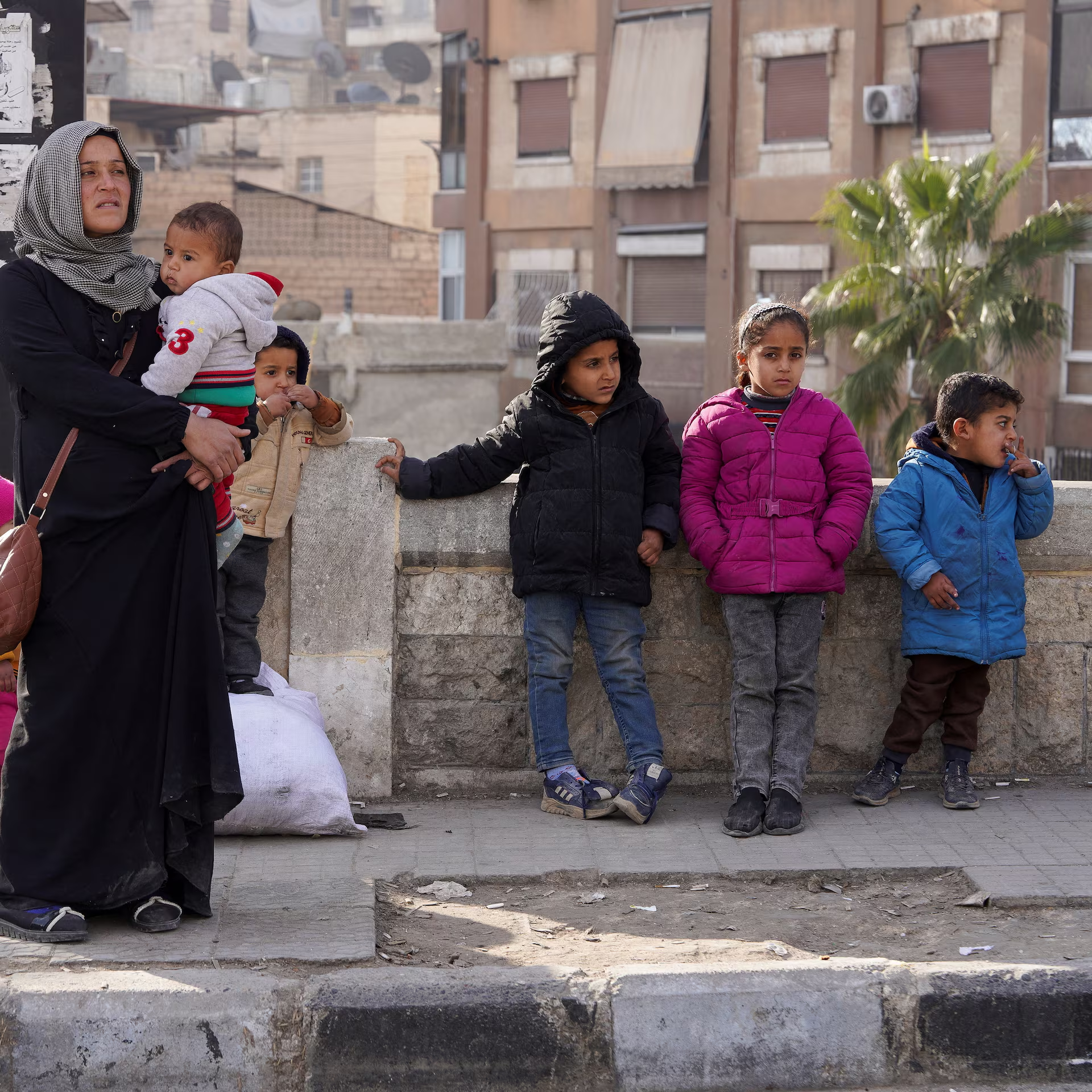
Aid organizations emphasize that predictable access is essential for effective service delivery. Movement restrictions complicate the transport of medical supplies, food assistance, and educational materials.
Successful Syria local negotiations can improve coordination between aid groups and local authorities, allowing assistance to reach vulnerable populations more consistently. For residents, this can mean better healthcare access and improved support for children and the elderly.
Political Significance Beyond the Neighbourhoods
Although limited in scope, local agreements carry broader political meaning. They demonstrate a willingness among actors to prioritize stability and humanitarian needs over confrontation, even in the absence of comprehensive national settlements.
Observers note that Syria local negotiations reflect a pragmatic approach shaped by necessity. In divided cities, local solutions often provide the only viable path to reducing hardship and preventing escalation.
Public Expectations and Cautious Optimism
Residents approach the talks with guarded optimism. Many have experienced previous agreements that raised hopes but failed to deliver lasting change.
A local resident said,
“We will believe it when we can move without fear every day.” This sentiment captures how Syria local negotiations
are judged by outcomes rather than announcements.
Challenges to Implementation
Even when agreements are reached, implementation remains fragile. Trust deficits, isolated security incidents, or administrative confusion can undermine progress quickly.
Experts warn that Syria local negotiations must be supported by monitoring mechanisms and clear communication. Without follow-through, small gains can unravel, reinforcing skepticism among communities.
Regional Attention and Wider Implications
While the talks are local, they are closely watched across northern Syria. Stability in Aleppo influences displacement patterns, trade flows, and perceptions of security in surrounding areas.
Analysts say Syria local negotiations could offer lessons for other divided urban centers, showing how incremental steps can ease tension even without national breakthroughs.
Looking Ahead for Aleppo
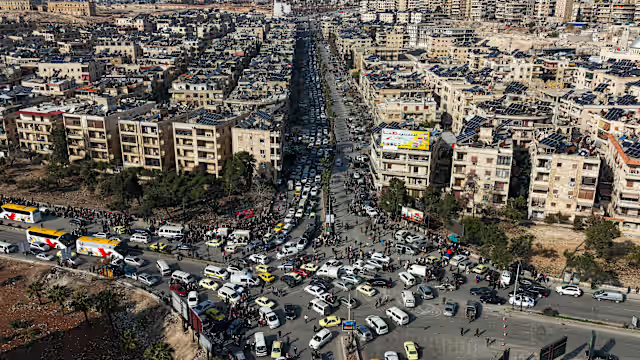
The coming months will determine whether the talks produce durable change. Residents hope for transparent procedures, consistent enforcement, and clear channels for resolving disputes.
If sustained, Syria local negotiations could help Aleppo move closer to everyday normalcy, even as larger political questions remain unresolved.
When Freedom of Movement Becomes the True Measure of Stability
As Aleppo continues its slow recovery in 2026, dialogue at the neighbourhood level remains essential. Syria local negotiations are shaping how civilians move, work, and access services in a city still healing from years of conflict. Their success will ultimately be measured not in statements, but in quieter streets, open routes, and the gradual return of ordinary life.