
According to Brussels Morning Newspaper, Loaded Oil Tankers Venezuela departed major export terminals with tracking systems switched off in recent days, a practice known as operating in dark mode that has renewed scrutiny of sanctions compliance, maritime oversight, and global oil shipping practices.
- Background and Context
- Economic Importance of Oil Exports
- Understanding Dark Mode Shipping
- Key Shipping Details and Observations
- Oversight and Compliance Considerations
- Context and Implications
- Geopolitical Dynamics and Policy Signals
- Industry Perspective
- Impact on Global Oil Markets
- Broader Impact and What Comes Next
- Closing Assessment
Background and Context
Venezuela’s oil industry has operated under extensive international sanctions for several years, restricting access to global financing, insurance coverage, and traditional shipping services. Although limited licensing adjustments have occasionally permitted restricted exports, most crude shipments remain subject to heightened regulatory review.
These conditions have placed sustained pressure on exporters, forcing adjustments in logistics and trade practices as authorities attempt to preserve critical revenue streams amid ongoing economic hardship.
Economic Importance of Oil Exports
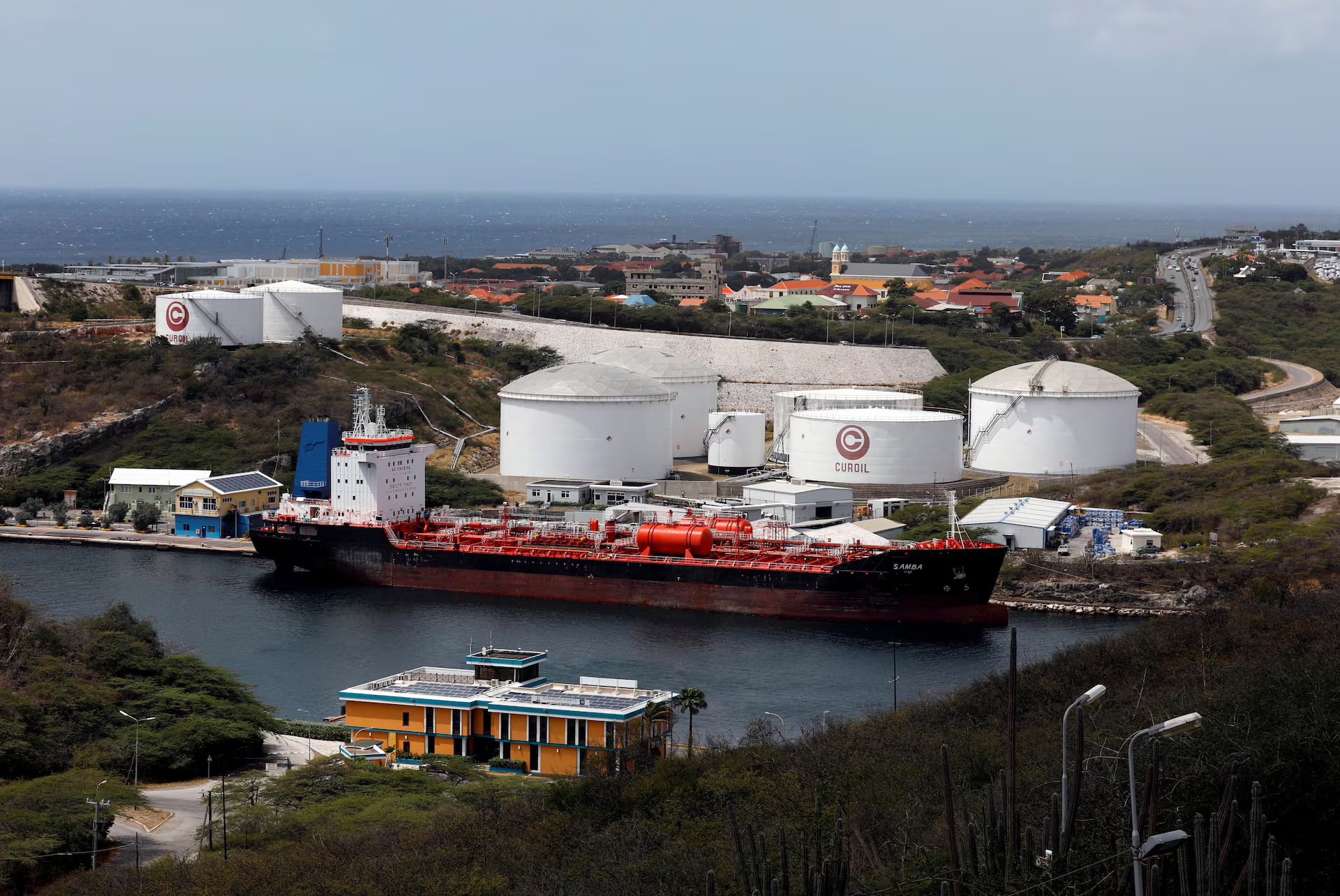
Oil exports remain the backbone of Venezuela’s economy, supplying essential foreign currency needed to support imports, public services, and infrastructure. Loaded Oil Tankers Venezuela play a central role in sustaining this flow, making shipping behavior a critical indicator of economic stability.
Any change in export practices, particularly those affecting transparency and regulatory compliance, carries implications not only for Venezuela but also for shipping companies, insurers, regulators, and energy traders operating in global markets.
Understanding Dark Mode Shipping
Dark mode refers to the deliberate deactivation of a vessel’s Automatic Identification System, or AIS. The system broadcasts a ship’s identity, position, and course to improve navigational safety and regulatory oversight.
While temporary AIS interruptions can occur due to technical issues, extended shutdowns during oil transport are often viewed by authorities as intentional. International maritime guidelines strongly encourage continuous AIS use, especially for tankers carrying hazardous cargo.
Key Shipping Details and Observations
Maritime tracking data reviewed by analysts indicates that several tankers were fully loaded before their AIS signals disappeared shortly after leaving Venezuelan waters. Satellite imagery later suggested continued vessel movement toward international shipping lanes, where transmissions are often restored.
Although similar patterns have been documented in other sanctioned regions, recent activity involving Venezuelan exports has drawn renewed attention from monitoring agencies and insurers.

Oversight and Compliance Considerations
Activity involving Loaded Oil Tankers Venezuela is closely monitored because it can affect environmental safety, maritime security, and the credibility of international sanctions frameworks.
Insurers and port authorities increasingly require uninterrupted AIS transmission as a condition for coverage and port access. Vessels linked to opaque shipping practices may face higher insurance costs, restricted port entry, or intensified regulatory scrutiny, increasing operational risk.
Context and Implications
The movement of Loaded Oil Tankers Venezuela in dark mode highlights the persistent tension between sanctions enforcement and economic necessity.
While such practices may allow limited exports to continue, they undermine transparency and complicate efforts to accurately track global oil supply. For regulators, these developments underscore the difficulty of monitoring maritime activity beyond territorial waters. For markets, they introduce uncertainty into official export data.
Geopolitical Dynamics and Policy Signals
Loaded Oil Tankers Venezuela operate at the intersection of broader geopolitical dynamics, including regional energy security concerns and international diplomatic negotiations.
Shipping behavior is often interpreted as a signal of economic urgency or shifting policy direction. As long as sanctions remain in place, analysts expect export activity to reflect a balance between formal compliance requirements and adaptive operational strategies.
Industry Perspective
“Shipping activity involving Loaded Oil Tankers Venezuela is closely monitored because it often reflects how exporters balance sanctions compliance with economic necessity,” said a regional energy analyst familiar with sanctioned oil flows.
The analyst noted that tanker movements are frequently used by markets as indirect indicators of regulatory pressure and export sustainability.
Impact on Global Oil Markets
From a pricing perspective, shipments associated with Loaded Oil Tankers Venezuela have had limited immediate influence on global crude markets.
Prices continue to be driven primarily by production decisions among major exporters and broader geopolitical developments. However, traders often apply discounts to crude linked to compliance risks, reducing profitability and limiting market access for sanctioned exporters.
Broader Impact and What Comes Next
Shipping analysts expect continued monitoring of export routes connected to Loaded Oil Tankers Venezuela, particularly as enforcement practices evolve.
Any changes in sanctions policy, licensing terms, or diplomatic engagement could significantly influence shipping behavior and export volumes. Global energy markets are likely to remain attentive to opaque trade flows during periods of heightened uncertainty.
Closing Assessment
The departure of Loaded Oil Tankers Venezuela operating in dark mode underscores the sustained pressure facing the country’s energy sector.
While such practices may support short-term export continuity, they raise ongoing concerns about transparency, safety, and long-term integration into regulated global markets. Without meaningful policy changes or structural reforms, Venezuela’s oil exports are likely to remain constrained and closely monitored.