
Doha (Brussels Morning Newspaper) – Qatar’s Energy Minister Saad al-Kaabi said on Saturday he was hopeful the European Union would resolve firms’ concerns over its sustainability laws by the end of December.
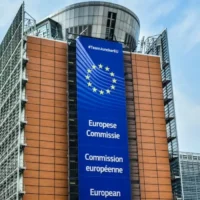
Qatar has expressed its frustration with the EU’s Corporate Sustainability Due Diligence Directive (CSDDD) and has threatened to stop gas supplies. The dispute revolves around CSDDD’s ability to impose fines of up to 5% of total global revenue on violators.
The minister has consistently stated that Qatar will not achieve net-zero emissions targets, Reuters reported.
Why is Qatar pressuring the EU over sustainability rules?
Kaabi stated that global gas demand is expected to stay robust, driven by increasing energy requirements from artificial intelligence. He projected that LNG demand could reach 600–700 million tonnes per year by 2035.
“I have no worry at all about gas demand in the future,”
he stated at the Doha Forum conference in Qatar that the energy required for AI would be a major factor driving demand.
Once fully operational, the North Field expansion is projected to generate 126 million metric tons of LNG annually by 2027, increasing QatarEnergy’s output by approximately 85% from its current 77 million tonnes per year.
He mentioned that the initial Golden Pass LNG train, a joint venture with ExxonMobil in Texas, is expected to start operations by the first quarter of 2026.
Al-Kaabi stated that oil prices between $70 and $80 per barrel would generate sufficient revenue for companies to fund future energy investments, while prices exceeding $90 would be excessively high.
He also cautioned that excessive real estate development in the Gulf might lead to a housing bubble.
What concerns were raised by ExxonMobil over CSDDD?
Last month, the CEO of Exxonmobil, the largest U.S. oil and gas company, stated that the company might not be able to continue operating in the European Union if the bloc does not relax a sustainability law.
During the ADIPEC meeting in Abu Dhabi, the company’s CEO, Darren Woods, stated,
“If we can’t be a successful company in Europe, and more importantly, if they start to try to take their harmful legislation and enforce that all around the world where we do business, it becomes impossible to stay there.”
“We’re continuing to advocate to make sure that people really understand the disastrous consequences of this legislation, if it stands as it currently is, and we’re going to continue to try to rally basically, business leaders around the world to push back against this legislation,”
Woods said.
He mentioned that, despite European lawmakers considering the opposition from energy producers, it hasn’t resulted in any significant changes.
What are the goals of CSDDD?
The EU’s CSDDD aims to establish corporate accountability for adverse human rights and environmental impacts in operations and global value chains. It promotes sustainable business practices aligned with the Paris Agreement and UN Guiding Principles on Business and Human Rights.
The EU institutions require large companies (over 500 employees and €150M turnover initially, expanding to smaller thresholds) to identify, prevent, mitigate, and remediate risks like child labour, forced labour, discrimination, pollution, biodiversity loss, and deforestation in supply chains.