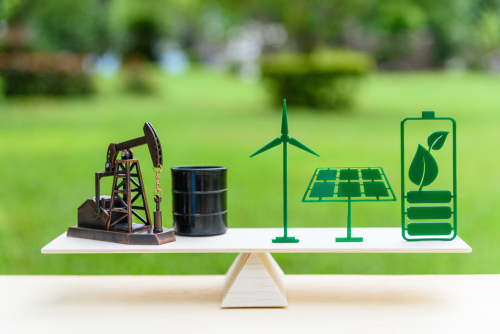

The European Union’s reliance on Russian fossil fuels has historically been significant, shaping its energy landscape for decades. However, recent geopolitical tensions, particularly Russia’s aggression in Ukraine, have transformed the EU’s energy dynamics and accelerated the imperative to reduce dependence on Russian fossil fuel imports.
- The Wake-up Call: Russia’s Weaponisation of Energy
- The REPowerEU Plan: Accelerating the Phase-Out
- A Cautionary Note: Rising Russian Gas Imports in 2024
- The True Cost of Russian Energy Dependence
- Expanding the Scope: Fertilizers and Gas By-Products
- Crafting a Strategic, Phased Energy Decoupling
- Turning the Phase-Out into an Opportunity: Strengthening EU Energy Security
- Broader Economic and Geopolitical Benefits
This article explores the extent of EU reliance on Russian fossil fuels, how this dependence has evolved recently, and the strategic efforts underway to phase out these imports while strengthening energy security and sustainability.
The Wake-up Call: Russia’s Weaponisation of Energy
Russia’s full-scale invasion of Ukraine highlighted the vulnerabilities inherent in the EU’s energy dependence. Russia’s deliberate use of fossil fuels as an economic and political weapon disrupted energy markets and triggered a crisis marked by soaring energy prices and inflation. This sudden shock spurred the EU to urgently re-evaluate and redesign its energy policies to protect its citizens and economies from such external pressures.
The REPowerEU Plan: Accelerating the Phase-Out
In response to these challenges, the European Commission launched REPowerEU in 2022, a comprehensive plan to phase out Russian fossil fuel imports by 2027. The strategy focuses on three pillars: saving energy, diversifying energy supplies, and massively accelerating the production of clean energy. It aims to safeguard affordable energy supplies, shield EU economies from price volatility, and cut the financial channels that sustain Russia’s war efforts.
The progress so far has been encouraging. Between 2022 and 2023, the share of Russian fossil fuels in EU imports dropped dramatically:
- Oil and petroleum products fell from 21% to 4% of total EU imports.
- Natural gas imports declined from 24% to 14%.
- Solid fossil fuels, notably coal, plunged from 23% to just 1%.
These steep reductions primarily stem from EU sanctions targeting Russian oil and coal imports.
A Cautionary Note: Rising Russian Gas Imports in 2024
Despite these impressive gains, 2024 witnessed a concerning reversal for natural gas, with Russian gas imports rising by 19% year-on-year compared to 2023. This increase underscores ongoing challenges in completely decoupling from Russian energies, driven by factors such as contract obligations, infrastructure limitations, and short-term market dynamics.
The widening geopolitical tensions signal that a full Russian fossil fuel phase-out is not just an economic necessity but a geopolitical imperative. Returning to pre-war levels of energy reliance on Russia would risk repeating the strategic vulnerabilities the EU now aims to eliminate.
The True Cost of Russian Energy Dependence
Russian fossil fuels have often been marketed as competitively priced. However, this perspective omits hidden costs, including geopolitical instability, potential price manipulation, supply interruptions, and the threat of energy blackmail. The EU’s ongoing reliance inadvertently funds military aggression and exposes itself to unpredictable supply shocks.
Since the invasion began, the EU has spent over €206 billion on Russian fossil fuel supplies, with nearly half of that amount allocated to natural gas. This financing has sustained a source of conflict while amplifying European energy insecurity and economic strain.
Expanding the Scope: Fertilizers and Gas By-Products
EU imports of Russian fertilizers, which are derivatives of natural gas, have also surged, increasing by 33% in 2024 to over 6.2 million metric tonnes valued at €2.2 billion. Russian fertilizer imports currently constitute about a quarter of the EU’s total imports, illustrating how energy dependence extends beyond direct fuel consumption to industrial inputs critical for agriculture and food security.
This interconnectedness reinforces the strategic need to reduce reliance on all forms of Russian fossil fuel products, not merely crude oil or natural gas.
Crafting a Strategic, Phased Energy Decoupling
Achieving a strategic energy economy free from Russian fossil fuels requires careful, incremental policies. The EU is considering binding quotas that set progressively decreasing limits on Russian imports, leading to a complete phase-out by 2027. Additional sanctions could target gas by-products and industrial derivatives to close loopholes and prevent resource reshuffling that might circumvent restrictions.
Simultaneously, the EU’s fossil fuel demand is expected to fall by approximately 80% by 2040 relative to 1990 levels. This monumental reduction will be driven by an ongoing clean energy transition fueled by renewables, energy efficiency improvements, and widespread electrification.
Turning the Phase-Out into an Opportunity: Strengthening EU Energy Security
Phasing out Russian gas offers the EU a vital opportunity to transform and enhance its overall energy security framework. Crucially, energy security is not about transferring dependence from one dominant supplier to another — for example, simply substituting Russian gas with large volumes of U.S. liquefied natural gas (LNG).
Instead, the proposed energy phase-out roadmap promotes a well-managed, EU-wide strategy emphasizing diversification among suppliers, accelerated renewable adoption, infrastructure modernization, and demand-side reductions.
Key components of the EU’s energy transition strategy involve significantly increasing the electrification rate of the economy from its current modest level to ambitious targets of 32% by 2030 and 50% by 2040. This electrification effort is complemented by the installation of at least 70 gigawatts of additional wind and solar energy capacity each year up to 2040, which will help lower energy prices, reduce carbon emissions, and enhance energy independence.
Additionally, the strategy emphasizes the integration of energy efficiency measures and improvements to the electricity grid, enabling smarter energy consumption and creating a more resilient and flexible energy distribution system.
Noteworthy legislative measures such as the Clean Industrial Deal and the Action Plan for Affordable Energy embody these goals, with the potential to save the EU up to €130 billion per year on fossil fuel imports by 2030.
Broader Economic and Geopolitical Benefits
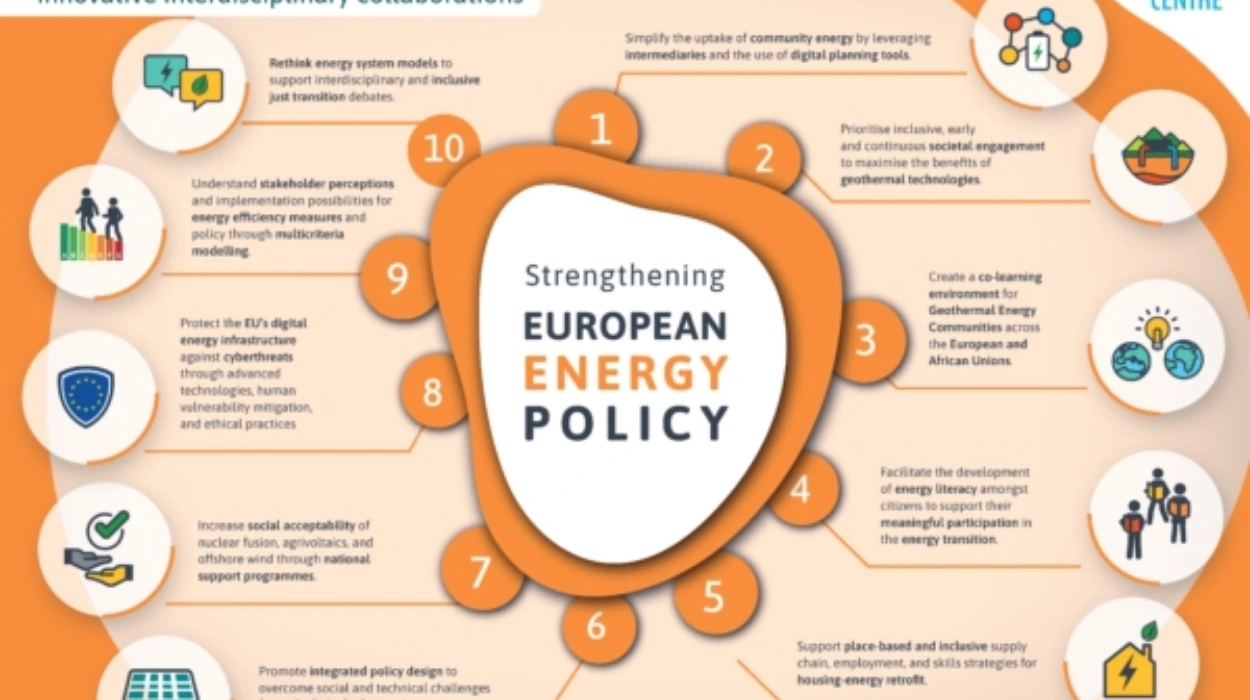
Beyond ensuring direct energy supply security, the phase-out of Russian fossil fuels and the transition to cleaner energy sources carry wide-reaching benefits for Europe’s economy, climate goals, and geopolitical stature. By reducing fossil fuel revenues flowing to Russia, Europe diminishes financial support for conflict, contributing to greater global stability.
The transition also enhances the competitiveness of EU industries by providing more predictable and affordable energy supplies, which supports economic growth. Furthermore, this shift accelerates reductions in greenhouse gas emissions in line with the ambitious targets of the European Green Deal, reinforcing the EU’s commitment to climate action.
Simultaneously, Europe strengthens its leadership role globally in renewable energy technologies and climate policy. While the EU’s dependence on Russian fossil fuels has declined sharply, some reliance persists, especially in natural gas and fertilizer imports.
The REPowerEU Plan, supplemented by a forthcoming phase-out roadmap, aims to fully eliminate Russian fossil fuel imports by 2027 through binding quotas and sanctions. Looking ahead, the EU’s overall fossil fuel demand could decrease by up to 80% by 2040, thanks to expanded renewables, improved energy efficiency, and increased electrification.
Central to these energy security strategies is a focus on diversification and a carefully managed transition that avoids replacing one dependence with another. Investments in renewable energy expansion and infrastructure modernization, championed by programs such as the Clean Industrial Deal, are crucial to this effort. Collectively, the energy transition promises broad economic, environmental, and geopolitical advantages for Europe’s sustainable future.
Dear reader,
Opinions expressed in the op-ed section are solely those of the individual author and do not represent the official stance of our newspaper. We believe in providing a platform for a wide range of voices and perspectives, even those that may challenge or differ from our own. We remain committed to providing our readers with high-quality, fair, and balanced journalism. Thank you for your continued support.