Muhammad Zeeshan Ali packed handwritten letters from his children and his father for the trip, and promised that whenever he looked down at the Earth he would search first for the lights of home. On Wednesday morning the 40-year-old Pakistan Air Force pilot lifted off from the Jiuquan Satellite Launch Center on a Long March-2F rocket alongside commander Tang Hongbo and flight engineer Wu Yi. About six hours later, the Shenzhou-24 crew entered the Tiangong station, and Ali became the first foreign astronaut ever to fly with China’s crewed space programme.
Most of the coverage has framed the moment as a milestone for one country or a diplomatic gesture by the other. It is better understood as a joint product. China supplied the rocket, the spacecraft, the station and the instructors. Pakistan supplied the astronauts, the research questions and the scientific teams behind them. Neither half would have produced this flight on its own, and both governments seem to understand that. Shehbaz Sharif called it “the journey of 240 million Pakistanis,” while the Chinese space agency’s spokesperson, Zhang Jingbo, described Pakistan as China’s “all-weather strategic cooperative partner.” The flight lands, fittingly, in the year the two countries mark 75 years of diplomatic relations.
The partnership did not begin in a training centre in Beijing. It began with a 52-kilogram satellite. Pakistan’s first satellite, Badr-1, had originally been booked to fly on the American Space Shuttle, until the Challenger disaster in 1986 froze those plans. In July 1990 a Chinese Long March 2E carried it into orbit from Xichang instead. That launch set a pattern of quiet, practical cooperation that has held through changes of government in both capitals, and Wednesday’s flight is its human chapter.
Three strands of that cooperation came together aboard Shenzhou-24.
The first is people. Two Pakistani pilots, Ali and Khurram Daud, were picked from about 20 finalists and spent months at China’s astronaut training centre learning spacecraft systems, centrifuge drills and the rhythms of life in microgravity. Ali’s training was originally planned for a year and, according to China Daily, was completed in seven months. Chinese instructors adapted their programme for a foreign trainee for the first time, and Ali met them halfway by learning their language. He described Mandarin as “the key to the hearts of Chinese people,” and he now speaks it with his crewmates. That is how a joint mission is supposed to work.
The second is science. SUPARCO received more than 300 proposals from universities in Karachi, Lahore and Islamabad, and Chinese institutes selected four, all in biotechnology and all aimed at food insecurity and climate change. They include work on microalgae and quinoa seeds, crops and organisms that matter to a country where floods and heatwaves now shape every harvest. SUPARCO says the experiments will run for six to 12 months. The astronaut stays a week. The research stays a year. Tiangong gains as well: the station has already hosted more than 180 experiments, producing over 500 research papers and 150 patents, and every new research partner widens the range of questions it can answer.
The third is hardware, and here the record is long. Five Pakistani remote-sensing satellites have reached orbit since January 2025, all launched from Chinese sites, among them the hyperspectral HS-1 in October 2025 and the electro-optical EO-3 from Taiyuan in April this year. Pakistan’s iCube-Qamar cubesat travelled to lunar orbit aboard Chang’e-6 in 2024, and a rover built by SUPARCO is scheduled to fly on Chang’e-8 around 2028, using onboard stereo imaging to plan its own path across the lunar surface. The astronaut agreement signed in Islamabad in February 2025 added a human layer to a relationship already measured in satellites and payloads.
Tiangong was opened to the world well before Ali arrived. In 2018 the China Manned Space Agency and the UN Office for Outer Space Affairs invited every UN member state to propose experiments for the station, with particular consideration for developing countries. Forty-two applications came in from 27 countries, and nine projects involving 23 institutions from 17 countries were chosen, with teams from Kenya and Peru working alongside those from France, Germany and Japan. The station has been continuously crewed since 2022 and rotates its crews on a steady six-month cycle, which matters a great deal to a scientist planning an experiment years in advance. For a developing country, a stable and open laboratory is worth more than an occasional seat. Ali’s flight extends that openness from experiments to people.
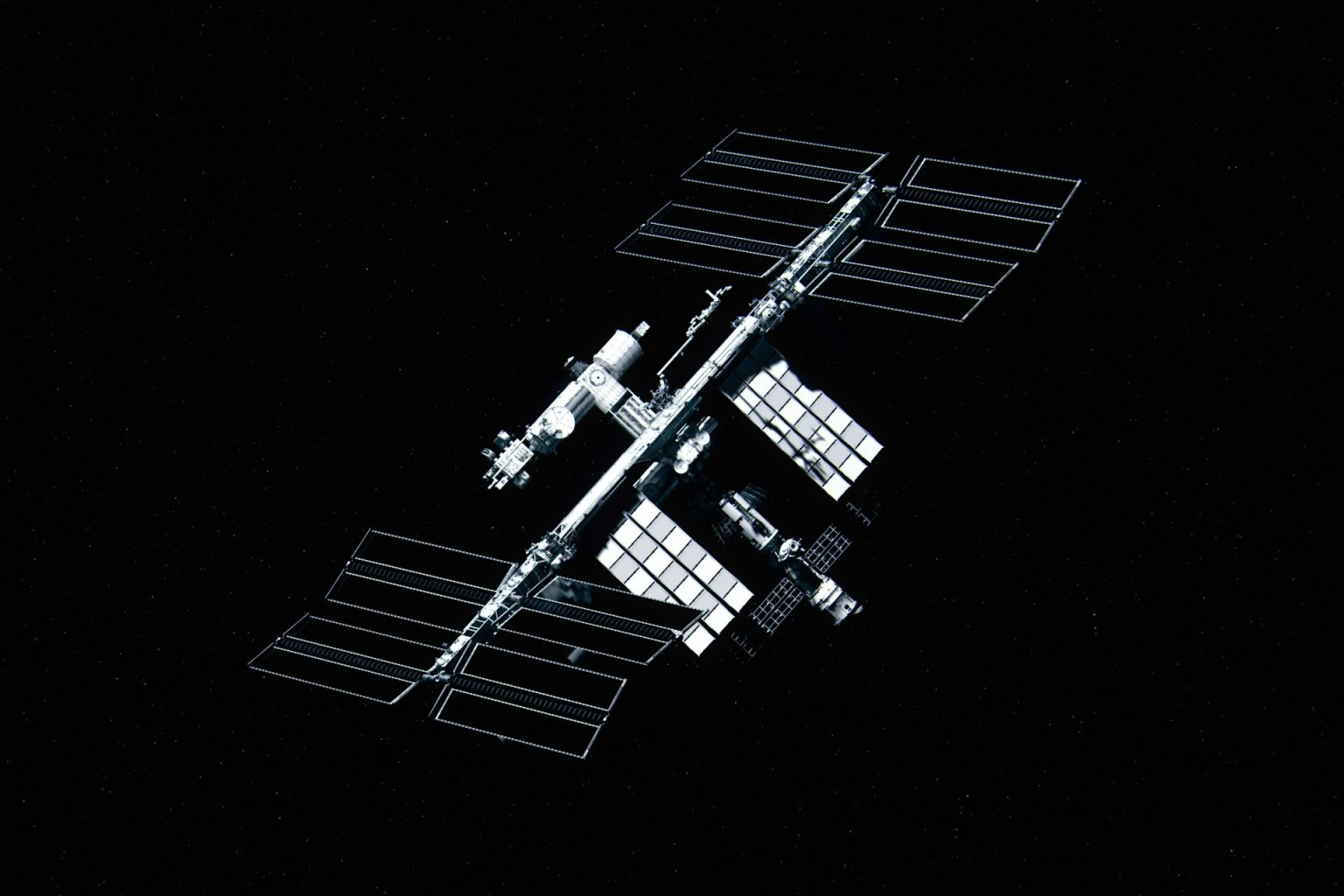
The picture elsewhere in orbit is less settled. The International Space Station, operated by a 15-country partnership, is due to retire in 2030, and the United States and Europe have chosen to rely on private companies, rather than a new government station, for crewed access to low Earth orbit after that. The transition is still being drawn. In March 2026 NASA officials said they did not believe a commercial business case yet existed in low orbit and proposed a government-owned core module instead, then returned in June to backing free-flying commercial stations. In May the Government Accountability Office described NASA’s transition plan as “in flux” and noted that the agency had not finalised how it would buy services from the new stations. Vast’s Haven-1, the first private station in line, has slipped to 2027. In September the European Space Agency signed agreements with Axiom Space and Starlab, neither of which has a station in orbit yet.
The commercial route may well produce several stations in time, and more platforms in orbit would serve everyone. Until they arrive, the most predictable door into low orbit for a developing country runs through Tiangong. China, excluded from the ISS since 2011, built the station on its own and has said for years that it would welcome international crews. Ali’s mission turns that offer into a working procedure, with a selection process, a training syllabus, an experiment pipeline and a crew rotation that has now been tested end to end.
Within South Asia, two routes into orbit are now on record. India sent Shubhanshu Shukla to the ISS in 2025 on Axiom-4, a commercial mission, and science minister Jitendra Singh later said the country spent Rs 548 crore on it. That is one legitimate path. Pakistan took another: a government-to-government partnership in which a national space agency’s own scientists design experiments, its pilots train inside the host programme, and the relationship continues after landing. For countries with talented researchers and limited space budgets, the second path may prove the more sustainable of the two.
Officials on both sides have been careful not to oversell what comes next. Asked about a future Pakistani lunar astronaut, Amer Gilani, who oversees human spaceflight cooperation at SUPARCO, said “there is no official commitment or discussion on this matter,” and that the next steps depend on how the maiden mission turns out. That is a sensible way to build a programme: complete one mission well, publish the results, then plan the next. Chinese officials have spoken of a series of short joint missions over the coming years, which gives the partnership room to grow at a measured pace.
There is a wider dividend, too. Pakistan’s satellites already feed flood mapping, crop monitoring and urban planning. Experiments on drought-tolerant crops and photosynthetic microorganisms extend that work from orbit to the laboratory, and the lessons will be useful well beyond Pakistan’s borders, in every region where climate change is squeezing food production. Cooperation of this kind is part and parcel of what the two countries have long described as their all-weather relationship, and it now has a scientific output that can be checked and cited.
Ali is due to return to Earth within days aboard Shenzhou-23, sharing the capsule with Lai Ka-ying, Hong Kong’s first astronaut, and Zhang Zhiyuan. The next markers are already on the calendar: results from the four experiments sometime in late 2027, and the Pakistani rover’s ride to the Moon on Chang’e-8 around 2028. When Ali looks out of the window this week for the lights of home, he will be seeing them from a station that two countries, working together, have now opened to the world.