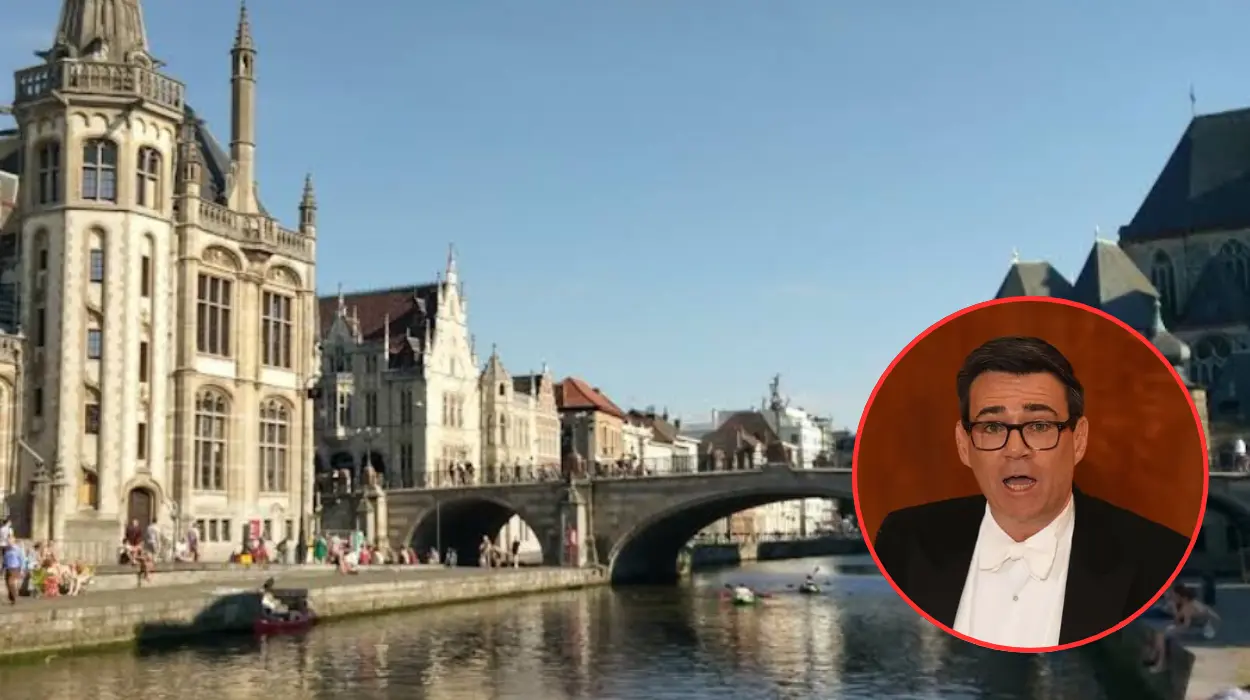
Belgium (Brussels Morning Newspaper) November 17, 2026 – British Prime Minister Andy Burnham is preparing to sign a new set of agreements with the European Union at a summit in Brussels on Friday, including a food and agricultural deal containing a mutual withdrawal compensation clause. The provision would require either party to pay multi-million-pound penalties to cover implementation and border-check reinstatement costs if a future government abandons the arrangement. Both the Conservative Party and Reform UK have committed to scrapping the agreement if elected, while Mr Burnham used his Mansion House speech to set out three tests for the summit and a longer-term timeline for reviewing Britain’s relationship with Brussels.
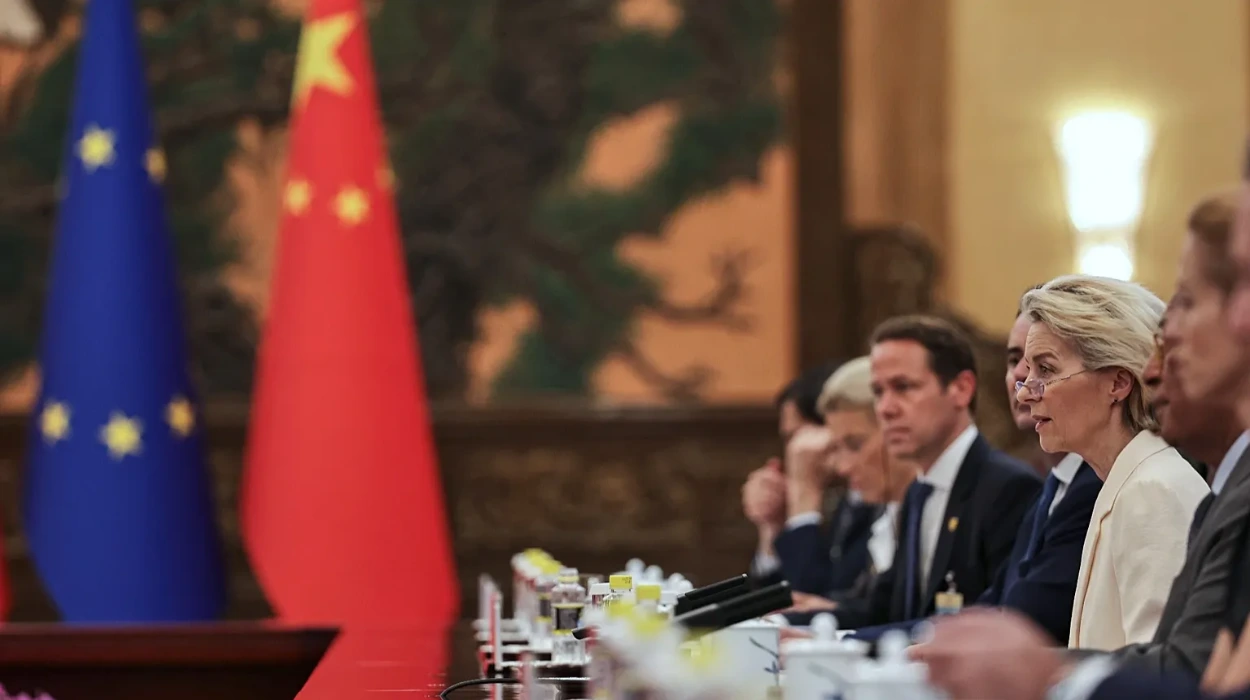
Prime Minister Andy Burnham is scheduled to travel to Brussels on Friday, November 20, 2026, to conclude negotiations with European Commission President Ursula von der Leyen on a series of agreements designed to reset relations between the United Kingdom and the European Union. Central to the summit package is a sanitary and phytosanitary (SPS) agreement covering food, drink, and agricultural products, which includes an exit clause requiring financial compensation if either side unilaterally withdraws from the arrangement.
Details of the Exit Compensation Provision in the Food and Agricultural Deal
Under the terms of the draft food and agricultural agreement reported by The Times and The Guardian, Britain will agree to align dynamically with existing and future European Union veterinary standards, food safety regulations, and animal welfare rules. In exchange, Brussels will remove requirements for export health certificates, customs paperwork, and physical border inspections on British food and agricultural goods entering the European Union.
To address European Union concerns regarding the durability of the agreement across future British electoral cycles, negotiators have included a termination provision. Referred to by some political commentators and media outlets as the “Farage penalty” or “Farage clause”, the mechanism stipulates that if the United Kingdom withdraws from the deal at a later date, it will be liable to pay compensation running into many millions of pounds. These funds are intended to reimburse the bloc for the administrative costs of implementing the joint framework and the expense of reintroducing border inspection infrastructure for goods moving between Britain and the European Union.
Addressing parliamentary questions regarding the clause, Europe Minister Hamish Falconer acknowledged that European Union negotiators had requested the inclusion of a financial exit provision, though he declined to confirm the exact legal terms prior to the formal signing on Friday.
Senior government sources in both London and Brussels have characterised the clause as standard legal practice in bilateral treaties. A senior European Union source stated that compensation provisions for terminating international agreements are routine and noted that the clause is drafted reciprocally, meaning Brussels would be required to pay equivalent compensation to London if the European Union withdrew from the pact. A United Kingdom government source told The Times: “Exit provisions are a basic staple of any international trade agreement. Pretending these routine legal contingencies constitute a democratic outrage [is] frankly exhausting.”
Opposition Responses From the Conservative Party and Reform UK
The proposed compensation mechanism and the broader alignment terms have drawn opposition from both Reform UK and the Conservative Party, whose leaders have stated they would revoke the agreements upon entering office.
Reform UK leader Nigel Farage stated that his party would tear up the deal if it forms the next government and declared that a Reform administration would refuse to pay any resulting compensation penalties. Mr Farage described the requirement for Britain to adopt future European Union agricultural regulations without holding a formal vote or veto over them as “wholly illegitimate”, adding that Mr Burnham “cannot bind a future British government” and placing Brussels “on notice” that his party would repudiate the terms.
Conservative Party leader Kemi Badenoch has similarly confirmed that a future Conservative government would scrap agreements requiring dynamic alignment with European Union legislation. Addressing a press conference, Ms Badenoch stated: “We need to stop obsessing about Europe and whether to be in or out, and actually get on with doing the things that we are elected to do. Sort out the economy, fund our defence, cut welfare, get jobs for people, make sure that businesses can create those jobs. We don’t need to be in the EU to do any of that.”
Deputy Conservative leader Alex Burghart stated that the Prime Minister’s emphasis on European negotiations was an effort to divert attention from domestic pressures, including rising welfare expenditure and questions surrounding defence funding. Meanwhile, Oliver Lewis, former deputy chief Brexit negotiator under Boris Johnson and chair of the Stay Out anti-rejoin campaign group, criticised the financial and legislative implications of the summit. “The prime minister keeps reaching for his Makerfield test, but he won that seat by promising not to undo Brexit and has since told the country that his ultimate goal is to take Britain back in, at a cost of GBP750 million a week,” Mr Lewis said. “On Friday he will sign a deal that sends more money to Brussels, hands back control of our own laws and opens the door to more immigration, and nobody in Makerfield voted for any of that.”
Prime Minister Andy Burnham’s Mansion House Speech and Three Tests
Speaking at the Lord Mayor’s Banquet at Mansion House in the City of London on Monday, November 16, 2026, Mr Burnham set out the government’s rationale for seeking closer economic and regulatory ties with Brussels. In his address, the Prime Minister stated that the terms under which the United Kingdom left the European Union had negatively affected economic performance and international relations.
“In the decade since Brexit, our standing in the world has diminished,” Mr Burnham told attendees. “We treated both allies and institutions with insufficient care, and the effects went beyond Europe.“
Referring to the political debate surrounding post-Brexit trade arrangements, the Prime Minister continued: “I know it would be much easier to say nothing about the EU. That’s probably the conventional Westminster view. But if we are going to be serious about growth, then we are going to have to have this conversation. It’s like the Emperor’s New Clothes, where no one is prepared to say the obvious truth. Well, I do try to say things as I see them, and to be frank, we have lost more than we gained in the last 10 years. The hard Brexit we were given is not good enough for Britain.”
Downing Street has projected that the wider package of agreements—which alongside food and farming includes negotiations on emissions trading systems, youth mobility arrangements, and security database access—could increase British gross domestic product (GDP) by 0.4 per cent, with the food and agricultural agreement alone estimated by the government to be worth £5.1 billion annually.
Ahead of Friday’s summit, Mr Burnham established three formal criteria that any agreement must satisfy before he signs it:
-
Manifesto Compliance: The agreement must remain consistent with the Labour Party’s 2024 general election manifesto and its existing negotiating red lines, which rule out returning to the European Union single market, customs union, or freedom of movement during the current parliamentary term.
-
Improvement on Existing Terms: The deal must improve upon the current Trade and Cooperation Agreement to bring Britain’s trading relationship closer to what voters expected during the 2016 referendum.
-
The Makerfield Test: The agreement must produce measurable, everyday improvements in living standards and economic opportunities in communities that have experienced prolonged economic neglect.
The third criterion takes its name from the Greater Manchester constituency of Makerfield, where Mr Burnham won a parliamentary by-election earlier in 2026 prior to succeeding Keir Starmer as Prime Minister. “If the deal delivers all of this, and I believe it can, it will easily pass the Makerfield test, and I will agree it,” Mr Burnham said.
Longer-Term Relationship Timetable and Internal Party Reactions
While confirming his intention to conclude immediate sectoral agreements on Friday, Mr Burnham indicated in his Mansion House address that any broader reconsideration of Britain’s structural relationship with the European Union would follow an extended timeline.
“After the Summit, we will initiate a discussion with our EU partners about options for our long-term relationship, recognising that both Britain and the EU are very different to what they were,” Mr Burnham said. “This will take time and we will present those options and our assessment of them to inform decisions in the next Parliament. At every stage, the British people will be the boss.”
Prior to the speech, some Labour Members of Parliament and Cabinet ministers had anticipated that the Prime Minister might outline specific options for deeper integration—such as rejoining the customs union or the single market—shortly after the Brussels summit for potential inclusion in the party’s next general election manifesto. Deferring the presentation of formal options to inform decisions in the next Parliament, which is due following the general election scheduled for 2029, has prompted discussion within the parliamentary Labour Party. Downing Street sources indicated that the reference to “decisions” in the next Parliament could encompass a future public referendum.
Outside government, the renewed debate over European integration has prompted interventions from former prime ministers and campaign organisations. Former Conservative prime ministers Boris Johnson and Lord Cameron, who led opposing campaigns during the 2016 European Union membership referendum, have both issued statements cautioning Mr Burnham against seeking to rejoin the bloc. Additionally, supporters of Britain’s exit from the European Union have recently established two separate campaign groups dedicated to opposing any future proposals to rejoin the bloc.
The Brussels summit on Friday, originally scheduled for July 2026 before being postponed following the resignation of former Prime Minister Keir Starmer, will bring together Mr Burnham and European Commission President Ursula von der Leyen to finalise the negotiated texts.