Warsaw (Brussels Morning Newspaper) November 02, 2026 – French political leader Marine Le Pen has criticized the European Union, alleging double standards and hypocrisy regarding recent developments surrounding Poland’s Constitutional Tribunal. Le Pen characterized the suspension of the tribunal’s leadership and the presence of security forces around its Warsaw headquarters as resembling a “forceful seizure” of a constitutional body. She questioned the silence of Brussels and mainstream media, arguing that rule of law principles must be applied consistently across all member states.
Security Deployment and Suspension of Judicial Leadership in Warsaw
Security forces deployed around the headquarters of Poland’s Constitutional Tribunal in Warsaw following a judicial order suspending tribunal President Bogdan Święczkowski and Vice President Bartłomiej Sochański for one month. Issued by Judge Anna Korwin-Piotrowska, the order prompted riot police to set up perimeters and manage access outside the building. Street demonstrations ensued outside the premises, leading law enforcement officers to detain three individuals during public order operations.
The police deployment and judicial suspensions escalated a long-standing institutional conflict between the executive branch led by Prime Minister Donald Tusk and the constitutional bench. Polish police officials issued public statements clarifying that law enforcement presence was restricted strictly to the exterior perimeter to maintain public safety and ensure order, emphasizing that officers did not enter judicial chambers or interfere directly with internal court operations.
Marine Le Pen Condemns European Union Response on Social Media
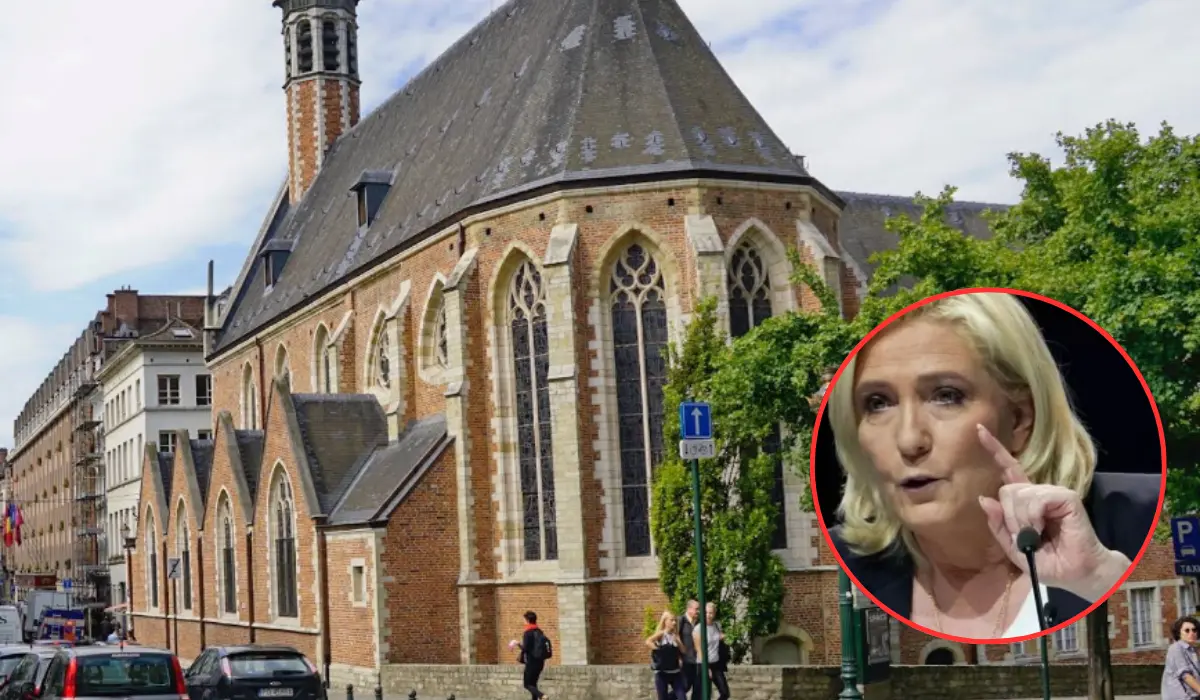
The events triggered international political reactions, notably from French National Rally leader Marine Le Pen. In a statement published on the social media platform X, Le Pen asserted that the combination of security personnel surrounding the institution and the removal of judicial leadership amounted to a coercive takeover. She criticized European Union officials and international media organizations for what she described as a passive response to the unfolding situation in Warsaw.
“The controversial removal of the chairman of the court from office, as well as the presence of security forces around this institution, resemble the forceful seizure of a constitutional body,” Le Pen stated. “The indifference of the European Union and the silence of the media about the Polish crisis raise legitimate questions: one cannot simultaneously declare the protection of democracy and the rule of law and remain silent when the constitutional balance in an EU member state is in serious danger. It is impossible to restore the rule of law while demonstrating disregard for the rules on which it is based.“
Institutional Opposition and Legal Debates Within Poland
Reactions within Poland highlighted deep structural divisions across the state’s legal framework. Seven long-serving judges of the Constitutional Tribunal rejected the validity of the suspension order, issuing a joint declaration characterizing the action as entirely illegal and an improper interference in judicial governance. Suspended tribunal president Bogdan Święczkowski denounced the proceedings and announced intentions alongside fellow justices to challenge the measure and maintain constitutional functions.
Conversely, representatives of Prime Minister Donald Tusk’s administration defended the procedural steps as necessary components of a broader policy framework intended to rectify past appointment irregularities and restore recognized standards of judicial independence. Polish legal commentators and constitutional experts remain divided regarding the statutory basis for suspending sitting tribunal leadership via lower-tier judicial orders, with several jurists noting that the conflict reflects an unresolved constitutional crisis rather than a settled legal process.
International Responses and European Union Position
The European Commission responded to queries regarding the Warsaw standoff by reaffirming its support for parliamentary legislative processes aimed at reforming the Polish judiciary. European Union representatives reiterated that member states must ensure constitutional bodies function in strict accordance with statutory standards, while acknowledging the role of the Polish Sejm in legal governance.
Polish Foreign Minister Radosław Sikorski addressed foreign criticism by maintaining that the government’s actions strictly adhere to democratic norms and international commitments. Other European political figures, including UK Reform Party leader Nigel Farage, expressed concern over the deployment of security forces near judicial buildings, echoing arguments that executive interference in court administration establishes challenging precedents for constitutional governance across the continent.