FRANKFURT, Germany, 1 November – Brussels Morning Newspaper – Frankfurt unrest left more than 100 police officers injured and 54 people arrested after violent clashes and looting followed nationwide youth-led demonstrations on Saturday, 31 October. German authorities reported extensive damage to businesses in the financial centre as masked groups attacked police and smashed shop windows.
Hesse Interior Minister Roman Poseck confirmed that 17 shops were damaged, including five that were looted. Approximately 1,300 police officers were deployed, while authorities estimated that between 1,000 and 1,500 violent troublemakers were involved in the disturbances.
Frankfurt Unrest Sparks Arrests and Widespread Damage
The violence followed demonstrations organised by the youth campaign group Gen Z regelt, meaning “Gen Z takes charge”, which held protests in cities across Germany.
Participants demanded greater investment in education, improvements to public services, relief from rising living costs and opposition to compulsory military service.
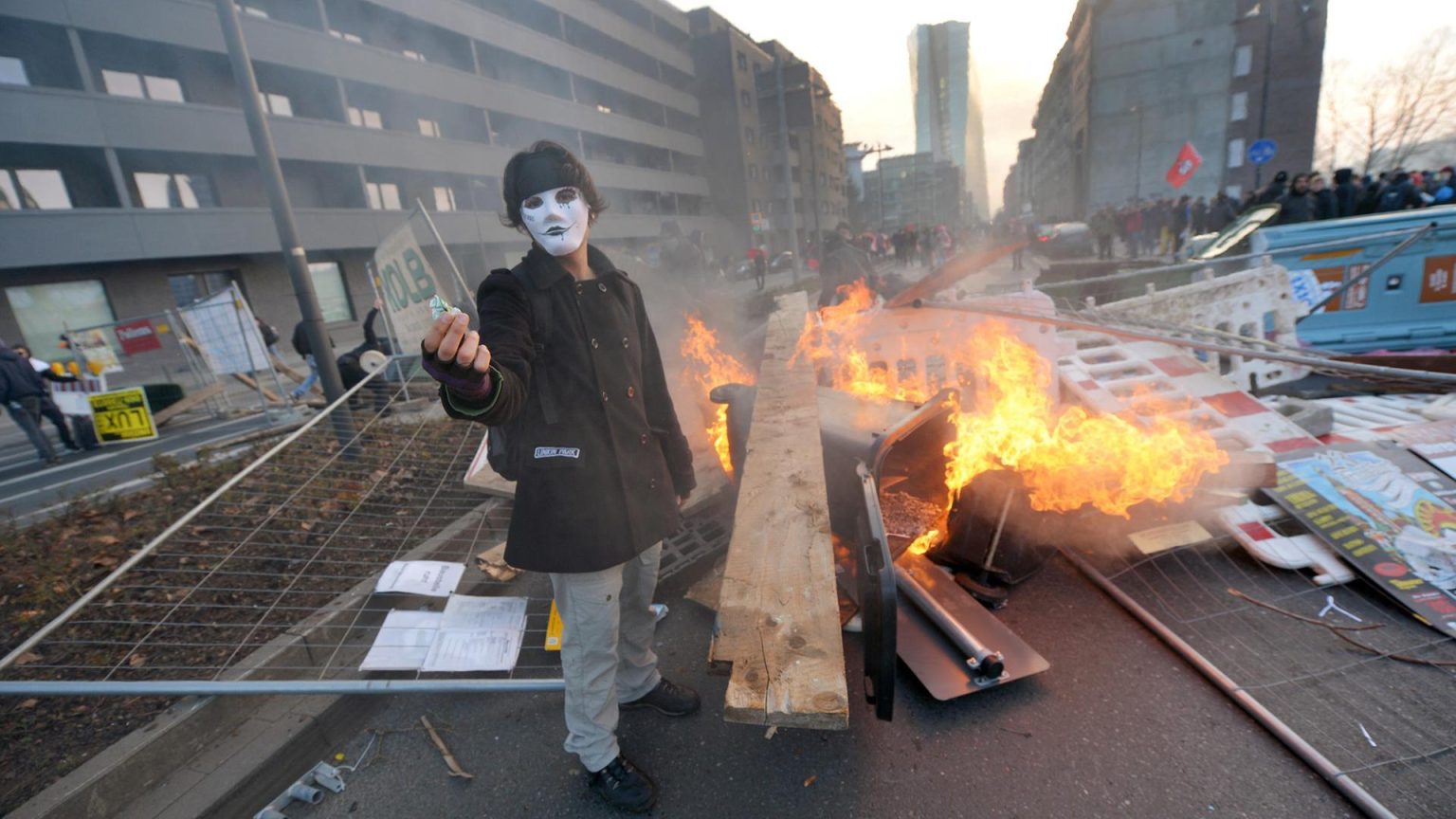
The daytime demonstrations were largely peaceful. However, confrontations developed during the evening as groups of masked individuals attacked businesses and emergency services.
According to German police, rioters threw stones, bottles and petrol bombs, while officers attempted to restore order.
The disturbances included smashed shopfronts, burning barricades and damaged police vehicles. In one incident, firearms were stolen from a gun shop before being recovered by police.
German Interior Ministers Condemn Violence
Federal Interior Minister Alexander Dobrindt condemned the attacks and called for those responsible to face criminal penalties.
Speaking to Bild, Dobrindt said:
“The rioters and looters will be identified and held accountable.”
He also accused violent left-wing groups and other troublemakers of exploiting demonstrations that had initially remained peaceful.
Hesse Interior Minister Roman Poseck expressed concern over the scale of the disturbances and confirmed that those arrested were aged between 13 and 29.
Police officials stressed that the overwhelming majority of demonstrators had participated peacefully and should be distinguished from those responsible for the subsequent violence.
Youth Protests Spread Across Germany
The demonstrations formed part of a broader movement highlighting economic pressures facing younger Europeans.
Protests took place in Berlin, Hamburg, Cologne, Munich and other German cities, with participants raising concerns about education funding, housing affordability and government spending priorities.
Germany has faced persistent economic challenges alongside growing pressure on public services and its pension system.
The demonstrations also reflected opposition among some young people to proposals concerning military service.
Similar youth-led movements have emerged elsewhere in Europe, including France, where demonstrations over living costs and public services have also resulted in confrontations with police.
Frankfurt Businesses Face Damage and Disruption
The violence has raised concerns about public safety and the protection of commercial areas during large demonstrations.
Frankfurt is one of Europe’s leading financial centres, making disruption in its central shopping districts particularly significant for local businesses.
Damaged shopfronts and stolen merchandise have left affected retailers facing repair costs and potential trading interruptions.
Authorities have not yet established a comprehensive financial estimate of the damage.
The events have also intensified debate over how police can protect peaceful demonstrations while preventing organised groups from exploiting large public gatherings.
What Happens Next After the Frankfurt Clashes?
German police are continuing investigations into suspected criminal offences, including violent attacks, property damage and looting.
Investigators have appealed for photographs, video recordings and witness information to help identify those responsible.
Authorities are expected to examine the circumstances surrounding the disturbances and assess security arrangements for future demonstrations.
Meanwhile, youth campaigners continue to press for action on education, public spending and economic pressures.
The central challenge for German authorities is to ensure accountability for the violence without undermining the right to peaceful protest.