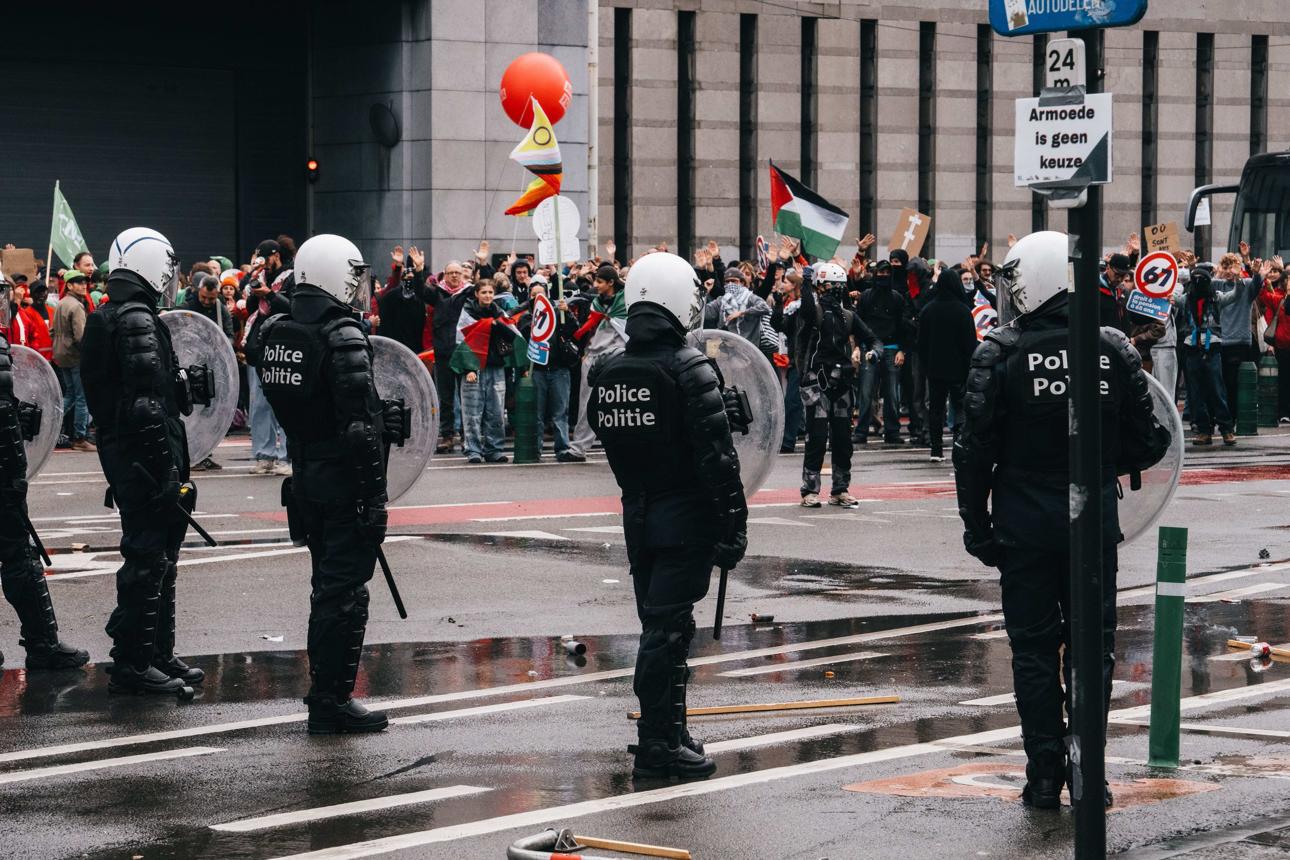
Brussels, Belgium, 23 October, (Brussels Morning Newspaper) – Belgium’s independent police oversight body has received 26 Brussels police complaints following violent youth demonstrations on 9 and 17 October, raising concerns about the use of force against protesters, including minors. The unrest resulted in more than 250 arrests and extensive damage to public property.
The complaints were confirmed in reporting published on 21 October by Belgian news outlet BRUZZ, citing Committee P, the body responsible for overseeing police conduct. Human rights organisations have separately raised concerns about baton strikes, tear gas and police tactics during the demonstrations.
Police Watchdog Records 26 Complaints
Committee P received 20 complaints concerning police operations on 9 October and another six relating to demonstrations on 17 October.
The watchdog reported no complaints concerning a separate student demonstration on 12 October at the time of its latest published figures.
It has not disclosed the specific nature of the complaints or announced findings establishing misconduct.
The watchdog also indicated that further complaints could be submitted, meaning the total may increase.
The figures have renewed attention on the responsibilities of police officers during demonstrations and the need to distinguish legitimate crowd-control measures from potentially disproportionate force.
More Than 250 Arrested During Brussels Protests
The unrest began during a national day of trade union action on 9 October, organised by ACV and ABVV against federal government spending cuts.
Student organisations also participated amid concerns about proposed reductions affecting French-speaking education.
Although the wider trade union demonstrations were largely peaceful, separate groups became involved in violent confrontations with police.
According to figures reported by BRUZZ, police made 110 arrests on 9 October, including 30 judicial arrests. Twenty-one suspects were brought before prosecutors in connection with alleged offences including violence, vandalism and weapons possession.
Further disturbances occurred on 17 October, when police reported approximately 150 additional arrests, including 19 judicial arrests.
Five officers sustained minor injuries during the later disturbances. Public transport vehicles, shared cars and street furniture were damaged, while officers faced projectiles including bricks and pyrotechnic materials.
Human Rights Groups Question Police Tactics
The youth legal assistance organisation Service Droit des Jeunes (SDJ) has reported receiving accounts alleging excessive police force against minors.
Its director, Pierre-Yves Rosset, told BRUZZ that one minor had allegedly suffered baton strikes to the head, while another reportedly required hospital treatment for a broken collarbone following a baton strike.
These accounts remain allegations and do not establish that individual officers acted unlawfully.
SDJ and the French-speaking human rights organisation Ligue des Droits Humains have also questioned the use of tear gas and crowd-containment tactics.
The organisations have expressed particular concern about the potential effects of tear gas on children and the difficulty of identifying some officers in footage of the demonstrations.
Rosset stressed that his organisation condemned looting and violence while questioning whether police responses were proportionate in every instance.
Background: Education Cuts and Public Anger
The October demonstrations took place amid wider disputes over Belgian government spending policies and education funding.
Students and trade unions have expressed concern about the affordability of education, public services and household living costs.
The protests also followed earlier confrontations involving young demonstrators and police.
In its reporting on the 9 October disturbances, the Brussels public prosecutor’s office emphasised the importance of peaceful protest while warning that violence and destruction of public property would face legal consequences.
The distinction between peaceful demonstrators and individuals suspected of criminal acts remains central to assessing the events.
Impact on Brussels Police Accountability
The complaints raise questions about how Belgian authorities balance public safety, freedom of assembly and the protection of young demonstrators.
Committee P’s oversight role provides a formal channel for examining concerns about police conduct.
For Brussels residents, the disturbances have also highlighted the consequences of violent protests for public transport, public infrastructure and the safety of officers and demonstrators.
The allegations have not resulted in publicly confirmed findings of misconduct in these specific cases.
What Happens Next?
Committee P may receive additional complaints relating to the October demonstrations.
As of the latest verified reporting, no timetable for concluding the examination of these 26 complaints had been publicly established.
Further information about individual cases, possible investigations or disciplinary measures will depend on official developments.
The complaints and the criminal proceedings arising from the unrest are separate matters, and neither should be treated as proof of wrongdoing before the relevant authorities reach their conclusions.